This post may contain affiliate links. Please read our disclosure policy.
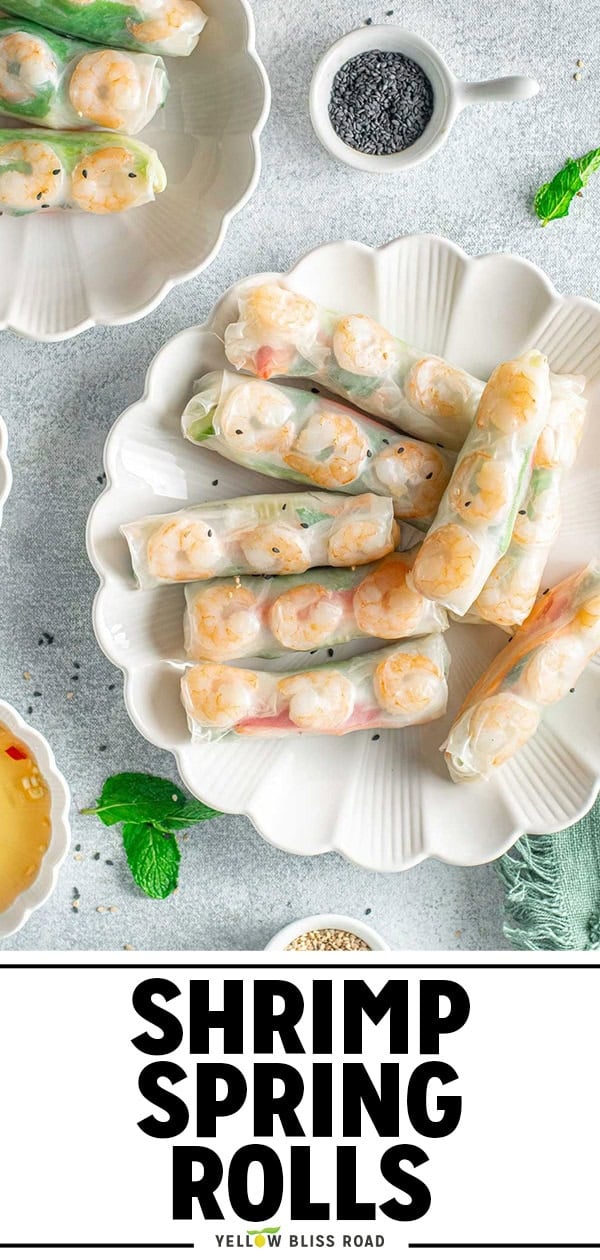
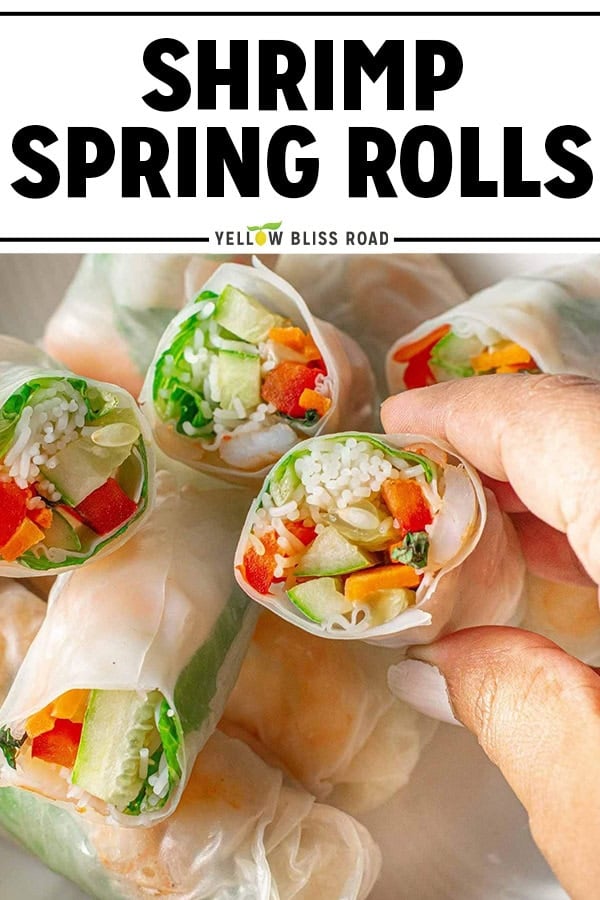
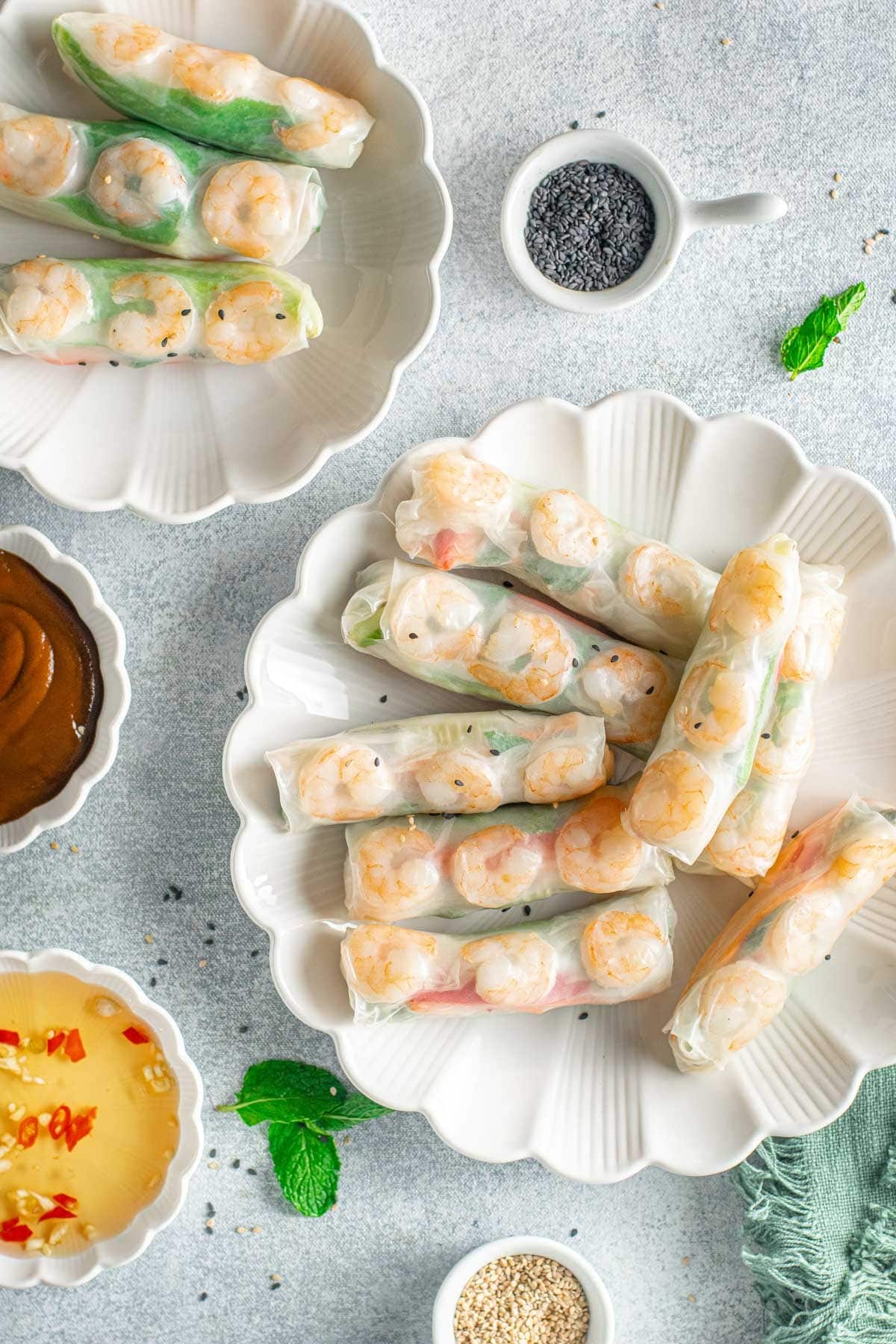
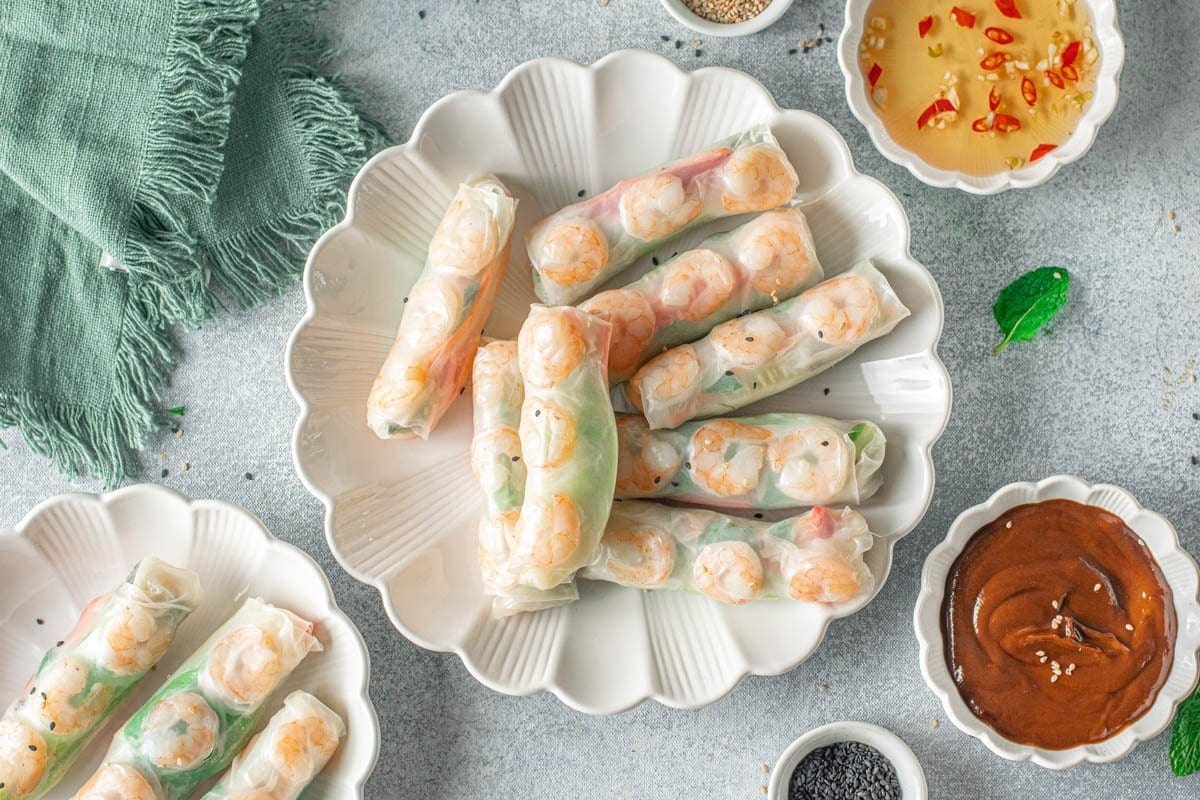
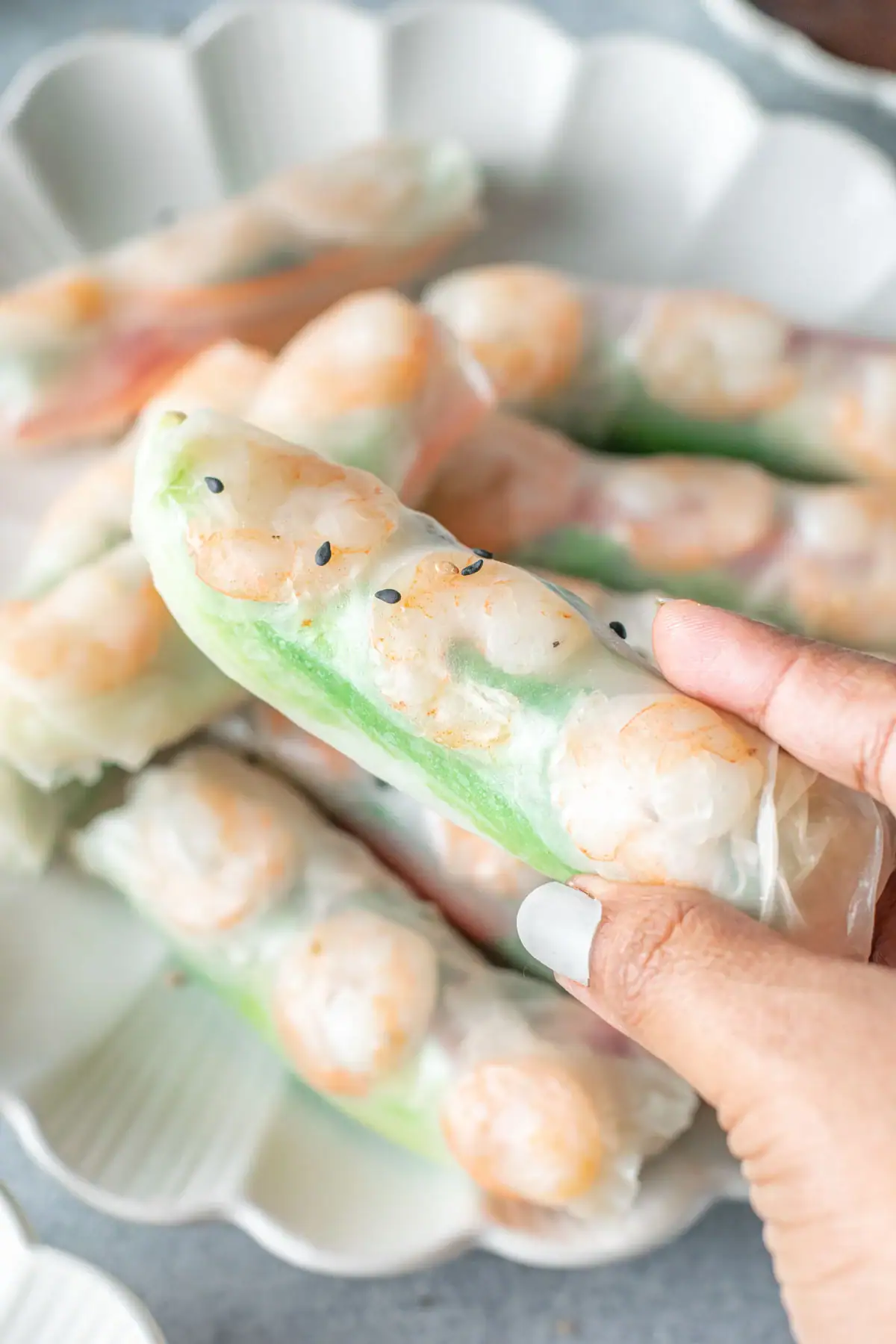
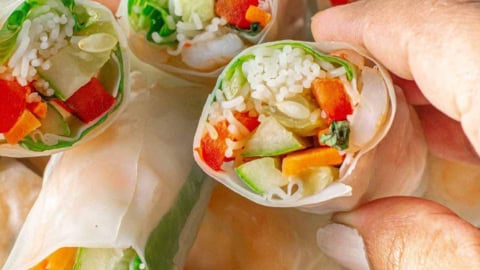
These fresh Vietnamese spring rolls are packed with shrimp, rice noodles, and crisp vegetables, all wrapped in soft rice paper. They’re light, cool, and colorful, and they come together without much more than a pot of water. Serve them with a creamy peanut sauce and watch how fast they disappear.
More Asian appetizers and sides: Chicken Satay with Peanut Sauce | Asian Cucumber Salad | Vegetable Egg Rolls
Before You Get Started
These are the fresh kind, sometimes called gỏi cuốn, wrapped in soft rice paper and served cold. Nothing gets fried, which is what sets them apart from the crispy Chinese and Thai spring rolls you get at most takeout counters.
Rice paper is the whole game here. Get these three things right and the rolling goes smoothly.
- Use warm water, not hot — Hot water oversoftens the paper and it tears while you’re rolling. Dip for about 10 seconds. It keeps softening on the counter.
- Don’t overfill — About a quarter cup of filling per sheet is plenty. Any more and the paper splits at the seam when you tuck in the sides.
- Work one sheet at a time — Wet rice paper sticks to everything, including itself. Soften a sheet, roll it, set it aside, then start the next one.
Set Up Your Rolling Station
Spend two minutes on setup and the rolling part takes ten. Skip it and you’ll be chasing a wet sheet of rice paper around the counter with sticky hands.
Here’s what you want in front of you before the first sheet goes in the water:
- A shallow bowl or pie plate of warm water, wide enough for a full rice paper round
- A damp kitchen towel or clean cutting board as your rolling surface, since dry counters grab at the paper
- All your fillings prepped and lined up in the order you’ll use them
- A platter with room to space the finished rolls apart
Line the fillings up left to right the way they go into the roll: lettuce, noodles, vegetables, herbs, then shrimp. The shrimp goes in last and sits near the top of the sheet so it shows through the finished roll.
RECIPE WALK-THROUGH
How to Make Vietnamese Spring Rolls
See the recipe card below for full, detailed instructions
The sauces come first so the flavors have time to settle while you prep everything else.
Step 1: Make the peanut sauce
Whisk the peanut butter, rice vinegar, soy sauce, brown sugar, sesame oil, and water together in a bowl until smooth. It’ll look separated at first and come together as you whisk. Add water a tablespoon at a time if you want it thinner.
Set it aside while you work. Sitting for 20 minutes deepens the flavor noticeably.
This is the same peanut sauce I serve with my Chicken Satay. Make a double batch if you’re putting both out.
Step 2: Add a second sauce if you want one
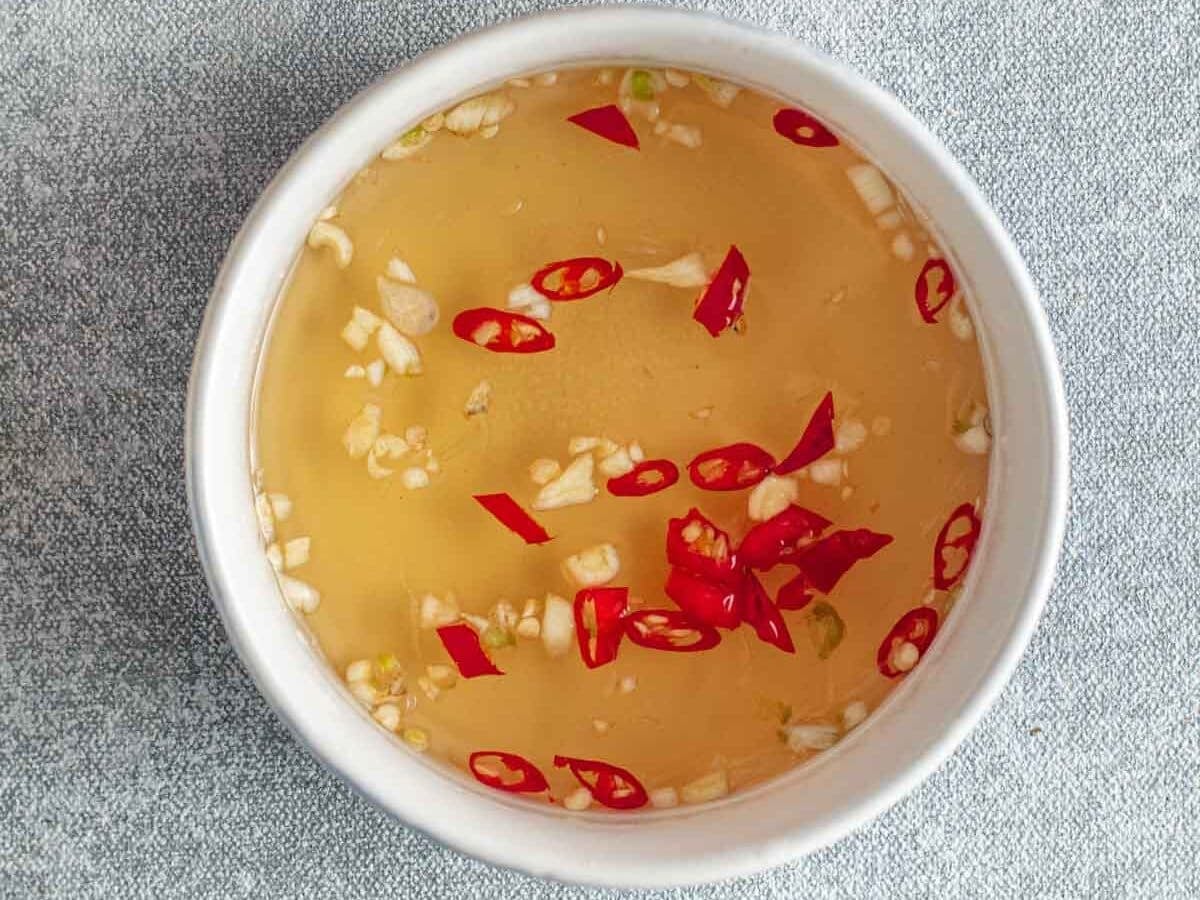
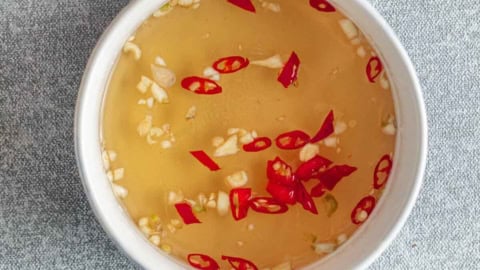
A classic Vietnamese dipping sauce, nuoc cham, is bright and thin where the peanut sauce is rich and creamy. Stir together water, sugar, fish sauce, garlic, lime juice, chopped red chili, and rice vinegar until the sugar dissolves.
Putting out both gives everyone a choice, and it takes about three minutes.
Step 3: Cook the shrimp
Bring a medium saucepan of water to a boil. Add the shrimp and cook 3 to 4 minutes, just until they’re pink and curled into a loose C shape. Tight little O shapes mean they went too long.
Drain, cool, and peel: Slice each shrimp in half lengthwise so you get two flat pieces that lie neatly in the roll.
Step 4: Soften the rice noodles
Bring a second pot of water to a boil, then turn off the heat and add the noodles. Let them sit about 5 minutes, or follow the package timing since brands vary.
Drain and rinse under cold water right away. This stops the cooking and keeps them from clumping into one solid mass while you roll.
Step 5: Prep the vegetables and herbs
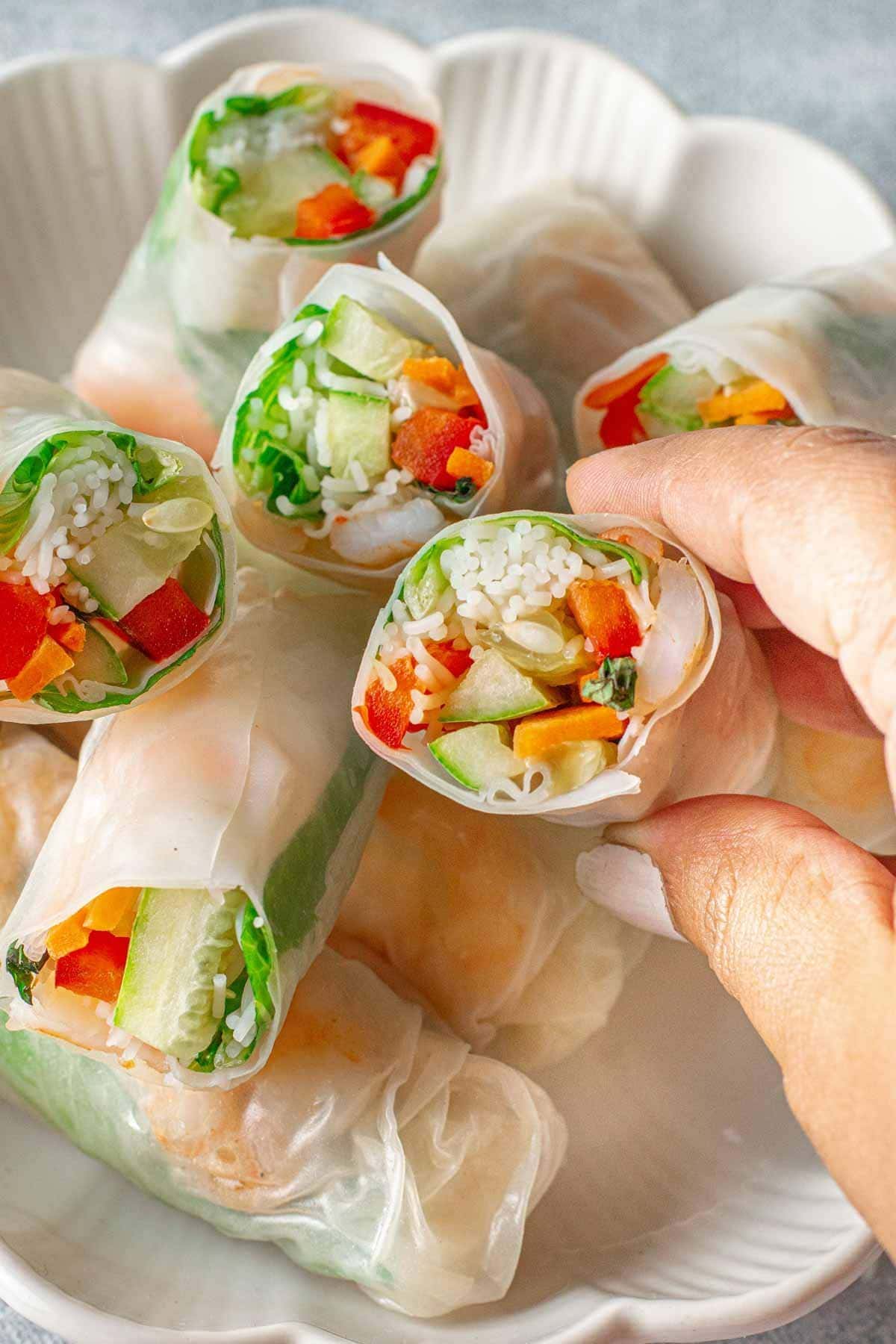
Julienne the bell pepper, cucumber, and carrot into thin matchsticks. Thin matters here. Thick pieces poke through the wrapper.
Pull the mint leaves off the stems and separate the lettuce leaves.
Step 6: Roll the spring rolls
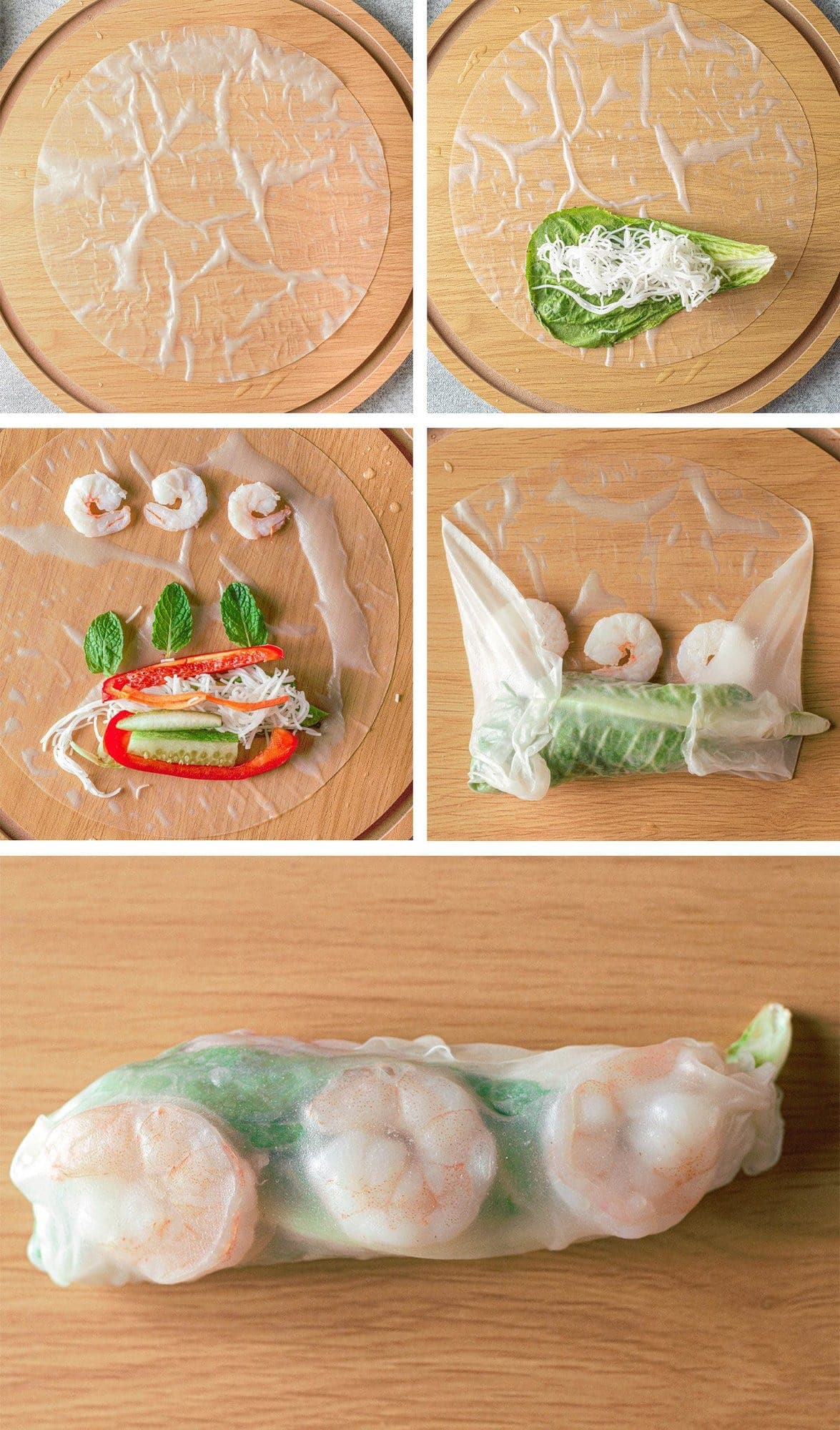
Submerge one rice paper sheet in the warm water for about 10 seconds, until it’s pliable but still has a little structure. Lay it flat on your damp surface.
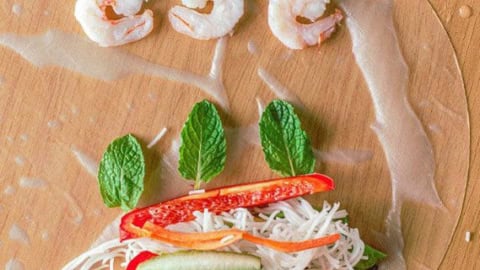
Place a lettuce leaf near the bottom edge. Add a small nest of noodles on top, then the cucumber, carrot, bell pepper, and a few mint leaves.
Arrange 3 shrimp halves cut side down about two inches below the top edge, leaving a gap between them and the vegetables. That gap is what makes the shrimp show through the finished roll.
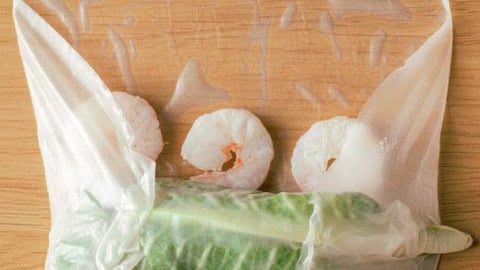
Fold the bottom edge up and over the filling and roll once, snugly. Fold in the left and right sides, then keep rolling to the top. Set it on the platter with space around it and start the next one.
Filling Swaps and Variations
Rice paper rolls are forgiving. Once you have the technique down, the filling is up to you.
The vegetables are the easiest place to play. Swap in shredded cabbage, thin avocado slices, or julienned jicama for crunch. Cilantro and Thai basil both work alongside or instead of the mint, and a handful of fresh herbs does more for these rolls than any extra vegetable will.
For protein, thinly sliced cooked pork is traditional and shredded rotisserie chicken is the easy weeknight route. Pan-seared tofu works well too, and you can skip the protein entirely and load up on vegetables and noodles instead.
Building the Spread
As an appetizer, plan on 1 to 2 rolls per person. If these are the main event for a light lunch, 3 to 4 per person is closer to right.
They’re cool and fresh, so they pair best with something warm and a little rich next to them.
Storage Tips
Storage, Freezing & Make Ahead
I’ll be straight with you. These are best the day you make them, ideally within a few hours. Refrigeration firms up rice paper and turns that soft chew into something tough and rubbery.
If you do have leftovers, wrap them individually in a damp paper towel, more than damp but not sopping, then store in an airtight container in the fridge. Eat within 24 hours. Let them sit at room temperature for 15 minutes before serving to soften the wrapper back up.
Don’t freeze them. Rice paper turns brittle and the vegetables go limp.
Make-ahead: Both sauces keep in the fridge for up to 3 days and honestly taste better on day two. You can cook the shrimp, boil the noodles, and cut the vegetables up to a day ahead, then store everything separately and roll right before guests arrive. That turns assembly into a 15-minute job.
Frequently Asked Questions
Why do my spring rolls stick together?
Rice paper is naturally tacky and finished rolls will fuse if they touch. Space them out on the platter instead of stacking. If you need to layer them, put a sheet of parchment or a damp paper towel between the layers.
Why does my rice paper tear while I’m rolling?
Almost always too much soaking or too much filling. Ten seconds in warm water is enough, and the sheet should still feel slightly firm when you lift it out. It softens the rest of the way while you’re adding the filling.
Can I use spring roll wrappers instead of rice paper?
No. Spring roll wrappers are wheat-based and made for frying, so they stay stiff and taste raw if you don’t cook them. Look for round rice paper sheets, sometimes labeled banh trang, in the Asian aisle or at an Asian market.
Can I make these without shrimp?
Absolutely. Thinly sliced cooked pork, shredded chicken, or seared tofu all work. You can also skip the protein and add extra vegetables and noodles.
More Asian-Inspired Recipes to Try
- Chopped Thai Salad with Peanut Dressing
- Teriyaki Chicken Lettuce Wraps
- Napa Cabbage Salad
- Kung Pao Shrimp
- The Best Copycat Bang Bang Shrimp
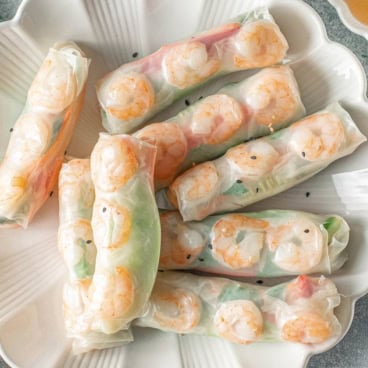
Vietnamese Spring Rolls

Ingredients
For the spring rolls:
- 1 pound large shrimp 22 to 25 count, peeled and deveined
- 3 ounces thin rice noodles
- 1 large red bell pepper julienned
- 1 cucumber julienned
- 1 carrot julienned
- ½ cup fresh mint leaves
- 12 large butter or green leaf lettuce leaves
- 12 large 22 cm round rice paper sheets
- Warm water for softening
For the peanut dipping sauce:
- ½ cup creamy peanut butter
- 2 tablespoons rice vinegar
- 2 tablespoons soy sauce
- 1 tablespoon brown sugar
- 1 teaspoon sesame oil
- ½ cup water
For the Vietnamese dipping sauce (optional):
- ⅓ cup water
- 3 tablespoons sugar
- 2 tablespoons fish sauce
- 1 teaspoon minced garlic
- 1 tablespoon lime juice
- 1 teaspoon chopped red chili
- 2 teaspoons rice vinegar
Instructions
- Make the peanut sauce: Whisk the peanut butter, rice vinegar, soy sauce, brown sugar, sesame oil, and water in a bowl until smooth. Set aside to let the flavors develop.
- Make the Vietnamese dipping sauce, if using. Stir the water, sugar, fish sauce, garlic, lime juice, chili, and rice vinegar together until the sugar dissolves.

- Cook the shrimp: Bring a medium saucepan of water to a boil. Add the shrimp and cook 3 to 4 minutes, until pink and curled. Drain and cool, then peel and slice each shrimp in half lengthwise.
- Soften the noodles. Bring a second pot of water to a boil, turn off the heat, and add the noodles. Let sit 5 minutes, or per package directions. Drain and rinse under cold water.
- Prep the vegetables. Julienne the bell pepper, cucumber, and carrot into thin matchsticks. Separate the lettuce leaves and pull the mint from the stems.
- Set up your station. Fill a shallow bowl with warm water. Lay a damp towel or cutting board on the counter as your rolling surface and line up the fillings.
- Soften a rice paper sheet. Submerge one sheet in the warm water for about 10 seconds, until pliable but still slightly firm. Lay it flat on the damp surface.
- Fill the roll. Place a lettuce leaf near the bottom edge. Top with a small nest of noodles, then cucumber, carrot, bell pepper, and mint. Arrange 3 shrimp halves cut side down about 2 inches below the top edge, leaving a gap between the shrimp and the vegetables.
- Roll it up. Fold the bottom edge over the filling and roll once snugly. Fold in both sides, then continue rolling to the top edge.
- Repeat and serve. Set each finished roll on a platter with space around it so they don't stick. Repeat with the remaining sheets and serve with the dipping sauces.
Notes
- Makes 12 rolls: You’ll use 3 shrimp halves per roll, so 12 rolls needs about 18 shrimp. A pound of 22 to 25 count shrimp gives you a few extra, which is nice insurance if a couple tear.
- Water temperature matters more than soak time. Warm, not hot. Hot water oversoftens the paper and it tears.
- Ten seconds is enough. The sheet keeps softening on the counter while you add filling.
- Don’t overfill. About ¼ cup of filling per sheet. Overfilled rolls split at the seam.
- Space the finished rolls out. Rice paper sticks to itself. Rolls that touch will fuse together.
- Thin matchsticks only. Thick vegetable pieces poke through the wrapper.
- Best the same day. Refrigeration toughens rice paper. If storing, wrap each roll in a damp paper towel in an airtight container and eat within 24 hours.
- Don’t freeze: Rice paper turns brittle and the vegetables go limp.
- Prep ahead: Cook the shrimp, boil the noodles, and cut the vegetables up to a day in advance. Sauces keep 3 days.
Nutrition
Nutritional Disclaimer Kristin Maxwell of “Yellow Bliss Road” is not a dietician or nutritionist, and any nutritional information shared is an estimate. For accurate calorie counts and other nutritional values, we recommend running the ingredients through your preferred online nutritional calculator. Calories and other nutritional values can vary depending on which brands were used.