This post may contain affiliate links. Please read our disclosure policy.
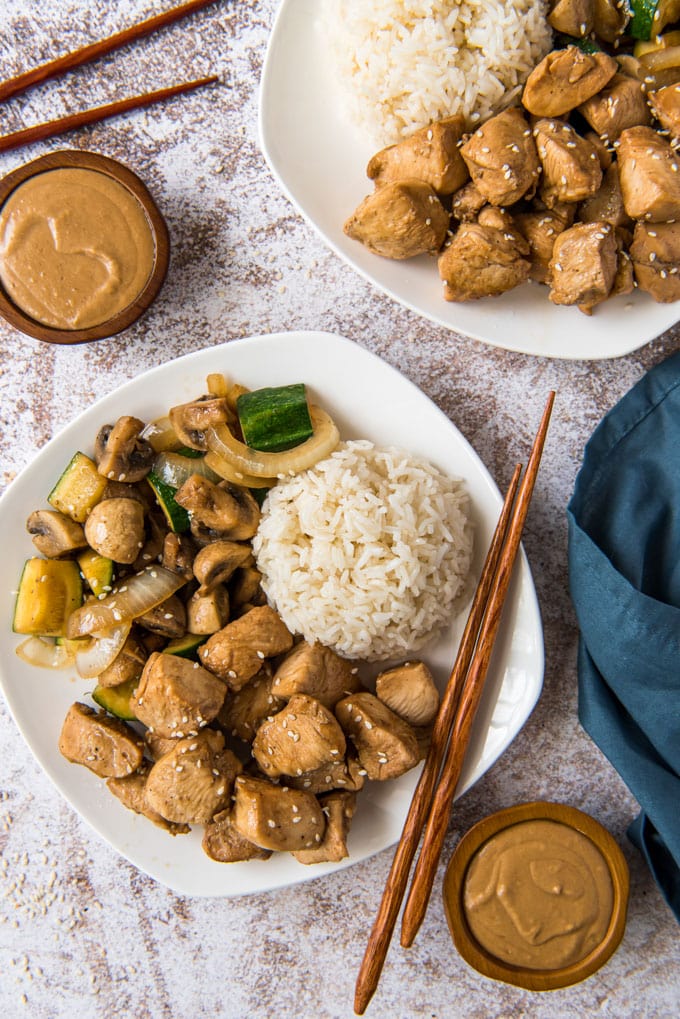
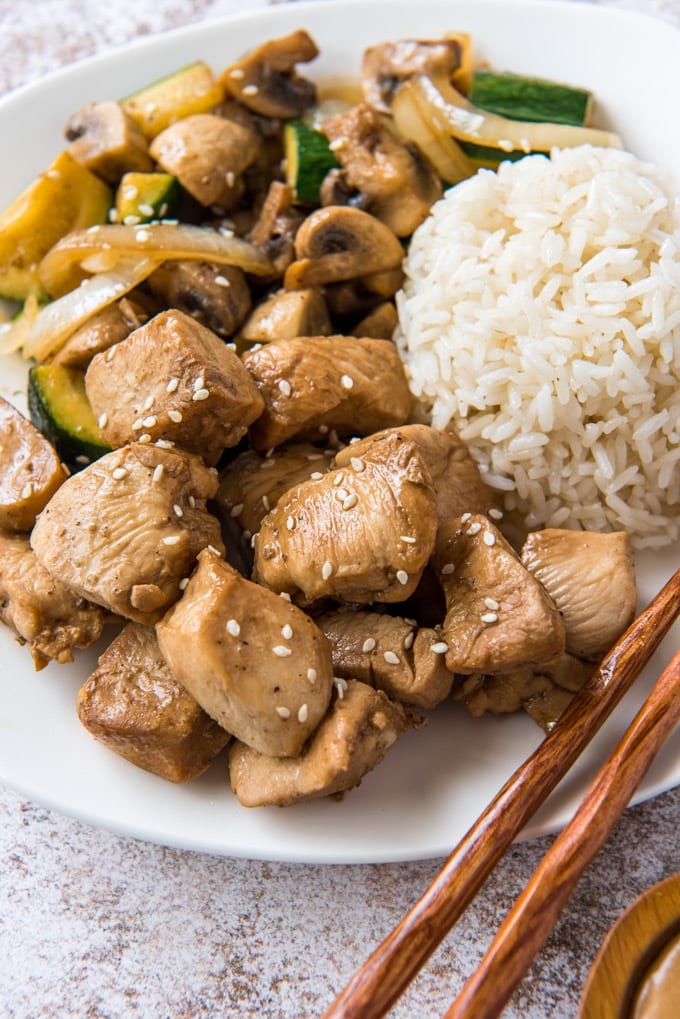
My Hibachi Chicken and Vegetables recipe brings that Japanese steakhouse flavor right to your stovetop. Tender chunks of chicken and crisp veggies are seared in garlic butter and served with a copycat Benihana magic mustard sauce. It comes together in about 35 minutes, no hibachi grill required.
More Asian-inspired chicken dinners: Teriyaki Chicken Bowl | Chicken Stir Fry | Szechuan Chicken Stir Fry.
3 Things That Really Matter for This Recipe
This recipe moves quickly once the pan is hot, so a little prep up front makes all the difference. Here are the keys to getting it right.
- Prep everything before you turn on the heat. Cut the chicken, chop the veggies, mix the sauces, and have your tools ready. There’s no time to chop mid-cook.
- Don’t crowd the pan. Cook the chicken in a single layer with space around each piece. Crowding causes steaming instead of searing, and you’ll lose that golden color.
- Use two pans when you can. Cooking the chicken and veggies side by side keeps everything hot and shaves real time off the meal. One pan works too, just transfer the chicken to a plate and cover with foil while the veggies cook.
RECIPE WALK-THROUGH
How to Make Hibachi Chicken and Vegetables
See the recipe card below for full, detailed instructions
The cooking process moves fast, so I always make the magic mustard sauce and garlic butter first. Once those are ready, the chicken and veggies come together in about 15 minutes.
Step 1: Make the Magic Mustard Sauce
Add the heavy cream, dry mustard, honey, sesame seeds, soy sauce, hot water, and garlic clove to a blender. Pulse until the seeds and garlic are broken down and the sauce is smooth.
Pour into a small bowl and set aside.
If you want the sesame flavor without the seeds (or you’re cooking for someone with a sesame allergy, like my son), just leave the seeds out. The sauce is delicious either way.
Step 2: Mix the Garlic Butter
In a small bowl, stir together the softened butter and finely minced garlic until fully combined.
Set aside. You’ll add half to the chicken and half to the veggies.
Step 3: Cook the Hibachi Chicken
Heat 2 tablespoons of oil in a large skillet or wok over medium-high heat until the oil is shimmering.
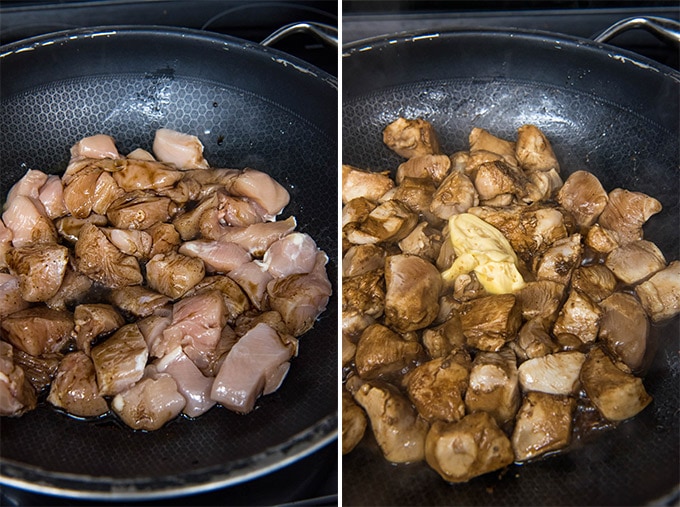
Add the chicken in a single layer along with the soy sauce, lemon juice, and a pinch of salt and pepper. Let it cook undisturbed for 3 to 4 minutes so the bottom gets a golden sear.
Add half of the garlic butter to the pan and stir as it melts. Cook for another 2 to 3 minutes, stirring once or twice, until the chicken is cooked through and no longer pink in the middle.
Transfer to a plate and cover with foil to keep warm.
Step 4: Cook the Hibachi Vegetables
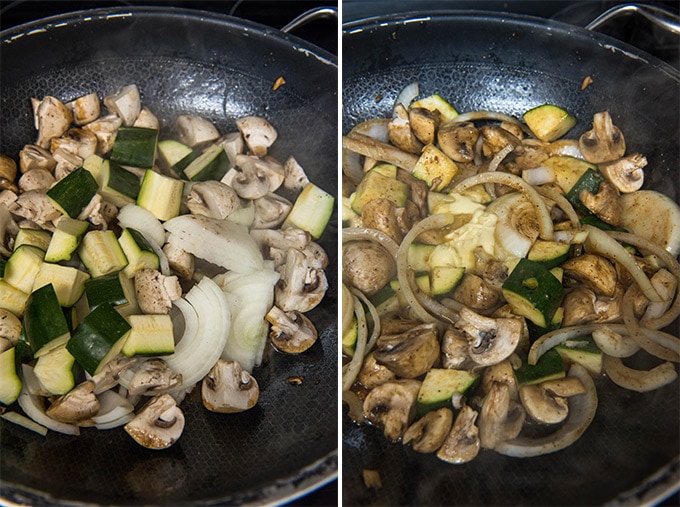
Add another tablespoon of oil to the same pan (or a second pan running alongside). Add the zucchini, onion, and mushrooms with a pinch of salt and pepper.
Cook for 3 to 4 minutes, stirring occasionally, until the veggies are fork-tender with a little color.
Stir in the remaining garlic butter during the last minute and toss to coat as it melts.
A small squeeze of fresh lemon juice over the top right before serving brightens everything up.
Step 5: Plate and Serve
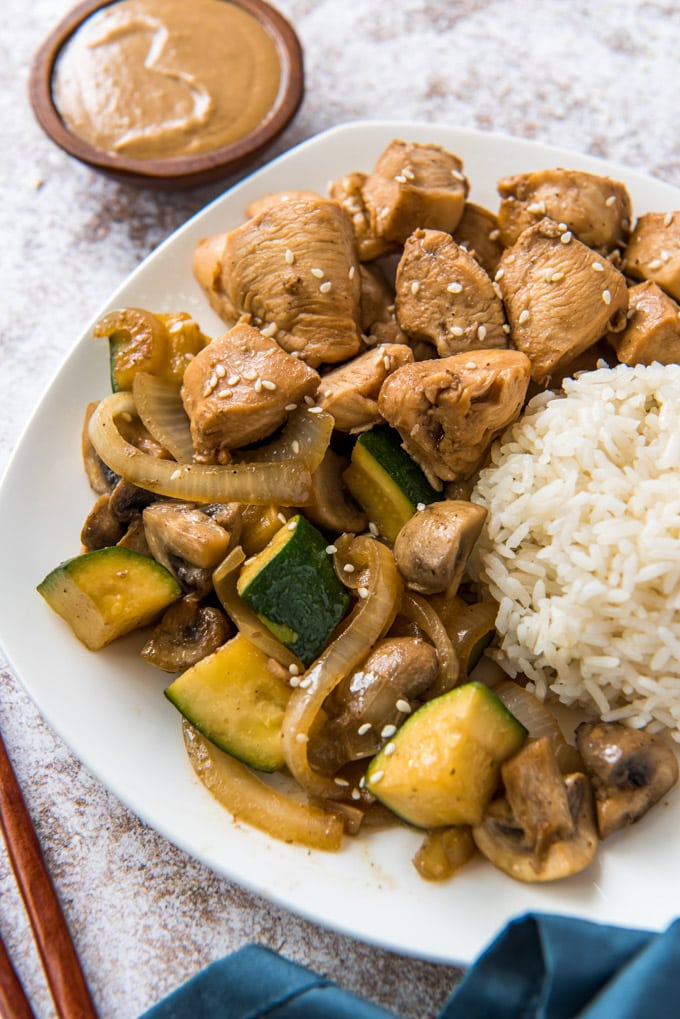
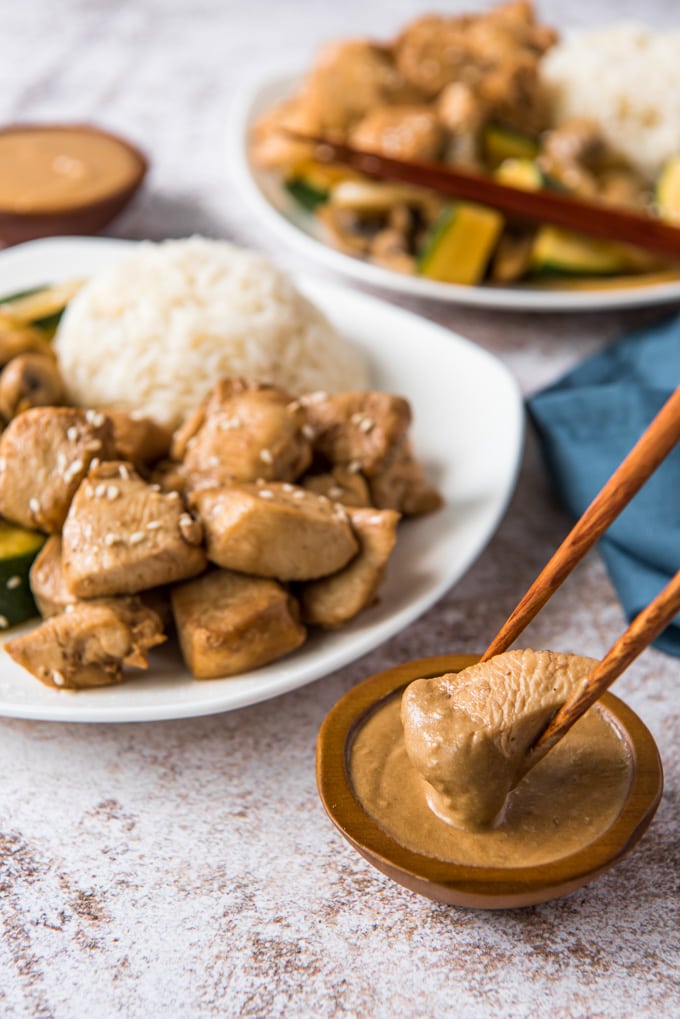
Plate the chicken and veggies side by side, with rice if you’re serving it. Pour the magic mustard sauce into small bowls for dipping.
The chicken is great on its own, but most of us double-dip everything.
What to Serve With Hibachi Chicken
Hibachi chicken works as a low-carb meal on its own, but it really shines next to a simple rice base. The magic mustard sauce already brings the dipping element, so you don’t need to layer on more sauces.
Rice and bases:
- Egg Fried Rice is the classic Teppanyaki-style pairing
- Chicken Fried Rice makes the meal extra hearty
- Steamed white or brown rice for a simpler weeknight option
Sides:
- A simple seaweed or cucumber salad for something cool and crisp
- Steamed edamame with a sprinkle of sea salt
- Extra steamed broccoli or snap peas if you want more veggies on the plate
Storage Tips
Storage and Reheating
Refrigerating leftovers: Store the chicken and veggies in airtight containers in the fridge for up to 4 to 5 days. The magic mustard sauce keeps separately for up to a week.
Freezing: Place the cooked chicken and veggies in airtight freezer containers for up to 4 months. I don’t recommend freezing the magic mustard sauce, since the cream tends to separate when thawed.
Reheating: Warm leftovers in a skillet over medium heat with a splash of water or oil, or microwave in 30-second bursts until heated through. Leftovers are also delicious cold, straight from the fridge.
Frequently Asked Questions
Can I use chicken thighs instead of chicken breast?
Yes, boneless skinless chicken thighs work great here and stay extra juicy. Cut them into the same 1 to 2-inch chunks and cook for an extra minute or so since thighs take a bit longer than breasts to cook through.
Why is my chicken not getting that golden sear?
Two usual culprits: the pan isn’t hot enough, or there’s too much chicken in it. Make sure the oil is shimmering before the chicken goes in, leave space around each piece, and don’t stir for the first few minutes so the bottom can sear.
Can I make the magic mustard sauce ahead of time?
Absolutely, and it actually gets better after a few hours in the fridge as the flavors blend. Make it up to 3 days in advance and keep it in a sealed container until ready to serve.
Do I need a wok, or will a regular skillet work?
A regular 10 or 12-inch skillet with high sides works perfectly. A wok is great if you have one, but it’s not required. The key is using a pan large enough to keep the chicken in a single layer.
Can I add other vegetables besides zucchini, onion, and mushrooms?
Yes, this recipe is flexible. Broccoli, bell peppers, carrots, and snap peas all work well. Just keep the total volume similar and cut everything into pieces that will cook in roughly the same time.
More Easy Asian-Inspired Recipes
- Chicken Lo Mein
- Bourbon Chicken
- Crockpot Orange Chicken
- Pork Stir Fry Rice Bowl
- Pan Fried Noodles
- Ramen Noodle Stir Fry
Hibachi Chicken and Vegetables

Ingredients
Chicken:
- 2 tablespoons vegetable or canola oil
- 2 pounds chicken breast cut into 2-inch pieces
- 3 tablespoons low sodium soy sauce
- 2 teaspoons fresh lemon juice
- Pinch of salt and pepper
- 2 tablespoons garlic butter recipe below
Vegetables:
- 2 tablespoons vegetable or canola oil
- 1 large zucchini quartered and cut into large chunks
- 1 large white onion cut in half, then into slices
- 2 cups white mushrooms quartered
- Pinch salt and pepper
- 2 tablespoons garlic butter recipe below
Garlic Butter:
- 2 teaspoons finely minced garlic
- 4 tablespoons butter softened
Magic Mustard Sauce (optional):
- 2 tablespoons dry mustard
- 1 1/2 tablespoons honey
- 1/2 cup heavy cream or half & half
- 1 tablespoon hot water
- 1 tablespoon sesame seeds preferably lightly toasted
- 1/4 cup soy sauce
- 1 garlic clove
Instructions
- Make the garlic butter. Combine the finely minced garlic and softened butter in a small bowl. Set aside until ready to use.
- Make the magic mustard sauce (optional). Place all sauce ingredients in a blender and pulse until well blended and smooth. Pour into a small bowl and set aside.
- Cook the chicken. Heat 2 tablespoons of oil in a large skillet or wok over medium-high heat. Add the chicken, soy sauce, lemon juice, salt, and pepper to the pan. Cook 3 to 4 minutes without stirring to develop a golden sear.
- Add the garlic butter. Stir half of the garlic butter into the chicken and let it melt. Cook for another 2 to 3 minutes, stirring once or twice, until chicken is cooked through and no longer pink. Transfer to a plate and cover with foil if cooking veggies in the same pan.
- Cook the vegetables. Add another tablespoon of oil to the pan. Add onion, zucchini, and mushrooms, and season with salt and pepper. Cook for 3 to 4 minutes, stirring occasionally, until fork-tender. Add the remaining garlic butter during the last minute and stir to coat as it melts.
- Serve. Plate the chicken and veggies, with rice if desired, and serve the magic mustard sauce on the side for dipping.
Notes
- Prep tip: This recipe moves quickly. Have all your ingredients chopped, sauces mixed, and tools (including foil) ready before you start cooking.
- Chicken size: Cut chicken into uniform 1 to 2-inch chunks for even cooking.
- Two-pan method: Cook the chicken and vegetables in separate pans at the same time to speed things up. If your veggies start to scorch, turn down the heat slightly.
- Veggie swaps: Broccoli, bell peppers, carrots, or snap peas all work well in place of (or in addition to) the zucchini, onion, and mushrooms.
- Chicken thighs work too: Boneless, skinless chicken thighs can be substituted for breast. Add an extra minute or so of cook time.
- Sauce shortcut: Store-bought yum yum sauce works in a pinch if you’re short on time, but the homemade magic mustard sauce is worth the few extra minutes.
- Leftover garlic butter: Save any extra garlic butter to use on rice, vegetables, or steak later in the week.
- Serve with: Steamed rice, fried rice, or a simple cucumber salad for a complete meal.
- Storage: Store leftovers in airtight containers in the fridge for up to 4 to 5 days, or freeze for up to 4 months (sauce stores separately and is not recommended for freezing).
- Sauce nutrition: The Magic Mustard Sauce is not included in the nutritional guide because it’s optional. A serving of the sauce would add around an additional 100 calories.
Nutrition
Nutritional Disclaimer Kristin Maxwell of “Yellow Bliss Road” is not a dietician or nutritionist, and any nutritional information shared is an estimate. For accurate calorie counts and other nutritional values, we recommend running the ingredients through your preferred online nutritional calculator. Calories and other nutritional values can vary depending on which brands were used.