
This post may contain affiliate links. Please read our disclosure policy.
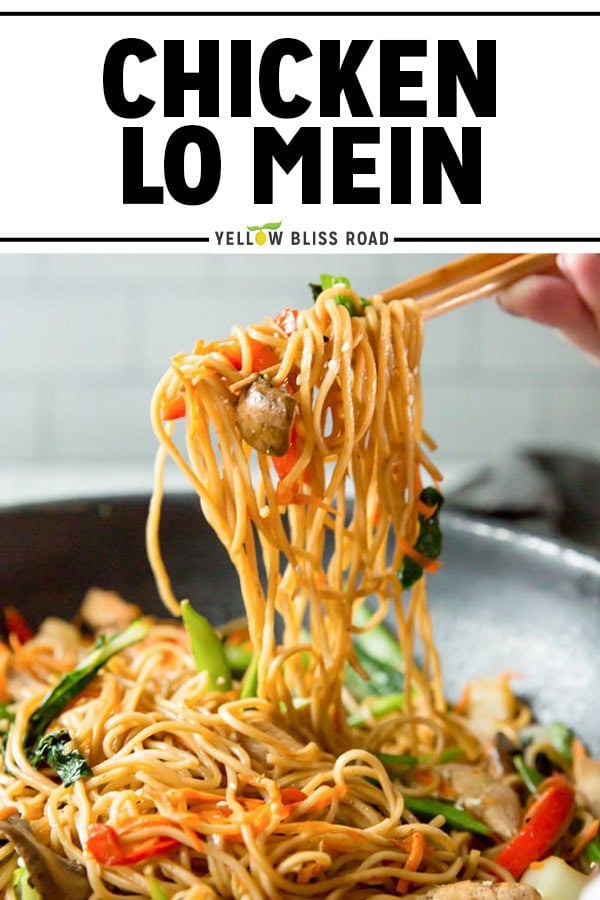
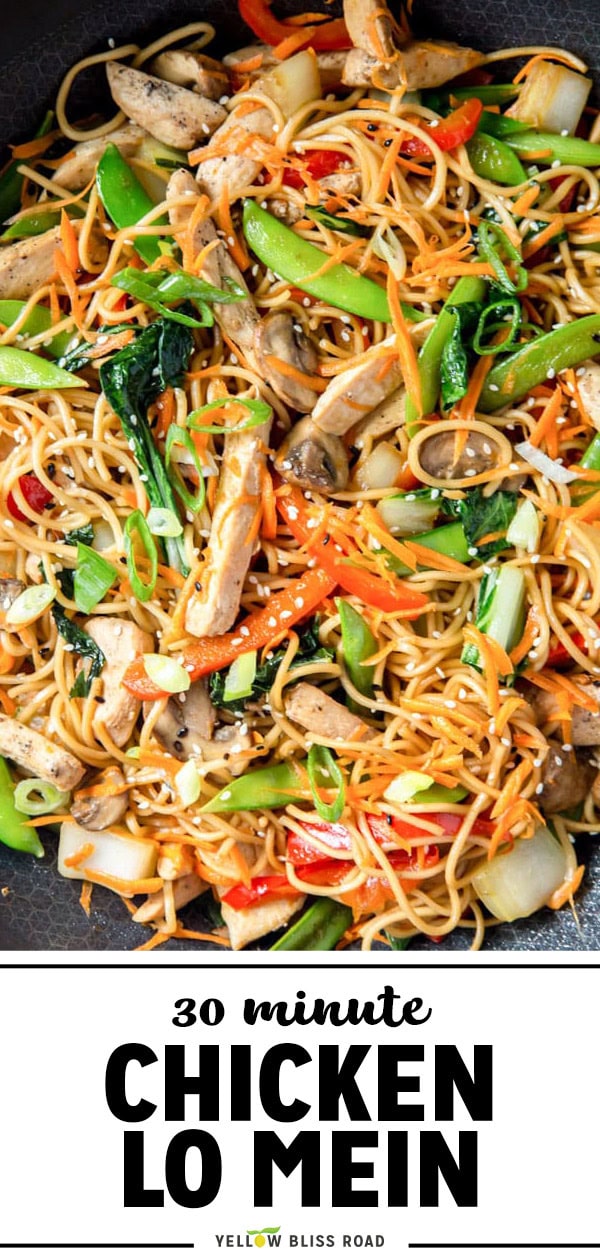
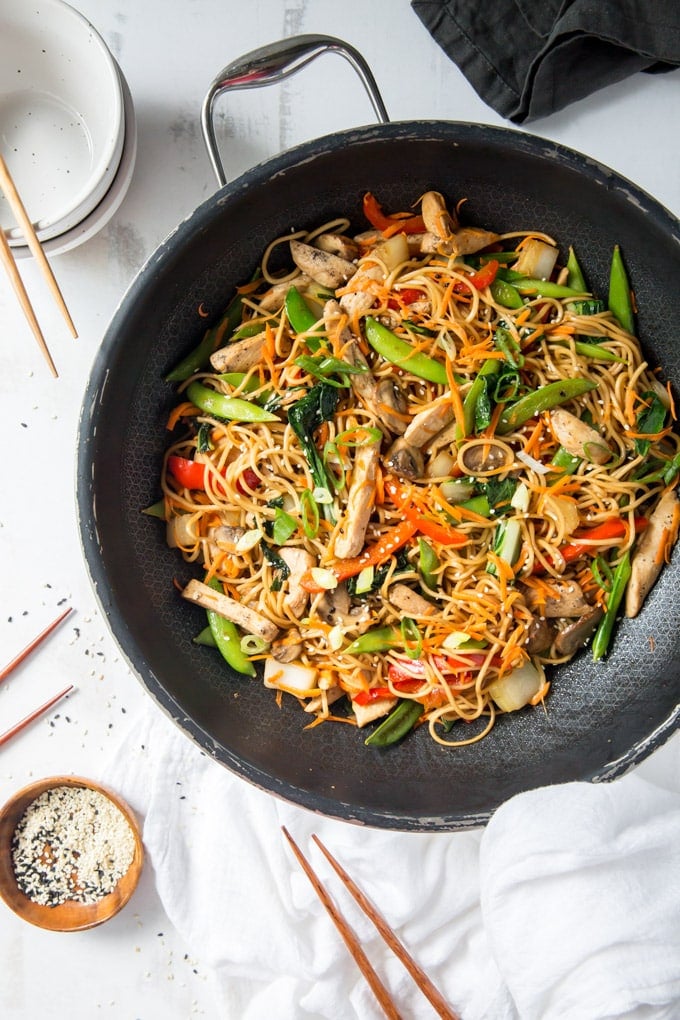
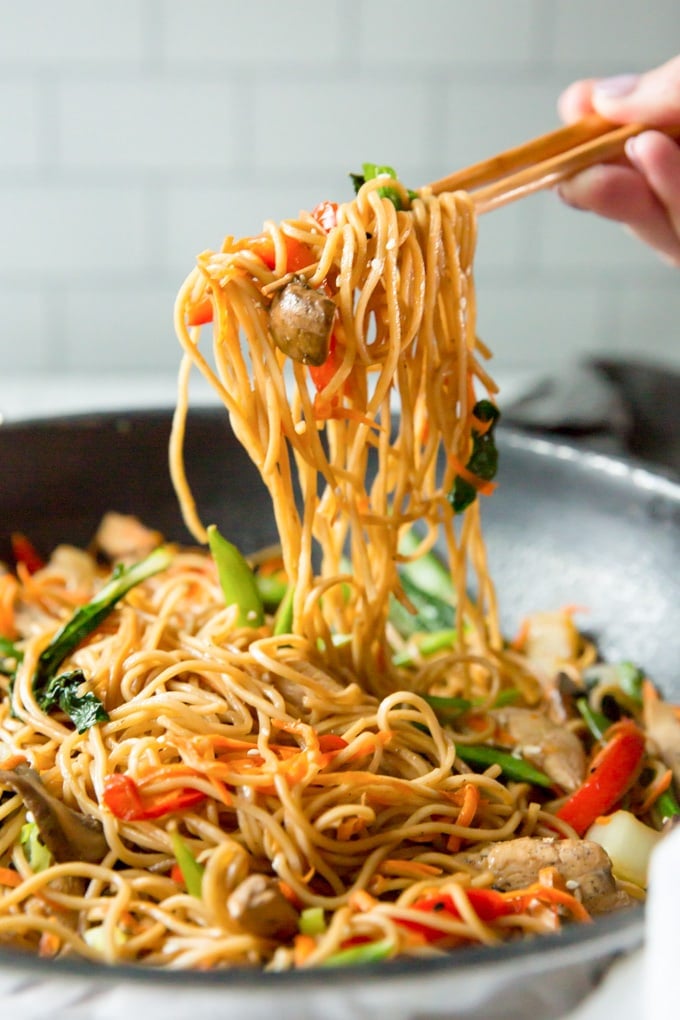
This Chicken Lo Mein is loaded with tender chicken, crisp vegetables, and noodles tossed in a savory homemade sauce. It comes together in about 30 minutes and tastes even better than takeout. If you’re looking for a fast, flavorful dinner the whole family will enjoy, this one delivers.
If you love quick noodle dinners, try this Chicken Chow Mein or these crispy Pan Fried Noodles. For a budget-friendly twist, this Ramen Noodle Stir Fry is another family favorite.
3 Tips That Make or Break This Recipe
A few things that’ll make sure your lo mein turns out perfectly every time.
- Cook noodles just until al dente. They’ll finish cooking when tossed with the hot chicken, veggies, and sauce. Overcooked noodles turn mushy fast and can’t hold up to stir frying.
- Prep everything before you start cooking. Slice the chicken, chop your veggies, and whisk the sauce first. Once the pan is hot, this recipe moves quickly and you won’t have time to stop and prep.
- Don’t overcrowd the pan. Cook the chicken first, then the vegetables, then combine everything at the end. Crowding leads to steaming instead of stir frying, and you’ll miss out on that lightly browned, flavorful finish.
Best Noodles for Lo Mein
Lo mein noodles are Chinese egg noodles, and you can usually find them in the refrigerated section of Asian grocery stores. Fresh noodles have the best chewy texture, but dried lo mein noodles work well too. Just follow the package directions and pull them a minute early.
If you can’t find lo mein noodles, there are several good substitutes. Udon noodles are the closest match for thickness and chew. Ramen noodles (without the seasoning packet) work in a pinch, and even spaghetti or linguine can stand in. The texture will be slightly different, but the sauce and flavors still come through.
Lo mein vs. chow mein. Both start with Chinese egg noodles, but the cooking method is different. Lo mein noodles are boiled, then tossed with sauce and stir fried ingredients. Chow mein noodles are boiled and then pan fried until crispy. Lo mein is saucier and softer, while chow mein has more crunch.
RECIPE WALK-THROUGH
How to Make Chicken Lo Mein
See the recipe card below for full, detailed instructions
This recipe comes together in four simple steps. See the recipe card below for full measurements and detailed instructions.
Step 1: Whisk the Sauce
In a small bowl, whisk together soy sauce, sugar, sesame oil, and ground ginger until the sugar dissolves and there are no lumps. Set it aside so it’s ready to go.
Want more depth? If you find the sauce too mild, add a splash of oyster sauce or an extra half teaspoon of sesame oil. A drizzle of sriracha or a pinch of white pepper adds a nice kick, too.
Step 2: Cook the Noodles
Boil the lo mein noodles according to the package directions, but pull them about a minute early. They should still have a slight firmness since they’ll soften when tossed with everything in the hot pan. Drain well and set aside.
- Salt your water. Noodles absorb a lot of flavor during boiling, so salted water makes a noticeable difference.
Step 3: Stir Fry the Chicken and Vegetables
Heat olive oil in a large skillet or wok over medium-high heat. Season the chicken strips with salt and pepper, then cook until golden and no longer pink inside, about 3 to 4 minutes per side. Transfer to a plate and cover loosely with foil.
Add a bit more oil to the same pan if needed. Stir fry the bell pepper, carrots, snap peas, and mushrooms for about 4 minutes, stirring frequently. You want them crisp-tender with a little color, not soft and limp. Add the bok choy last and cook another 3 to 4 minutes until it wilts down.
- Keep the chicken in the pan with the veggies so it stays warm and soaks up the flavors as they cook together.
Step 4: Toss Everything Together
Add the chicken back to the pan, then toss in the drained noodles. Pour the sauce over everything and use tongs to gently toss and coat until the noodles are evenly coated and the sauce is absorbed.
Top with sesame seeds and serve right away.
Use tongs instead of a spoon. They make it easier to lift and turn the noodles without breaking them, and help distribute the sauce more evenly.
Make It Your Own
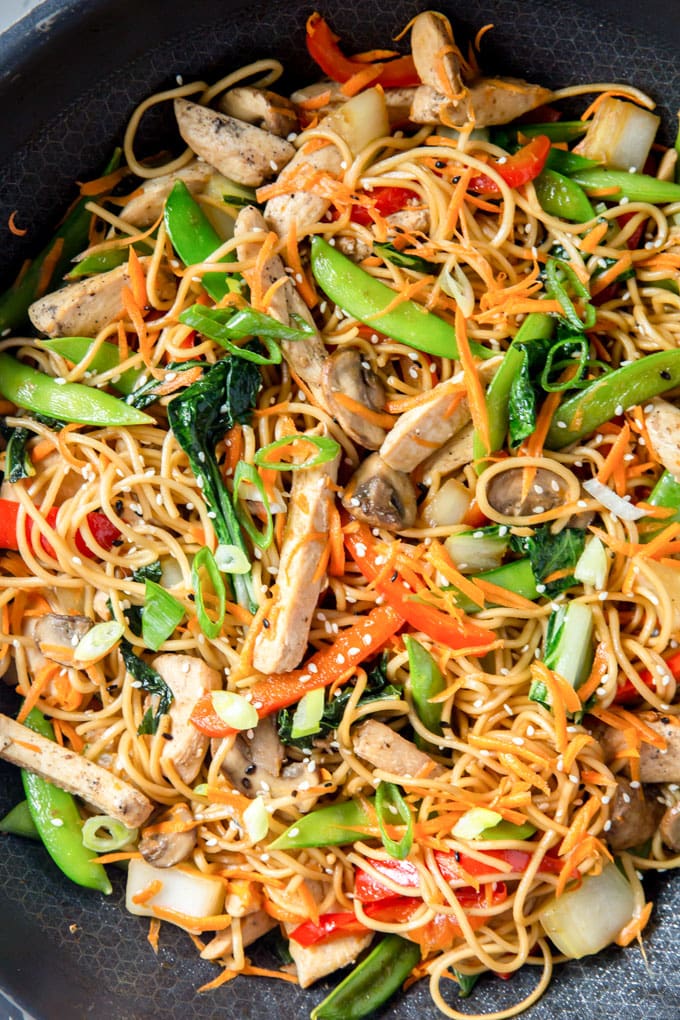
One of the best things about lo mein is how flexible it is. Here are some easy ways to switch things up:
Swap the protein. Try thinly sliced beef, shrimp (just cook for 1 to 2 minutes per side), or ground pork. For a vegetarian version, skip the meat entirely and add extra vegetables or some cubed tofu.
Use whatever veggies you have. Broccoli, cabbage, zucchini, baby corn, and bean sprouts all work well. Harder vegetables like broccoli and carrots should go in first since they take longer to cook. Leafy greens like bok choy or spinach go in at the end.
Boost the flavor. A tablespoon of oyster sauce adds richness and a more takeout-style taste. You can also stir in a splash of rice vinegar for brightness, or top with chili garlic sauce for heat.
Build a Takeout Spread
Chicken lo mein is hearty enough to serve on its own, but it’s also great as part of a homemade takeout night. Pair it with a few of these favorites for a full spread:
Fried rice:
Main dishes:
For appetizers, try Pork Egg Rolls or Air Fryer Cream Cheese Wontons.
Storage Tips
Storage and Reheating
Refrigerator: Store leftover chicken lo mein in an airtight container in the fridge for up to 3 days. The noodles will absorb some of the sauce as they sit, which is normal.
Reheating: Reheat in a skillet over medium heat with a splash of soy sauce or water to loosen the noodles back up. Stovetop works much better than the microwave here since it helps refresh the texture.
Freezing is not recommended. Lo mein noodles tend to get soft and break apart after freezing and reheating. This dish is best enjoyed fresh or within a few days.
Frequently Asked Questions
Can I use spaghetti or another pasta instead of lo mein noodles?
Yes. Spaghetti and linguine are the most common substitutes and work well in a pinch. The texture will be slightly different since Italian pasta doesn’t have the same chewiness as Chinese egg noodles, but the sauce and flavors still come together nicely.
Udon or ramen noodles are closer matches if you have access to them.
How do I make lo mein taste more like takeout?
The biggest difference is usually the sauce. Adding a tablespoon of oyster sauce gives it that rich, savory depth you get from restaurants. More sesame oil helps too. If you like some heat, stir in chili garlic sauce or a drizzle of sriracha at the end. Using high heat when you stir fry the chicken and vegetables also gives you more flavor from browning.
Can I make chicken lo mein ahead of time?
You can prep the components ahead of time. Slice the chicken, chop vegetables, and whisk the sauce up to a day in advance. The noodles are best cooked fresh, though. If you do cook them early, toss with a small drizzle of sesame oil to keep them from sticking. Assemble everything right before serving for the best texture.
More Easy Takeout-Style Recipes
- Chicken Chow Mein
- Teriyaki Chicken Bowl
- Pork Fried Rice
- Slow Cooker Mongolian Beef
- Ramen Noodle Stir Fry
Chicken Lo Mein
Ingredients
Sauce:
- 3 tablespoons soy sauce
- 2 tablespoons sugar
- 1 1/2 teaspoons sesame oil
- 1/2 teaspoon ground ginger
Lo Mein:
- 8 ounces lo mein noodles
- 1 tablespoon olive oil (plus more as needed)
- 1 pound boneless, skinless chicken breasts sliced into thin strips
- 2 garlic cloves minced
- 1 red bell pepper seeded and sliced into thin strips
- 1 cup sugar snap peas
- 1 cup shredded or sliced carrots
- 1 cup sliced mushrooms
- 1 cup bok choy roughly chopped
- Salt and pepper to taste
- Sesame seeds for garnish
Instructions
- Make the sauce. In a small bowl, whisk together soy sauce, sugar, sesame oil, and ground ginger until the sugar dissolves. Set aside.
- Cook the noodles. Bring a large pot of salted water to a boil. Cook lo mein noodles according to package directions, pulling them about a minute early so they're slightly al dente. Drain well and set aside.
- Cook the chicken. While noodles are cooking, heat olive oil in a large skillet or wok over medium-high heat. Season chicken strips with salt and pepper and add to the pan. Cook until golden and no longer pink, about 3 to 4 minutes per side. Transfer to a plate and cover loosely with foil.
- Stir fry the vegetables. Add another tablespoon of olive oil to the skillet if needed. Add garlic, bell pepper, snap peas, carrots, and mushrooms. Cook for about 4 minutes, stirring frequently, until crisp-tender. Add bok choy and continue cooking 3 to 4 minutes until wilted.
- Combine everything. Add the chicken back to the pan and stir until warmed through. Add the drained noodles and pour the sauce over everything. Toss with tongs until the noodles are evenly coated and the sauce is absorbed.
- Serve. Top with sesame seeds and serve immediately.
Notes
- For a richer, more takeout-style flavor, add 1 tablespoon of oyster sauce to the sauce mixture.
- Add a drizzle of sriracha or chili garlic sauce for heat.
- An extra half teaspoon of sesame oil deepens the flavor.
- Pull noodles about a minute early. They finish cooking in the pan with the sauce.
- If you can’t find lo mein noodles, use udon, ramen (discard the seasoning packet), or spaghetti.
- Toss cooked noodles with a small drizzle of sesame oil if not using them right away to prevent sticking.
- Chicken can be prepped ahead of time. Slice and store in the fridge for up to a day before cooking.
- Swap with shrimp (1 to 2 minutes per side), thinly sliced beef, ground pork, or tofu.
- Use whatever vegetables you have on hand. Broccoli, cabbage, zucchini, baby corn, and bean sprouts all work well.
- Add harder veggies first, leafy greens last.
- Store leftovers in an airtight container in the fridge for up to 3 days.
- Reheat in a skillet over medium heat with a splash of soy sauce or water to loosen the noodles.
- Freezing is not recommended as the noodles tend to get soft and break apart.
Nutrition
Nutritional Disclaimer Kristin Maxwell of “Yellow Bliss Road” is not a dietician or nutritionist, and any nutritional information shared is an estimate. For accurate calorie counts and other nutritional values, we recommend running the ingredients through your preferred online nutritional calculator. Calories and other nutritional values can vary depending on which brands were used.


This was very bland. Barely edible.
Flavor levels can be very personal. Sorry it didn’t suit your tastes, but my family loves it.
I tried this tonight. It was delicious.
Thank you
You are so welcome Rose! Thanks for your feedback.
I generally love working with your recipes, and l adore Asian inspired dishes, but l am allergic to all peppers and chilies (with the exception of white and black pepper). I’ve noticed that most of your Asian dishes use either peppers or red pepper flakes. I will sometimes use a fairly heavy garlic/ginger combo to add some heat, or complete my dish with a little wasabi at the end. Are there any other non pepper ways you can recommend to add spice to some of your Asian recipes?
Hi Zoe, Chiles and peppers are the most common way to add heat to a dish. Wasabi is a great idea, and garlic and ginger can help too. Horseradish is another idea.