This post may contain affiliate links. Please read our disclosure policy.


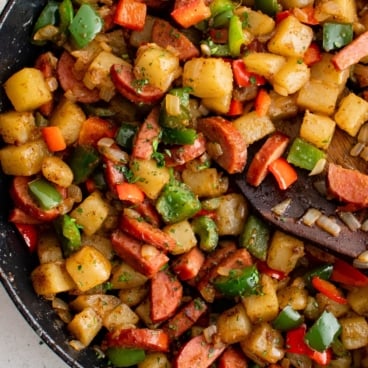
This homemade corned beef hash turns leftover corned beef and fresh potatoes into a golden, savory skillet breakfast that’s simple and so satisfying. Toss everything in a hot pan with butter and seasonings, give it time to develop those deep, flavorful edges, and you’ve got a breakfast worth waking up for. It’s the perfect way to use up leftover corned beef from your Corned Beef and Cabbage dinner.
If you love hearty skillet breakfasts, try our Breakfast Hash with sausage and eggs or this Sausage and Potato Breakfast Hash for another easy option.

3 Things That Really Matter in Corned Beef Hash
- Don’t stir too often. Let the hash sit in the pan long enough to develop golden, browned edges before you flip or stir. Stirring too frequently is the most common reason hash turns out soft instead of getting that satisfying color.
- Dice your potatoes small and even. Cut potatoes into ¼” to ½” pieces and keep them uniform so they cook at the same rate. Cut the bell pepper the same size or slightly larger so everything finishes together.
- Use butter and oil together. The combination gives you the rich flavor of butter with the higher heat tolerance of oil, which helps everything brown without burning.
RECIPE WALK-THROUGH
How To Make Corned Beef Hash
See the recipe card below for full, detailed instructions
Step 1: Cook the Potatoes and Peppers
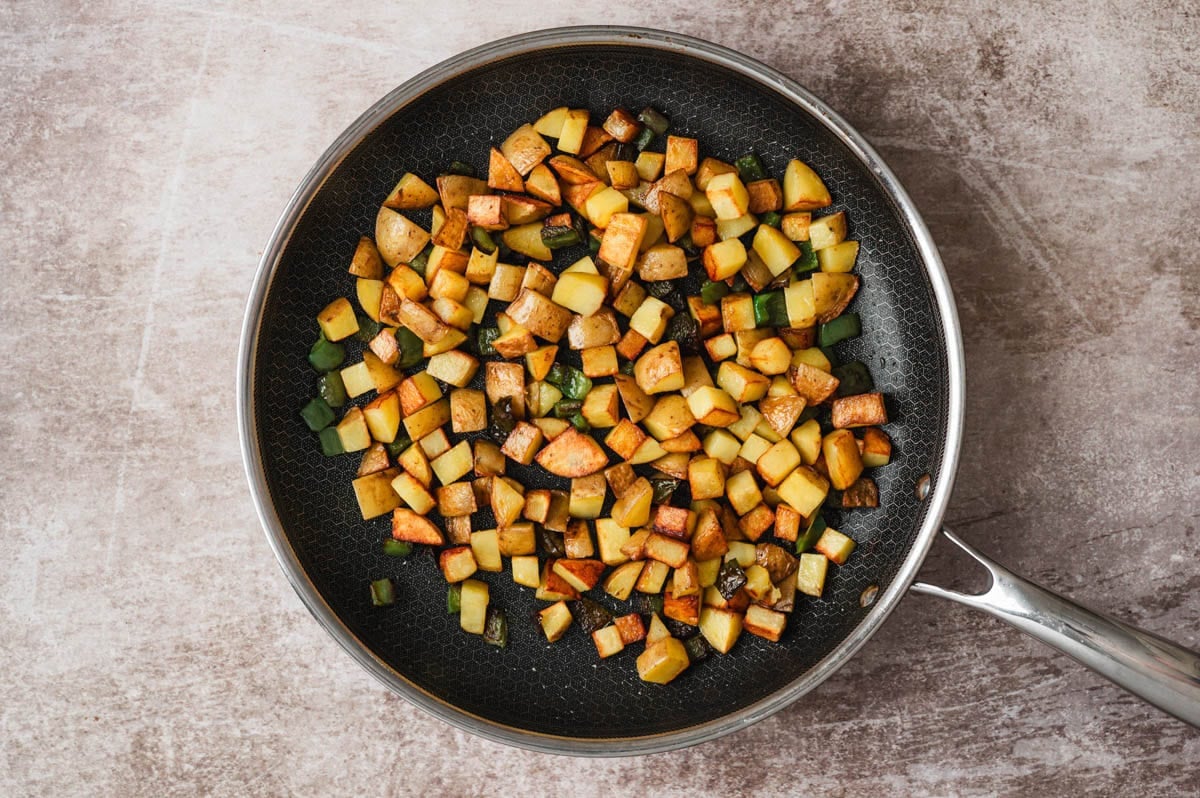
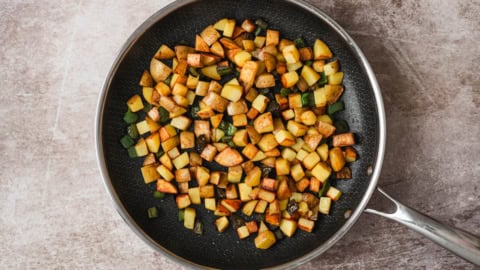
In a large 12-inch non-stick skillet, melt the butter with the oil over medium heat. Once the butter is bubbly, add the diced potatoes and green bell pepper. Spread them into an even layer.
Cook for about 15 minutes, stirring occasionally so the potatoes can develop color. You’re looking for lightly browned edges and potatoes that are beginning to soften. If they’re browning too fast, reduce the heat slightly.
- Pro tip: The potatoes take the longest and need undisturbed time in the pan to build a golden crust. Stirring occasionally, not constantly, allows browning to occur.
Step 2: Add Corned Beef, Onion, and Seasonings
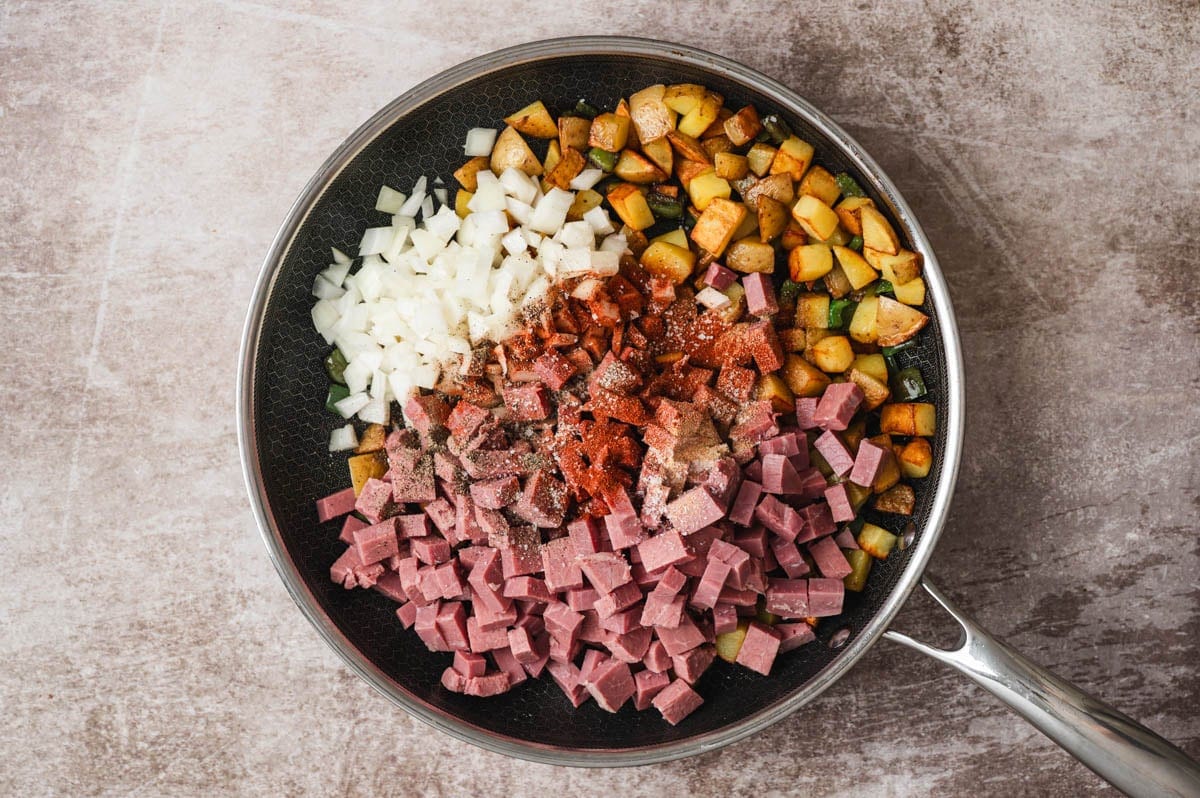
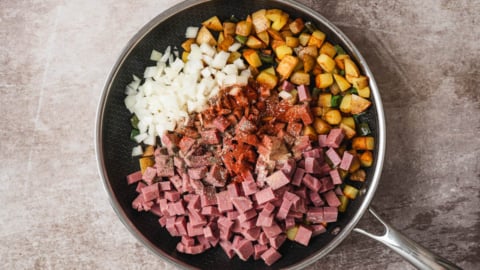
Add the diced onion, black pepper, salt, paprika, garlic powder, and cooked corned beef (cubed or shredded).
Stir to combine, then continue cooking for another 10-15 minutes, stirring often. The goal here is deep golden brown potatoes and lightly crisped edges on the corned beef. The onions and peppers should soften and take on color as well.
- Cubed vs. shredded corned beef. Cubed gives you more defined, meaty bites throughout, while shredded creates a more integrated, diner-style hash where the meat blends into every forkful. Either way works great.
Step 3: Season and Serve
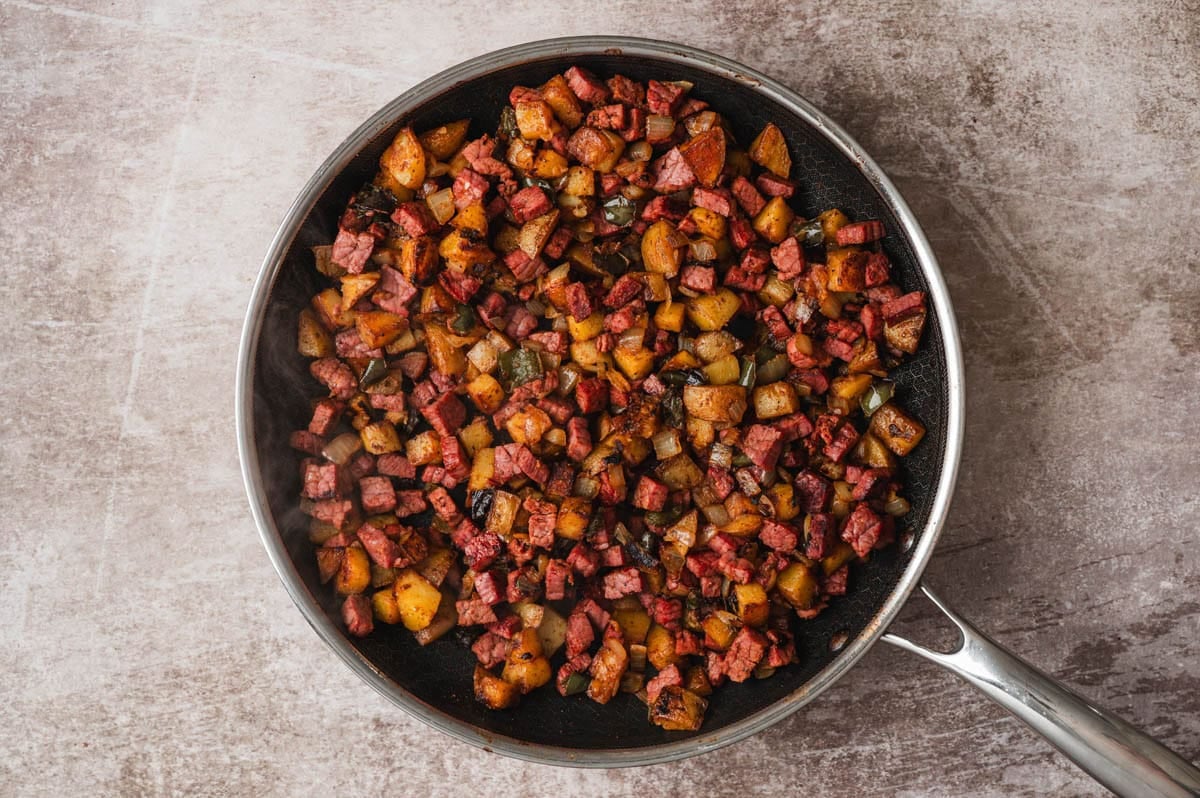
Taste and adjust salt and pepper as needed. Stir in fresh chopped parsley if using, and serve immediately while hot and crisp.
Serve with a fried or poached egg on top for the classic diner-style presentation. A runny yolk adds richness and turns this into a complete meal.
Variations
- Use leftover corned beef and cabbage – A perfect way to repurpose St. Patrick’s Day leftovers.
- Add eggs on top – Fry or poach eggs and place them over the hash for a classic diner-style finish.
- Swap the peppers – Red bell peppers add a little sweetness and color.
- Make it spicy – Add a pinch of cayenne or a few dashes of hot sauce.
- Use shredded corned beef – Creates more crispy edges throughout the hash.
Storage Tips
Storage and Reheating
- Storage: Leftovers can be refrigerated in an airtight container for up to 3 days.
- Reheating: Reheat in a skillet on low heat for 5-7 minutes until warmed through. A skillet is the best method since it helps restore some of the texture. The microwave works in a pinch but the hash will be softer.
- Make ahead: You can prep and dice everything ahead, but for best texture, cook it fresh. Hash is all about those crispy edges.
- Freezing is not recommended. The potatoes can become mushy when thawed and reheated.

Frequently Asked Questions
How do I get corned beef hash with a nice golden crust?
Butter, oil, and a hot skillet are key here. Spread the hash in the pan and resist stirring too often. Let it sit for several minutes to build color before flipping. The less you move it around, the better the browning. If the pan is too crowded, the hash will steam instead of getting that golden edge.
What’s the difference between homemade and canned corned beef hash?
Homemade uses real chunks of corned beef and fresh diced potatoes, so the texture is chunkier and more flavorful. Canned hash is finely ground and more uniform. This recipe gives you that classic corned beef hash flavor with much better texture and fresh ingredients.
Can I use deli corned beef instead of leftover?
Yes, ask the deli counter for thick slices (about ½” thick), then cube at home. Boar’s Head or similar quality deli corned beef works well. The key is getting it thick enough that it holds up in the skillet rather than falling apart. Thin sandwich slices won’t give you the right texture.
Can I add eggs to corned beef hash?
Yes! The best way is to top the finished hash with a fried or poached egg rather than mixing eggs in. For a fun presentation, make small wells in the hash, crack eggs into them, cover the pan, and cook until the whites are set but yolks are still runny. A runny yolk adds richness and turns the hash into a complete breakfast.
More Easy Breakfast Recipes
- Breakfast Hash
- Hash Brown Waffles
- Broccoli Quiche
- Sausage and Potato Breakfast Hash
- Egg & Sausage Breakfast Muffins

Corned Beef Hash

Ingredients
- 2 tablespoons butter
- 1 tablespoon light olive oil or vegetable oil
- 2 cups yellow or red potatoes ¼” to ½” diced
- 1 cup green bell pepper ½” diced
- 1 cup yellow onion ½” diced
- 1 pound cooked corned beef cubed ½” or shredded
- 1 teaspoon kosher salt
- 1/2 teaspoon black pepper
- 1/2 teaspoon paprika
- 1 teaspoon garlic powder
- Fresh chopped parsley for garnish if desired optional
Instructions
- Melt the butter with the oil in a large 12-inch nonstick skillet over medium heat. Once the butter is bubbly, add the diced potatoes and green bell pepper.
- Cook for about 15 minutes, stirring occasionally, until potatoes begin to soften and lightly brown. Reduce heat to low if needed to avoid over-browning.

- Add the onion, corned beef, salt, pepper, paprika, and garlic powder. Stir to combine.
- Continue cooking for another 10-15 minutes, stirring often, until potatoes are deeply golden brown and cooked through. The corned beef, onion, and bell pepper should all have deep color.
- Taste and season with more salt and pepper if needed. Stir in fresh parsley and serve immediately.


Notes
- Best corned beef to use: Leftover corned beef from a home-cooked dinner works best. No leftovers? Ask your deli counter for thick-sliced corned beef (about ½” thick) and cube it at home. Boar’s Head or similar quality works well.
- Cubed or shredded? Cubed corned beef gives you defined, meaty bites. Shredded creates a more blended, diner-style texture. Both work great.
- Potato shortcut: Use leftover cooked potatoes or frozen diced potatoes to cut the cook time roughly in half. Just make sure to still let them brown in the pan.
- Dice size matters. Smaller, uniform potato pieces cook faster and more evenly. Keep the bell pepper the same size or slightly larger so everything finishes together.
- Don’t stir too much. Let the hash sit in the pan to develop golden, browned edges. Too much stirring prevents browning.
- Butter + oil combo. The butter adds flavor while the oil helps prevent burning at higher heat.
- Serving suggestion: Top with a fried or poached egg for the classic diner presentation. A runny yolk adds richness and makes this a complete meal.
- Storage: Refrigerate leftovers in an airtight container for up to 3 days.
- Reheat in a skillet over low heat for 5-7 minutes for the best texture. Microwave works but the hash will be softer.
- Not recommended for freezing. The potatoes can become mushy when thawed.
- Season to taste. Corned beef can vary in saltiness, so taste the hash before adding extra salt at the end.
Nutrition
Nutritional Disclaimer Kristin Maxwell of “Yellow Bliss Road” is not a dietician or nutritionist, and any nutritional information shared is an estimate. For accurate calorie counts and other nutritional values, we recommend running the ingredients through your preferred online nutritional calculator. Calories and other nutritional values can vary depending on which brands were used.