This post may contain affiliate links. Please read our disclosure policy.
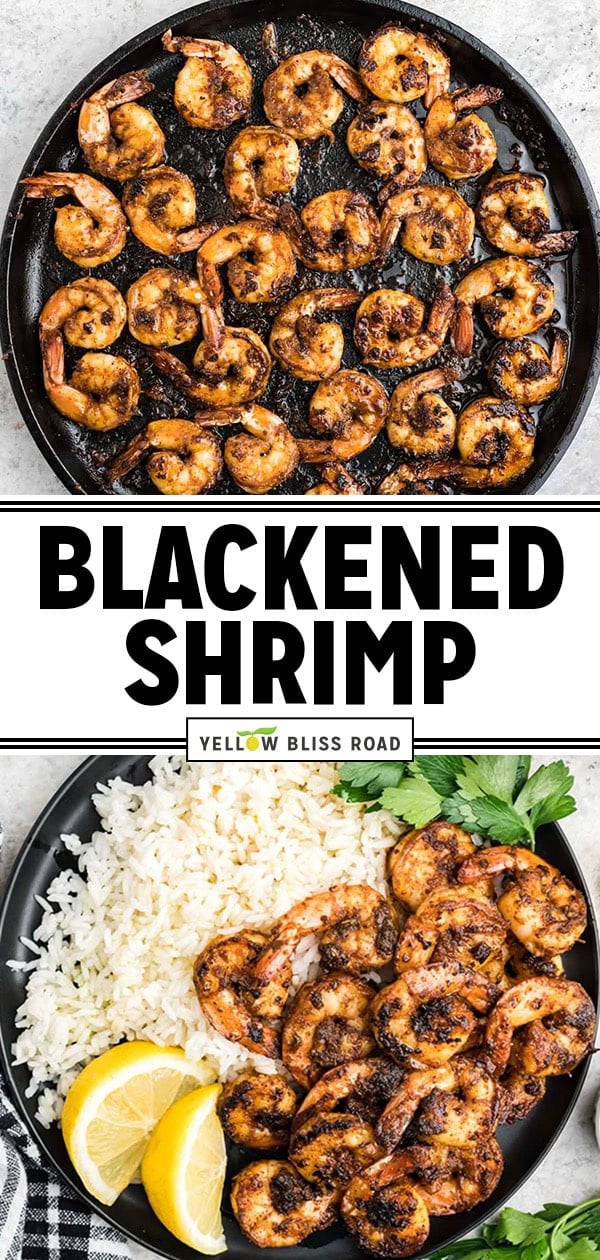
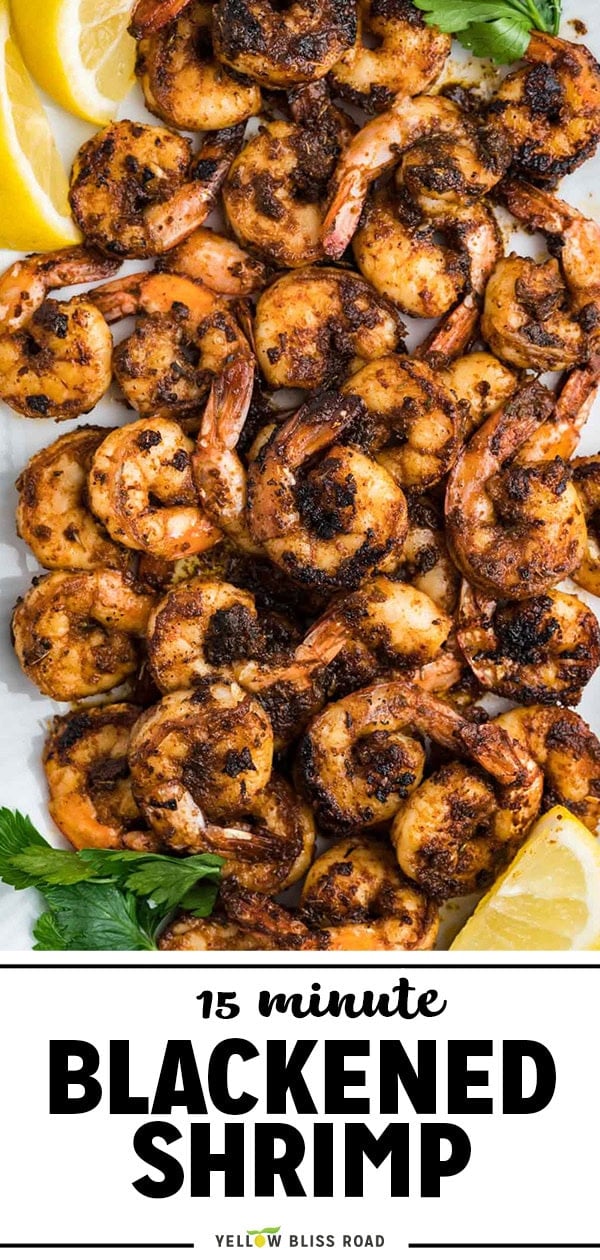
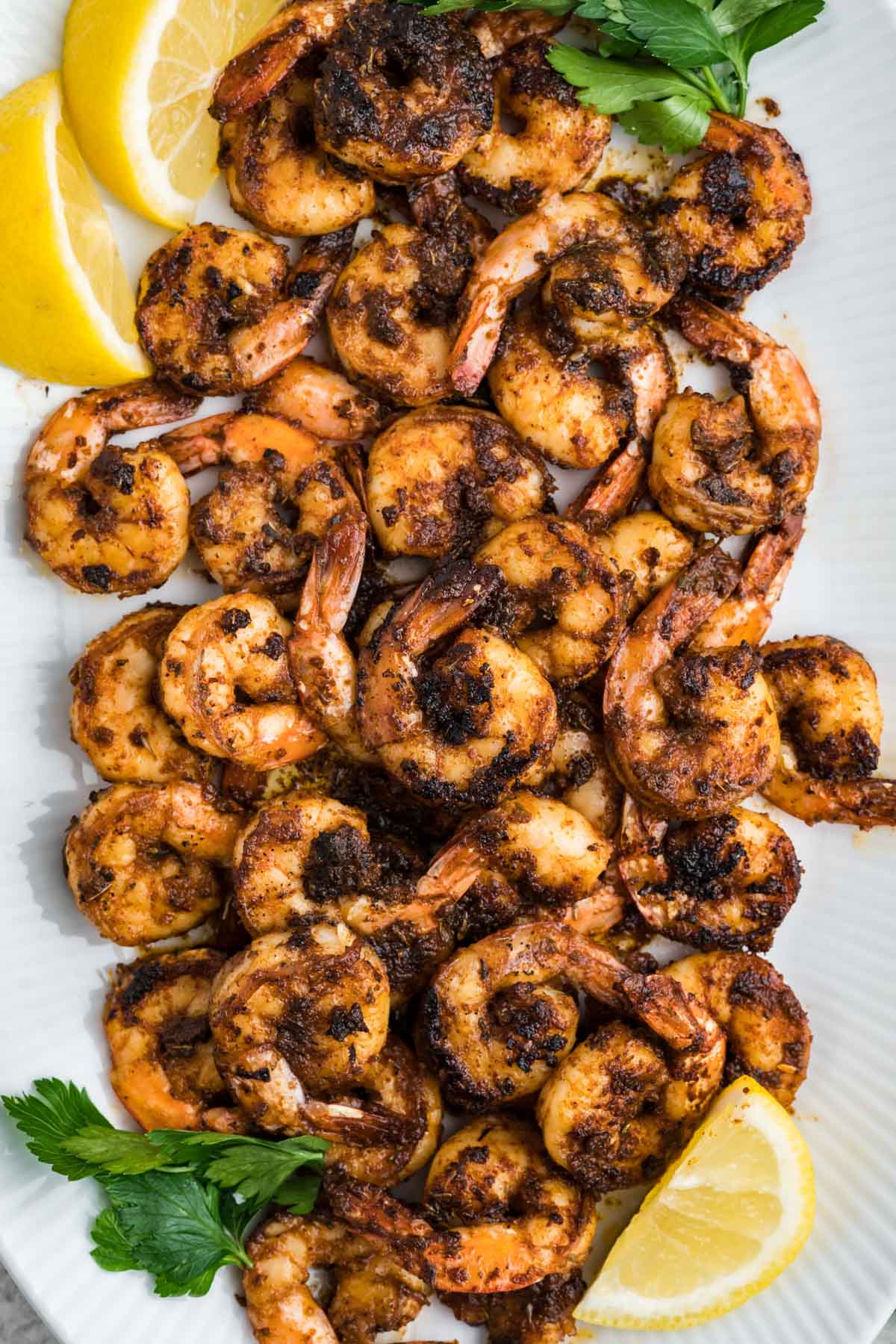
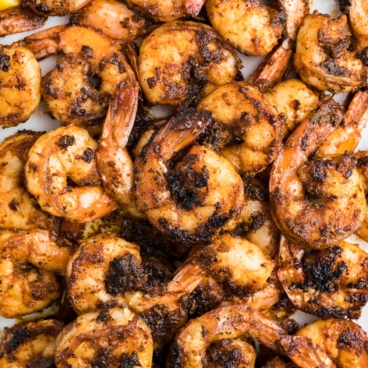
Blackened Shrimp comes together in about 15 minutes with a bold Cajun spice crust and a pantry blend you probably already have. The shrimp go dark and smoky on the outside while staying tender in the middle. Fast enough for a Tuesday, good enough for company.
More easy shrimp dinners: Spicy Garlic Shrimp | Pan Seared Shrimp | Sheet Pan Lemon Pepper Shrimp
Before You Get Started
Blackened shrimp cook so fast that there is almost no room to correct course once they hit the pan. These three things are the difference between a smoky crust and a rubbery dinner.
- Pat the shrimp completely dry. Wet shrimp steam instead of searing, and you will never get that dark crust. Frozen shrimp need an extra pass with paper towels.
- Use a high smoke point oil. The pan needs to hit 375°F to 400°F, and extra virgin olive oil starts smoking right around there. Avocado oil handles it easily.
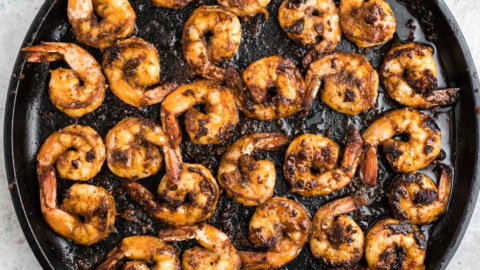
- Pull them the second they turn opaque. Shrimp go from tender to rubbery in under a minute. Look for a loose C shape, not a tight O.
RECIPE WALK-THROUGH
How to Make Blackened Shrimp
See the recipe card below for full, detailed instructions
The whole thing happens in one skillet in about 10 minutes. Get everything measured and within reach before you start, because once that pan is hot there is no time to go hunting for the tongs.
1. Mix the blackening seasoning
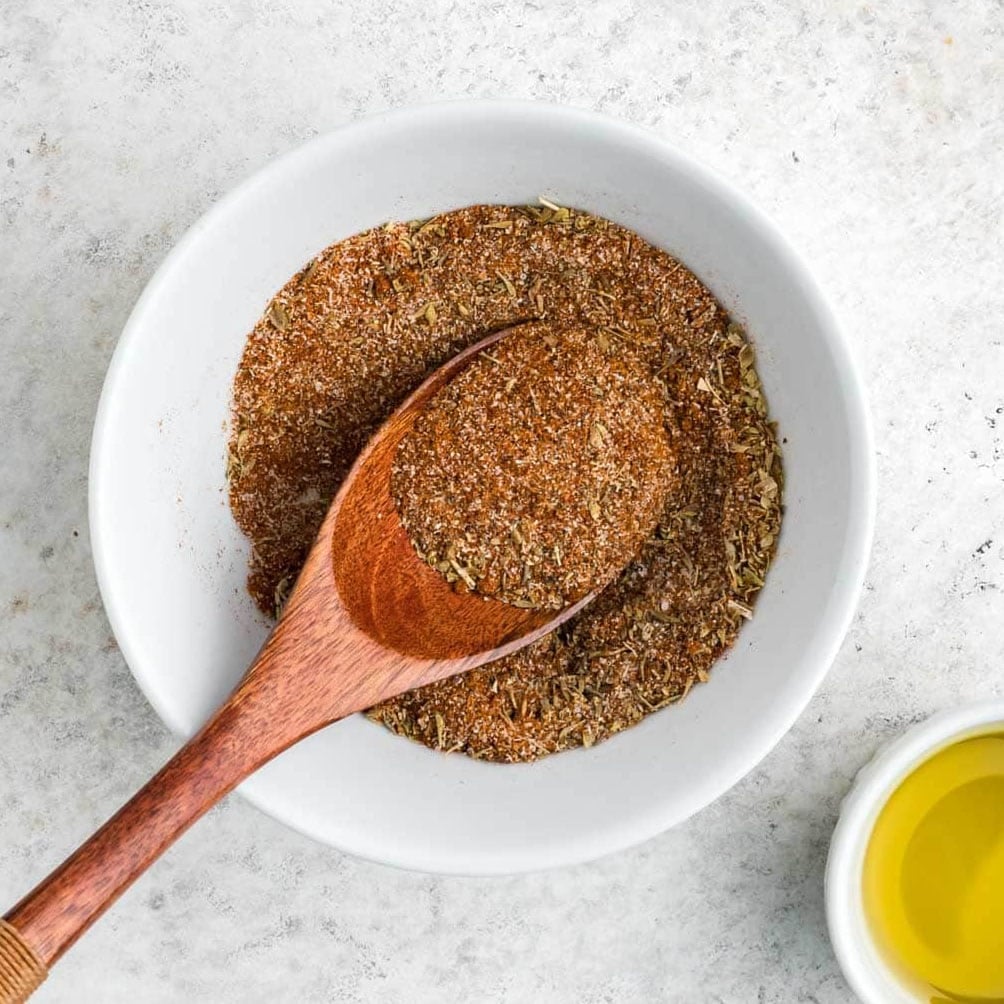
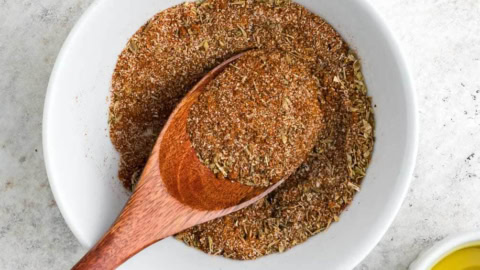
Stir the paprika, garlic powder, onion powder, cayenne, thyme, oregano, salt, and black pepper together in a small bowl.
Dial the heat to your family’s taste. Cayenne is the only source of heat here. Cut it to ¼ teaspoon for younger eaters, or double it if everyone at your table likes it spicy.
- Very close to a Cajun seasoning: Readers ask about the difference all the time. Blackening describes the technique more than the spices. You press the seasoning onto the food and sear it in a screaming hot pan until the crust darkens. Cajun seasoning is the all-purpose blend you shake onto anything.
2. Dry and coat the shrimp
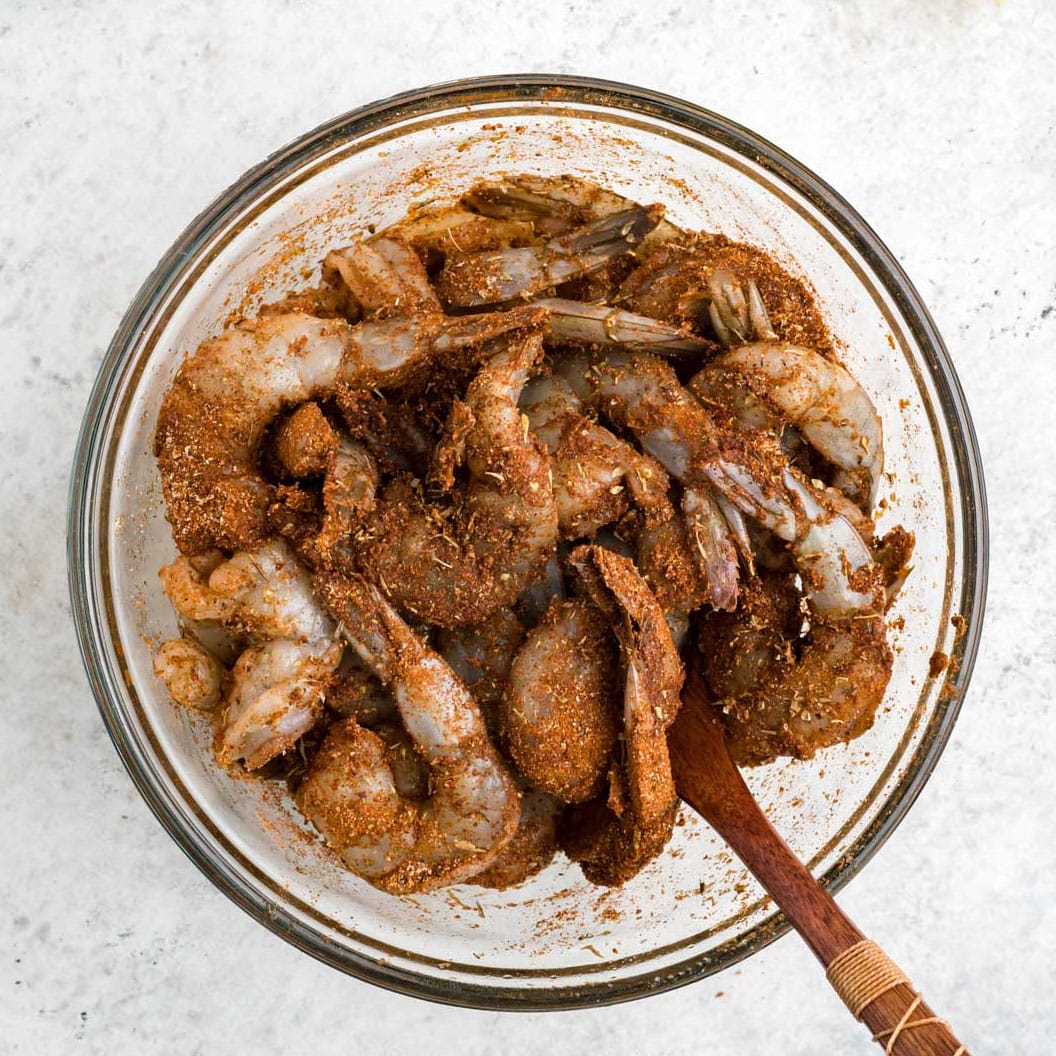
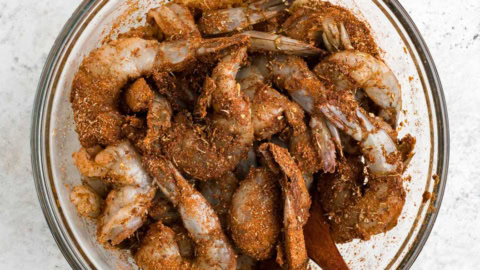
Pat the shrimp very dry with paper towels, then toss them with the seasoning until every piece is evenly coated. Use your hands and really press the spices on. That contact is what builds the crust.
- Shrimp Size: Medium shrimp work, but large or jumbo give you more margin for error since they take a few extra seconds to overcook.
3. Get the skillet ripping hot
Heat a cast iron skillet over medium-high until it reaches 375°F to 400°F.
If you do not have a thermometer, flick a few drops of water onto the surface. When they sizzle and vanish instantly, you are ready.
Add the oil and let it shimmer.
Cast iron holds heat best and gives the deepest crust, but a heavy nonstick pan works too. The pan being genuinely hot matters more than which pan you use.
4. Sear without touching them
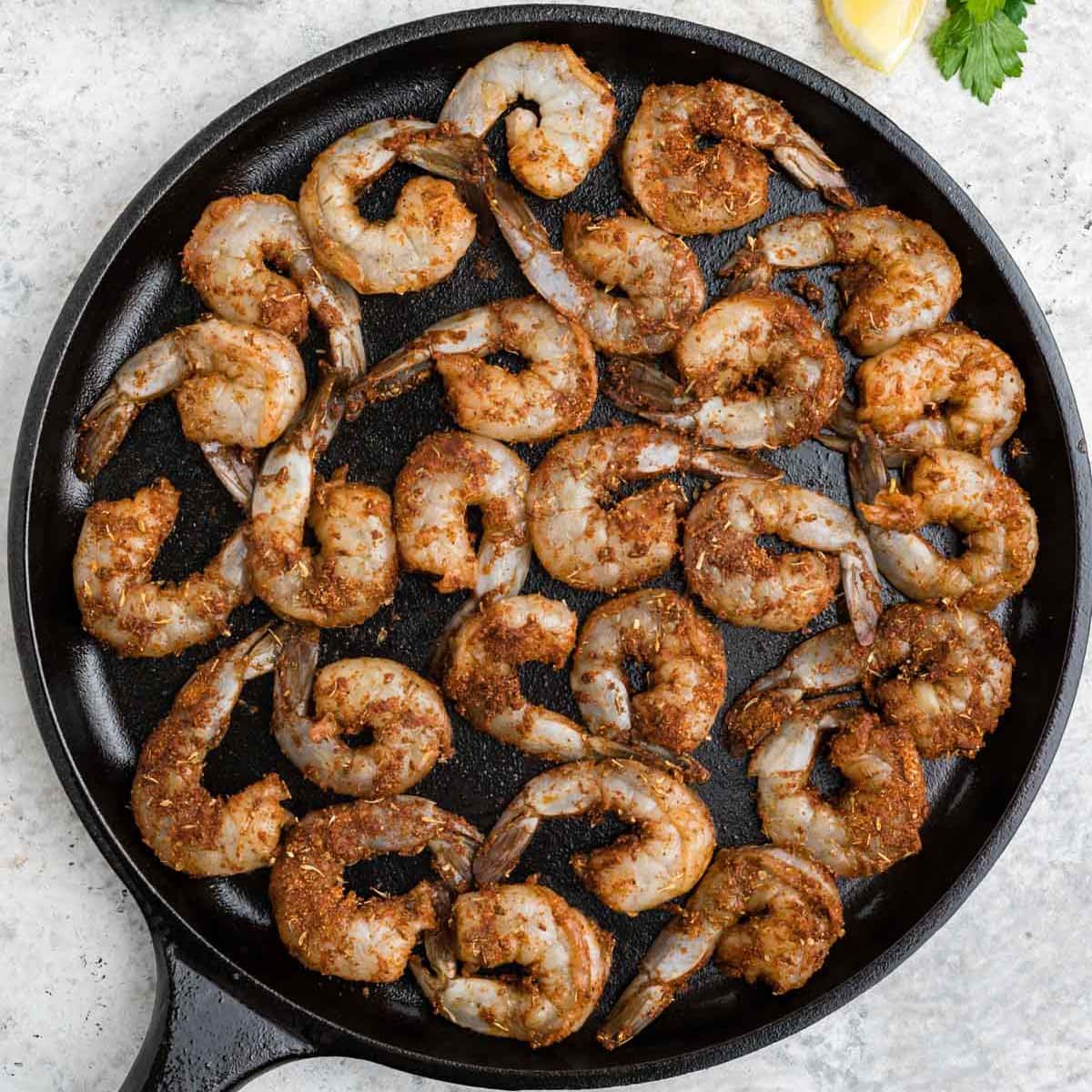
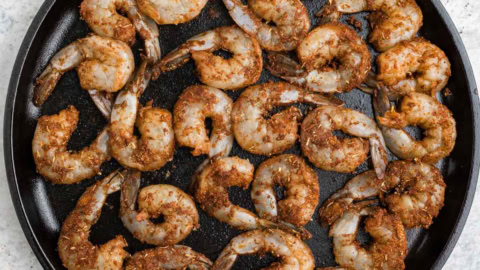
Add the shrimp in a single layer with a little space between each one, then leave them alone for 2 full minutes.
Cook in batches if you need to. Crowding the pan drops the temperature and the shrimp steam instead of searing. Two quick batches beat one sad one.
If you want to peek, lift just one shrimp with a spatula and check for a dark, spotty crust before you commit to flipping the whole pan.
5. Flip once and finish
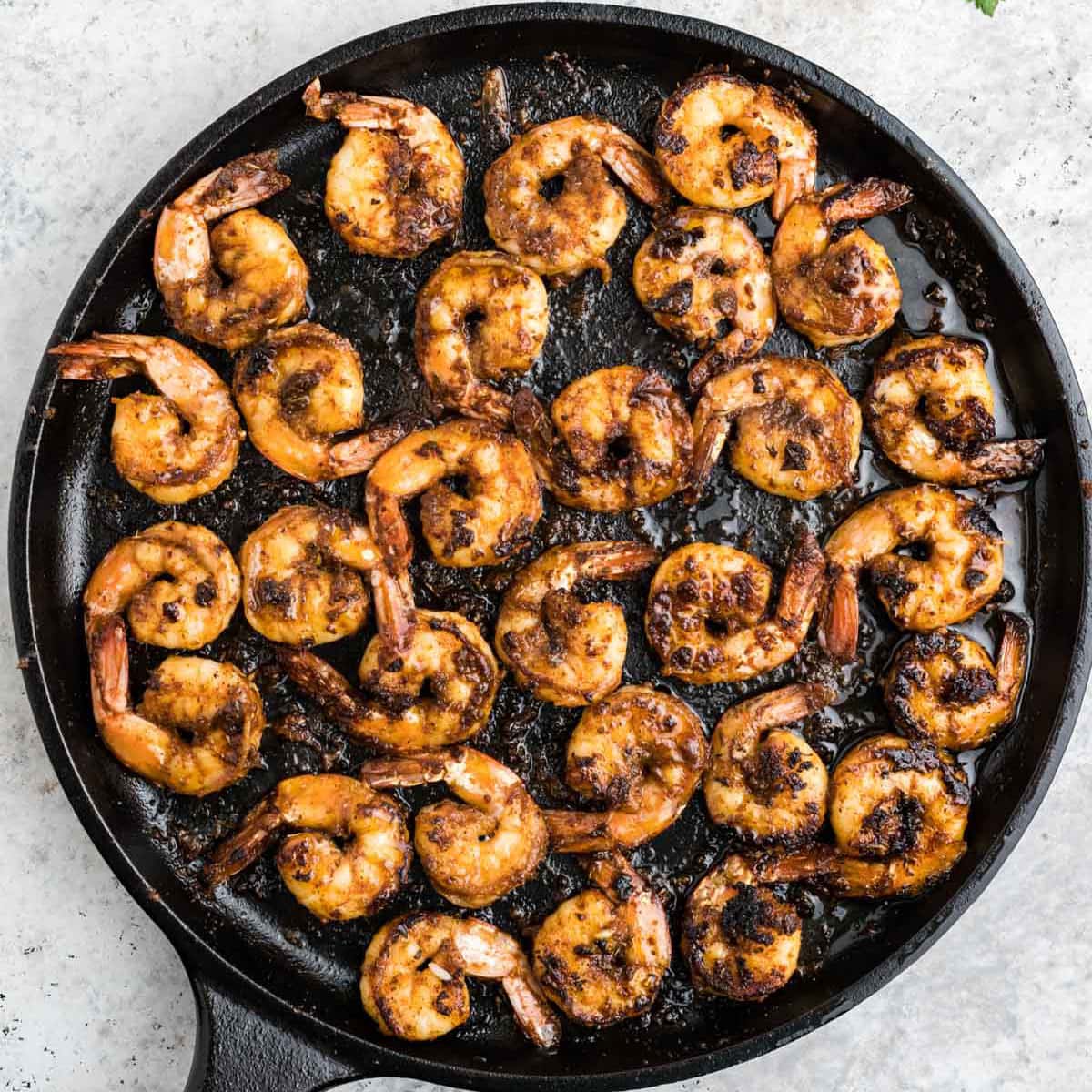
Flip the shrimp and cook 2 more minutes, until they are opaque all the way through and curled into a loose C.
Get them out of the pan immediately, because they keep cooking on a hot surface.
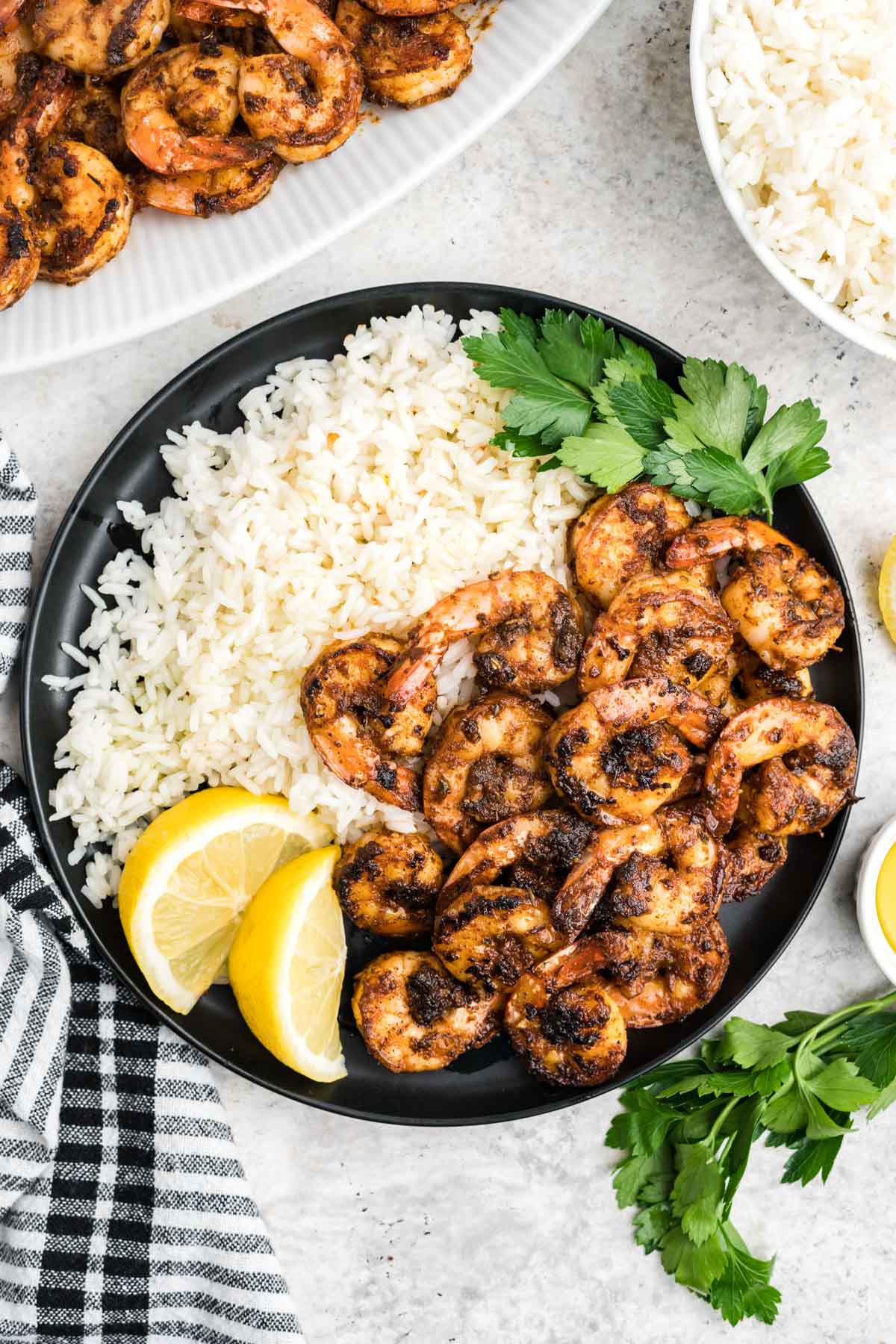
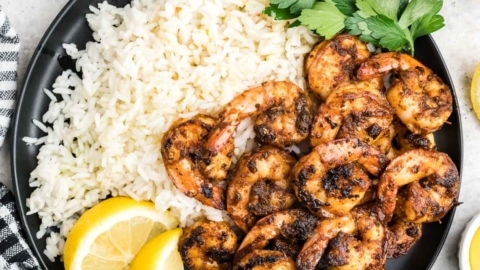
Squeeze fresh lemon over the top and scatter on chopped parsley. The acid cuts through the spice and wakes everything up.
What to Serve With Blackened Shrimp
A pound of blackened shrimp disappears fast around here, so I almost always serve them over something. Rice is the easy answer, with something crisp and cool on the side to balance out the spice.
- One Pot Dirty Rice — the most natural pairing, since it leans into the same Cajun flavors
- Seasoned Rice with Herbs and Garlic — a simpler base that lets the shrimp be the star
- Garlic Green Beans — cooks in the same amount of time as the shrimp
- Fresh Corn Salad with Tomatoes — the one I reach for all summer
- Side Salad — for something crisp and cooling next to the heat
Serving them as an appetizer instead? Put out my Homemade Remoulade Sauce, the creamy Louisiana classic that tames the cayenne, or my Easy Cocktail Sauce if you want something sharper.
Feeding a crowd outside? My Cookout Side Dishes collection has the salads, slaws, and potato sides that fill out a plate when the protein cooks in ten minutes.
Storage Tips
Storage and Reheating
Refrigerator: Cool completely, then store leftovers in an airtight container for up to 3 days.
Freezer: Cool completely and freeze in a zip-top bag for up to 3 months.
Reheating: Thaw frozen shrimp completely first. Skip the microwave, which will turn them rubbery fast. Melt a little butter in a skillet over medium and warm the shrimp for about 30 seconds per side, just until heated through.
Leftover ideas: Honestly, leftover blackened shrimp are better cold than reheated. Toss them straight into a salad, fold them into a rice bowl, or warm a few tortillas and turn them into shrimp tacos for lunch.
Frequently Asked Questions
Why did my blackened shrimp turn out rubbery?
They spent too long in the pan, and it usually happens in the last 30 seconds. Shrimp are done the moment they turn opaque and curl into a loose C. Once they tighten into a closed O shape, they have gone too far.
Get them out of the skillet the second they look right, because a hot pan keeps cooking them even off the heat. If your shrimp were small, try large or jumbo next time. Bigger shrimp give you a wider window before they overcook.
What can I substitute for the blackening seasoning?
A store-bought Cajun or Creole seasoning is the closest swap, and you can use it one for one. Old Bay works too, though it is milder and leans more toward celery salt than heat.
If you are missing just one or two spices from the blend, smoked paprika can stand in for regular paprika, and a pinch of red pepper flakes covers for cayenne. Just taste your substitute first, since most premixed blends are much saltier than this homemade version.
What is the best oil for blackening shrimp?
Something with a high smoke point, which is why I call for avocado oil. The pan needs to be at 375°F to 400°F, and extra virgin olive oil starts smoking in that range, which can leave a bitter taste and fill your kitchen with haze. Canola, grapeseed, or refined light olive oil all work.
You can finish with a little butter for flavor once the shrimp come off the heat, but do not start with it, since butter burns long before the pan gets hot enough.
Can I use shrimp that are already cooked?
You can, but manage your expectations. Precooked shrimp are already fully cooked, so any time in a hot skillet is overcooking. Pat them very dry, toss them in the seasoning, and give them 30 to 45 seconds per side in the hot pan, just enough to toast the spices and warm them through.
You will get the flavor, but not the same crust. Raw shrimp are worth the extra two minutes here.
More Cajun Favorites
- Cajun Shrimp Pasta
- Southern Style Shrimp and Grits
- Shrimp Po Boy Sandwich
- One Pot Cajun Sausage and Rice
- Cajun Grilled Pork Chops
Blackened Shrimp

Ingredients
- 1 pound raw shrimp thawed, peeled and deveined, tails on or off
- 1 tablespoon paprika
- 1 teaspoon garlic powder
- 1 teaspoon onion powder
- 1/2 teaspoon cayenne pepper
- 1/2 teaspoon dried thyme
- 1/2 teaspoon dried oregano
- 1/4 teaspoon salt
- 1/4 teaspoon ground black pepper
- 3 tablespoons avocado oil or another high smoke point oil
- Optional: fresh lemon and parsley
Instructions
- Pat the shrimp completely dry with paper towels and set aside. Dry shrimp are essential for a good crust.
- In a small bowl, stir together the paprika, garlic powder, onion powder, cayenne, thyme, oregano, salt, and black pepper.

- Toss the shrimp in the seasoning until every piece is fully coated, pressing the spices on with your hands.
- Heat a cast iron skillet over medium-high to 375°F to 400°F. You will know it is ready when a few drops of water sizzle and evaporate on contact. Add the oil and heat until it shimmers.
- Add the shrimp in a single layer with space between each one. Cook undisturbed for 2 minutes. Work in batches if needed so the pan is not crowded.
- Flip once and cook 2 more minutes, until the shrimp are opaque throughout and curled into a loose C shape. If using a thermometer, they are done at 120°F to 125°F.
- Remove from the pan immediately and serve with fresh lemon and chopped parsley if desired.
Notes
- Dry shrimp are non-negotiable. Any surface moisture steams the shrimp instead of searing them and you will not get a crust. Frozen shrimp need an extra pass with paper towels after thawing.
- Oil choice matters at this heat: Extra virgin olive oil starts smoking around 375°F, so avocado, canola, or grapeseed oil is the better pick. Finish with butter off the heat if you want the flavor.
- Doneness cue: Shrimp are ready when they turn opaque and curl into a loose C. A tight O shape means they are overcooked. Carryover heat will finish them after they leave the pan.
- Do not crowd the pan. Cook in two batches if you need to. A crowded skillet drops in temperature and the shrimp steam.
- Adjust the heat level: Cayenne is the only spicy ingredient. Use ¼ teaspoon for a milder version or 1 teaspoon for real heat.
- Pan options: Cast iron gives the deepest crust, but a heavy nonstick skillet works as long as it is fully preheated.
- Storage: Refrigerate leftovers in an airtight container up to 3 days or freeze up to 3 months. Reheat gently in a buttered skillet for about 30 seconds per side. Do not microwave.
Nutrition
Nutritional Disclaimer Kristin Maxwell of “Yellow Bliss Road” is not a dietician or nutritionist, and any nutritional information shared is an estimate. For accurate calorie counts and other nutritional values, we recommend running the ingredients through your preferred online nutritional calculator. Calories and other nutritional values can vary depending on which brands were used.