This post may contain affiliate links. Please read our disclosure policy.
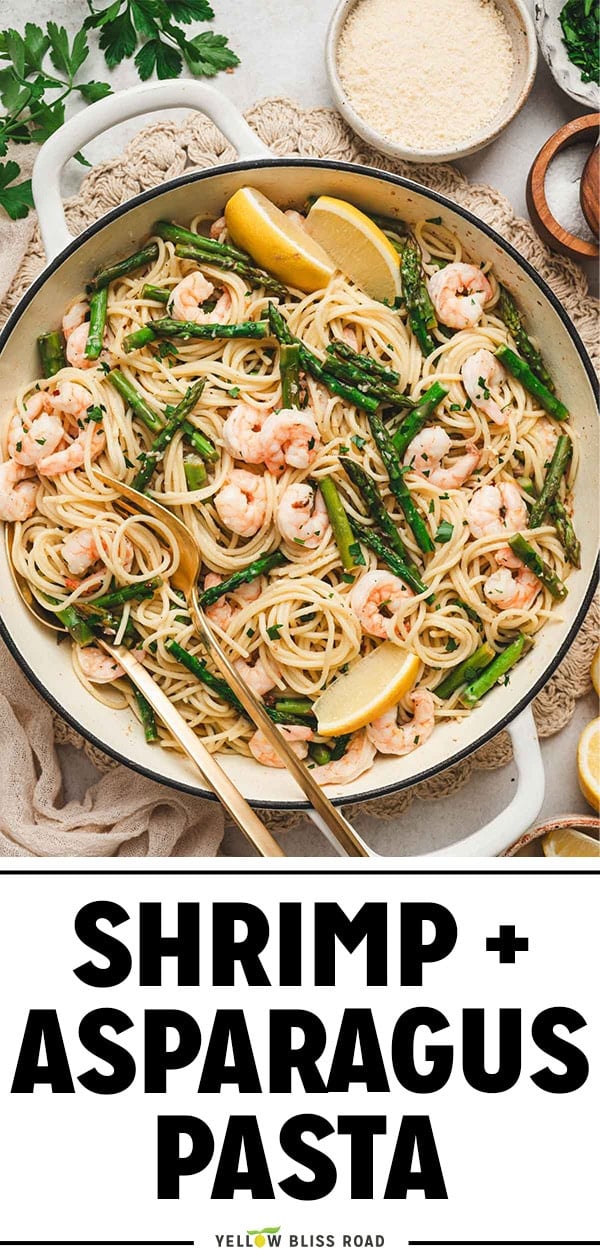
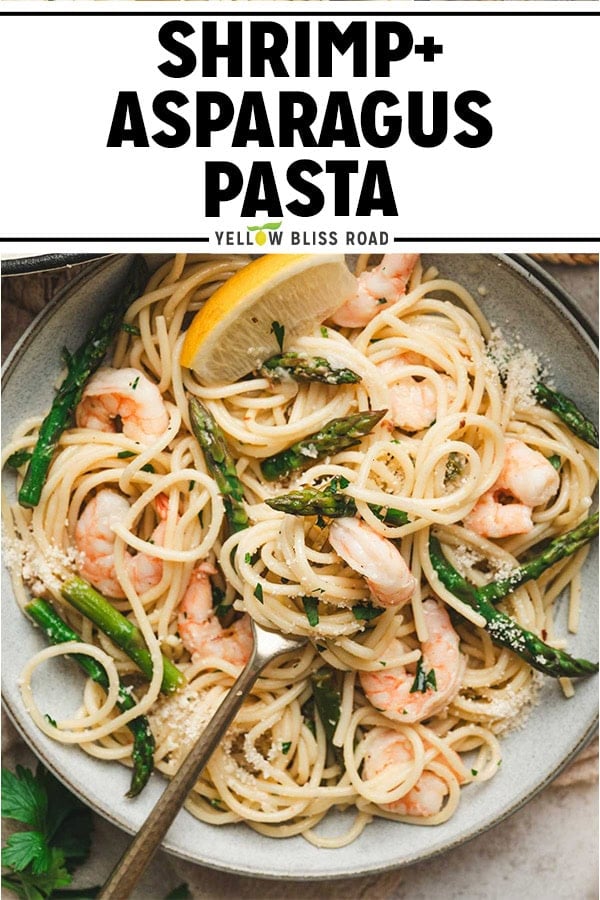
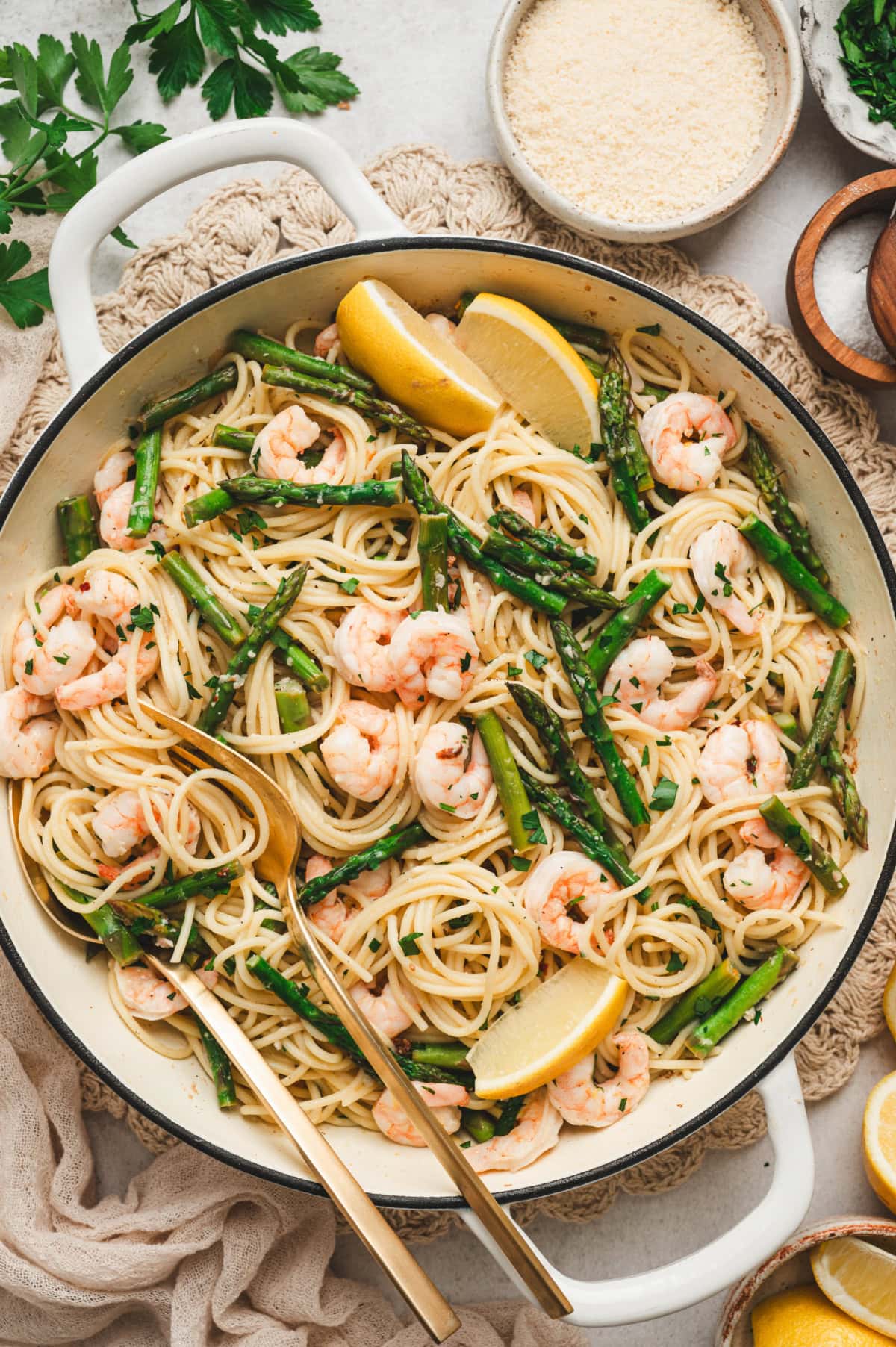
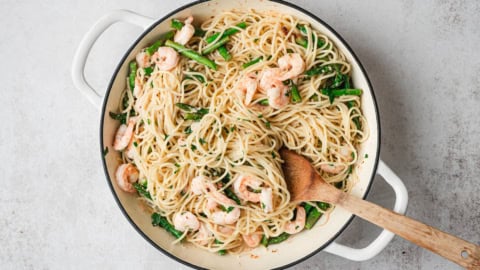
This Shrimp and Asparagus Pasta is bright, buttery, and ready in about 25 minutes. Tender shrimp and crisp asparagus are tossed with spaghetti in a simple lemon and white wine pan sauce that tastes light but feels special. It’s an easy weeknight dinner with just enough polish to serve to company.
If shrimp pasta is on regular rotation in your kitchen, you’ll also love my Shrimp Alfredo Pasta, Garlic Tomato & Shrimp Pasta, and Cajun Shrimp Pasta.
5 Things That Really Matter for This Recipe
- Have everything prepped before you start: This dish moves fast once the skillet is hot. Having the shrimp, asparagus, garlic, shallot, lemon, and parsley ready to go makes the cooking process much smoother.
- Don’t overcook the shrimp: Shrimp cook very quickly, usually in just 1 to 2 minutes per side. Pull them from the skillet as soon as they turn pink and opaque so they stay tender.
- Cook the asparagus just until tender-crisp: You want it bright green, with a little bite left. Overcooked asparagus can turn soft and dull, robbing the dish of its fresh feel.
- Save a cup of the pasta water: It’s what helps turn the butter, lemon, wine, and Parmesan into a silky sauce. It is the key to getting the pasta lightly coated instead of dry.
- Use a dry white wine: Chardonnay or Sauvignon Blanc adds brightness and depth without making the sauce heavy. Avoid sweet wines or cooking wine for the best flavor.
RECIPE WALK-THROUGH
How To Make Shrimp and Asparagus Pasta
See the recipe card below for full, detailed instructions
I love recipes like this because they feel restaurant-worthy without being too difficult to pull off. I make this with ingredients I usually have on hand, and everything cooks so quickly and without a bunch of prep, so it is approachable even after a long workday.
Step 1: Cook the pasta
Bring a large pot of generously salted water to a boil and cook the spaghetti until al dente according to the package directions. Before draining, reserve 1 cup of the pasta water.
- Do not skip the pasta water here. It helps bring the whole sauce together at the end and gives the pasta that glossy, lightly coated finish.
Step 2: Prep and season the shrimp
While the pasta cooks, pat the shrimp dry and season them lightly with salt.
- Dry shrimp sear better in the pan and do not release as much water, which helps keep the skillet hot and the flavors concentrated.
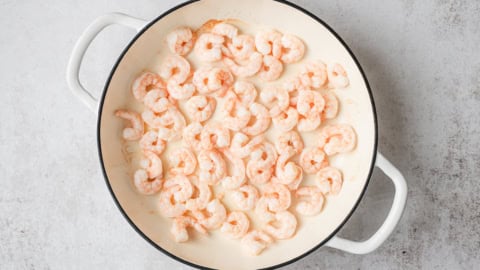
Step 3: Cook the shrimp
Melt 1 tablespoon of butter in a large skillet over medium-high heat. Add the shrimp and cook for 1 to 2 minutes per side, just until pink and opaque. Transfer them to a plate and keep warm.
- The shrimp will go back into the pan later, so it is better to slightly undercook them than to leave them in too long now.
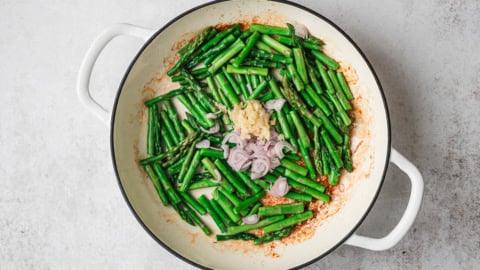
Step 4: Cook the asparagus and aromatics
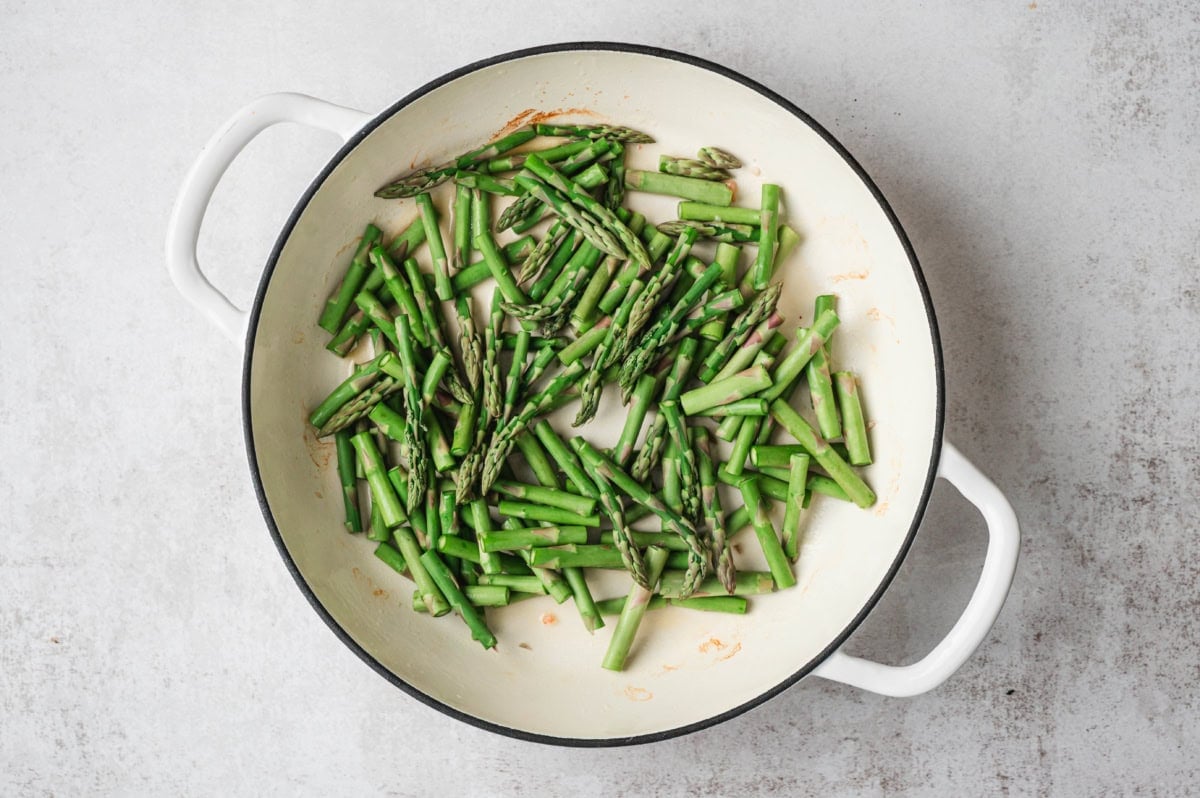
Add the asparagus to the same skillet and cook for about 3 minutes, until just tender-crisp and bright green. Add the sliced shallot and garlic, then cook for 1 minute more.
- This short cooking time keeps the asparagus fresh and vibrant while giving the shallot and garlic enough time to soften and become fragrant.
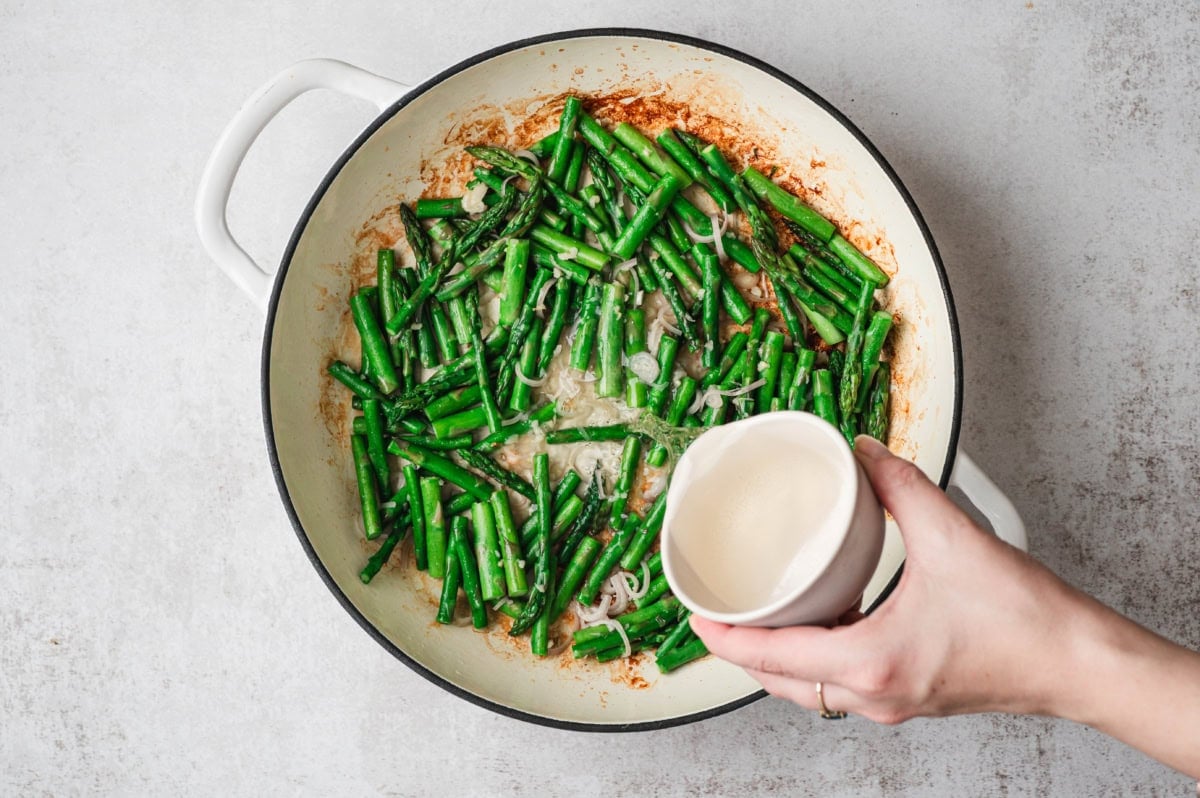
Step 5: Deglaze with wine
Pour in the white wine and let it simmer for 2 to 3 minutes, scraping up any flavorful brown bits from the bottom of the pan.
- This step adds depth and helps build the sauce’s base. If you do not have wine, broth or a little pasta water works as a substitute.
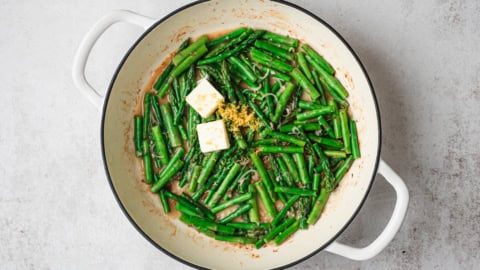
Step 6: Build the sauce
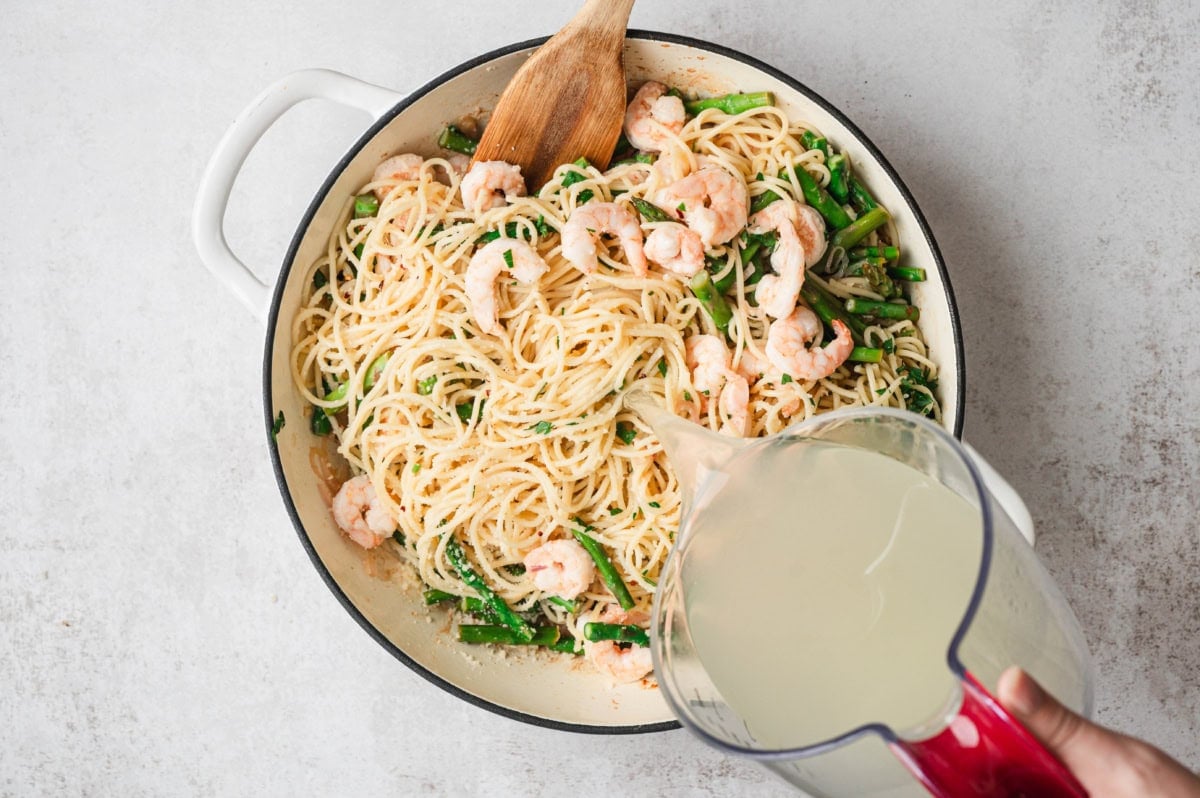
Reduce the heat to low, then stir in the remaining 3 tablespoons of butter, lemon zest, and lemon juice. Stir until the butter is fully melted and the sauce looks smooth.
- The lemon keeps the sauce fresh and lively, while the butter gives it richness without making it too heavy.
Step 7: Toss everything together
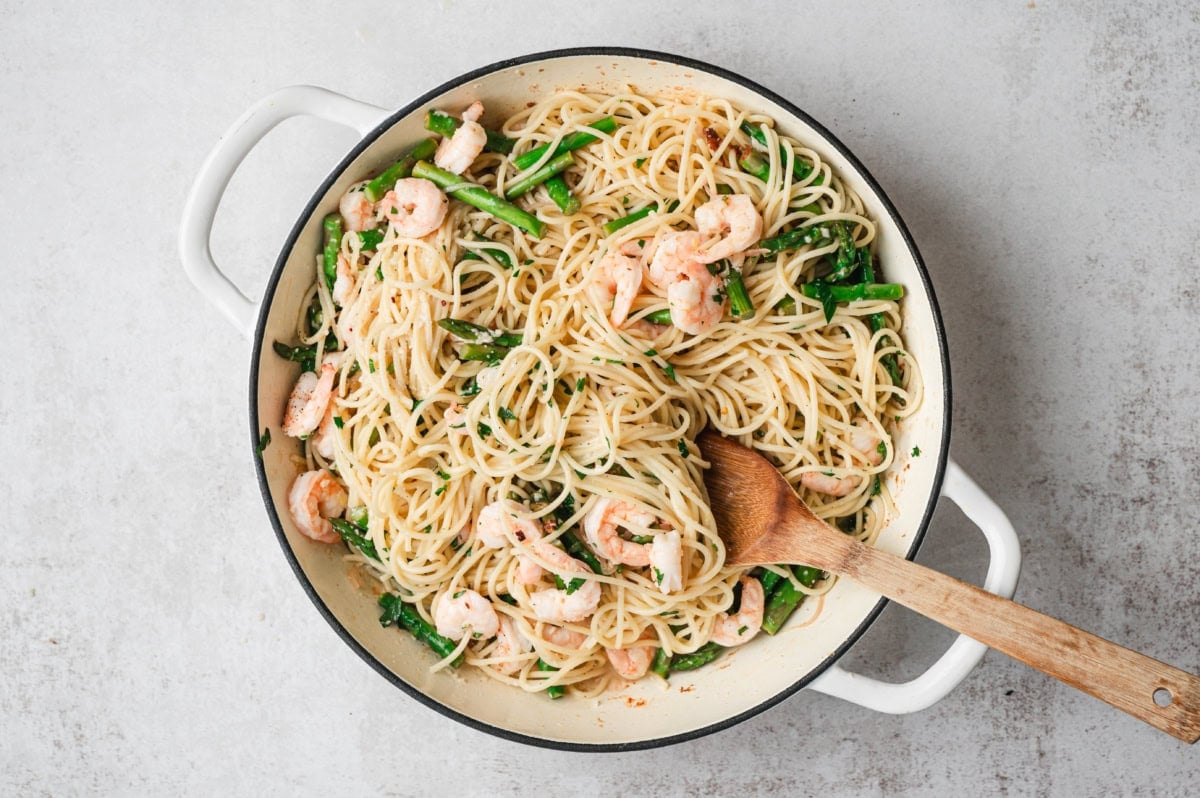
Add the cooked pasta, shrimp, parsley, and Parmesan to the skillet. Toss until everything is evenly coated, adding reserved pasta water a little at a time until the sauce lightly clings to the pasta.
- You may not need the full cup of pasta water, so add it gradually until the pasta has the right texture.
Step 8: Finish and serve
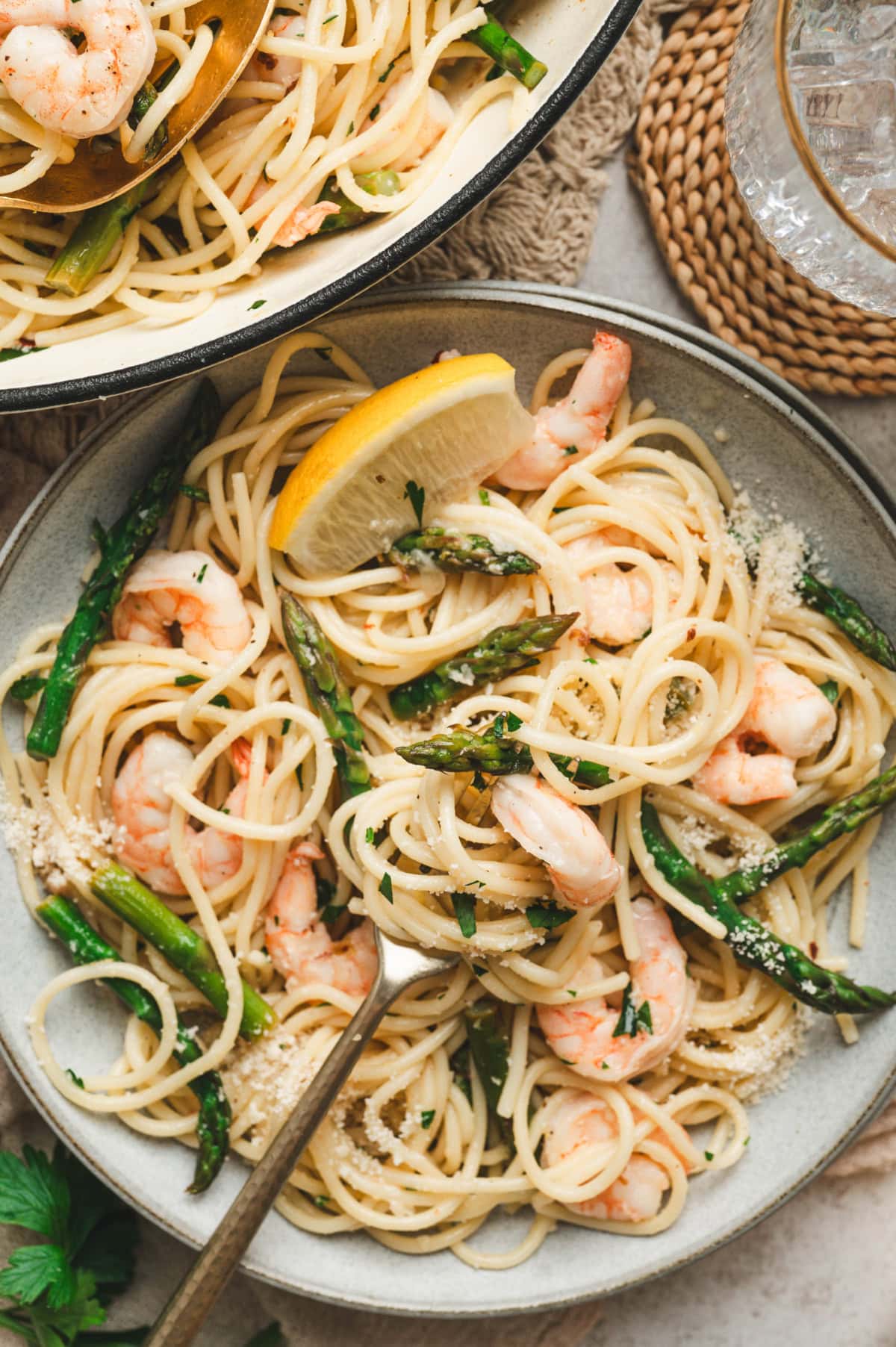
Taste and season with salt, black pepper, and a pinch of red pepper flakes if you like a little heat. Serve immediately with extra Parmesan and lemon wedges.
- This pasta is best right away, when the shrimp are tender, the asparagus is still vibrant, and the sauce is silky.
What to Serve Alongside
A crusty loaf of bread is the most natural pairing here; you’ll want something to soak up every last bit of the lemon-butter sauce. A simple salad rounds it out, but keep it bright and peppery so it doesn’t compete with the pasta.
Skip the extra vegetable side. Asparagus is already doing that work, and adding more greens crowds the meal.
Storage Tips
Storage and Reheating Tips
- Storage: Store leftover shrimp and asparagus pasta in an airtight container in the refrigerator for up to 2 days. This dish is really best served fresh, since shrimp and asparagus can lose their ideal texture after sitting.
- Reheating: To reheat, place the pasta in a covered skillet over low heat with a splash of water or broth to loosen the sauce. Warm gently just until heated through so the shrimp do not get rubbery.
- Freezing: This is not the best recipe for freezing, since the shrimp, asparagus, and delicate butter sauce do not hold up especially well after thawing.
- Make Ahead: For leftovers, keep portions small and reheat only what you plan to eat right away.
Frequently Asked Questions
Can I use frozen shrimp?
Yes, frozen shrimp work well here. Thaw them completely first, either overnight in the fridge or in a colander under cold running water for about 10 minutes, then pat them dry before seasoning. Excess water keeps them from searing and can dilute the sauce.
What’s the best wine to use for shrimp pasta?
Use a dry white wine you’d actually drink, like Sauvignon Blanc or Chardonnay. Avoid anything labeled “cooking wine” (the flavor is harsh) and skip sweet whites like Moscato or Riesling.
Can I make this without wine?
Yes. Swap the white wine for an equal amount of chicken or vegetable broth, or use some of your reserved pasta water in a pinch. Don’t substitute red wine; it changes the color and flavor completely.
Why is my asparagus mushy?
Asparagus overcooks quickly, especially thin spears. Cook it just 3 minutes in the hot pan, only until it’s bright green and tender-crisp. If your spears are very thick, cut them on a slight bias so they cook evenly. Pencil-thin asparagus may need closer to 2 minutes.
More Easy Shrimp and Pasta Recipes
- Penne Pasta Primavera
- Spicy Lemon, Asparagus & Bacon Pasta
- Lemon Butter Pasta
- One Pan Lemon Garlic Pasta
- Blackened Shrimp
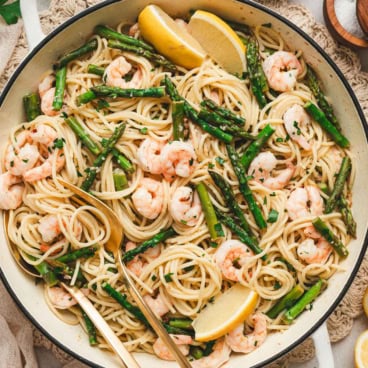
Shrimp and Asparagus Pasta

Ingredients
- 12 ounces spaghetti
- 1 pound large shrimp (50-60 count) peeled, deveined, tails removed
- 1 pound asparagus trimmed and cut into 1½” pieces
- 4 tablespoons (½ stick) salted butter divided
- 3 cloves garlic pressed or minced
- 1 shallot thinly sliced
- 1/2 cup dry white wine
- Zest of 1 lemon
- Juice of 1 medium lemon zest it before juicing!
- 2 tablespoons chopped fresh parsley
- 1/2 cup grated Parmesan plus more for serving
- Salt, black pepper, and red pepper flakes to taste
- Lemon wedges for serving
Instructions
- Bring a large pot of generously salted water to a boil. Cook the spaghetti according to package directions until al dente. Reserve 1 cup of pasta water before draining.
- While the pasta cooks, pat shrimp dry and season lightly with salt.
- Melt 1 tablespoon of butter in a large skillet over medium-high heat. Add the shrimp in a single layer and cook 1 to 2 minutes per side, just until pink and opaque. Transfer to a plate and keep warm.

- Add the asparagus to the skillet and cook 3 minutes, until bright green and tender-crisp. Add the shallot and garlic and cook 1 minute more.
- Pour in the white wine and simmer 2 to 3 minutes, scraping up any browned bits from the pan.
- Reduce the heat to low. Stir in the remaining 3 tablespoons of butter, the lemon zest, and the lemon juice until the butter is melted.
- Add the cooked pasta, shrimp, parsley, and Parmesan. Toss until coated, adding the reserved pasta water a splash at a time until the sauce lightly coats the noodles.
- Taste and season with salt, black pepper, and a pinch of red pepper flakes. Serve immediately with extra Parmesan and lemon wedges.
Notes
- Prep everything before you start. The dish moves fast once the shrimp hits the pan.
- Always reserve pasta water before draining. It’s what turns the butter and lemon into a real sauce.
- Use a dry white wine you’d drink, like Sauvignon Blanc or Chardonnay. Skip cooking wine and sweet whites.
- No wine on hand? Substitute chicken or vegetable broth, or use some of the pasta water.
- Spaghetti can be swapped for thin spaghetti, bucatini, linguine, or cavatappi. Skip angel hair; it’s too delicate.
- Don’t overcook the shrimp. They’re done at 1 to 2 minutes per side, when pink and just opaque.
- Asparagus should stay bright green and tender-crisp. Pencil-thin spears may need closer to 2 minutes.
- Leftovers keep in the fridge for up to 2 days. Reheat in a covered skillet over low heat with a splash of water or broth. Freezing is not recommended.
Nutrition
Nutritional Disclaimer Kristin Maxwell of “Yellow Bliss Road” is not a dietician or nutritionist, and any nutritional information shared is an estimate. For accurate calorie counts and other nutritional values, we recommend running the ingredients through your preferred online nutritional calculator. Calories and other nutritional values can vary depending on which brands were used.