This post may contain affiliate links. Please read our disclosure policy.
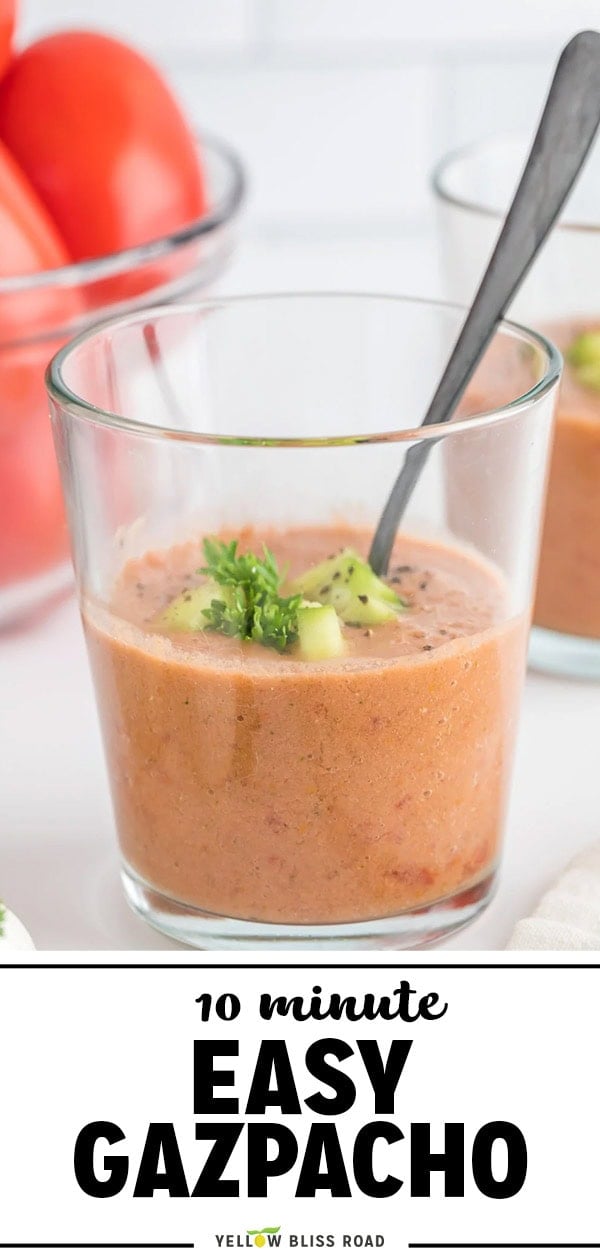
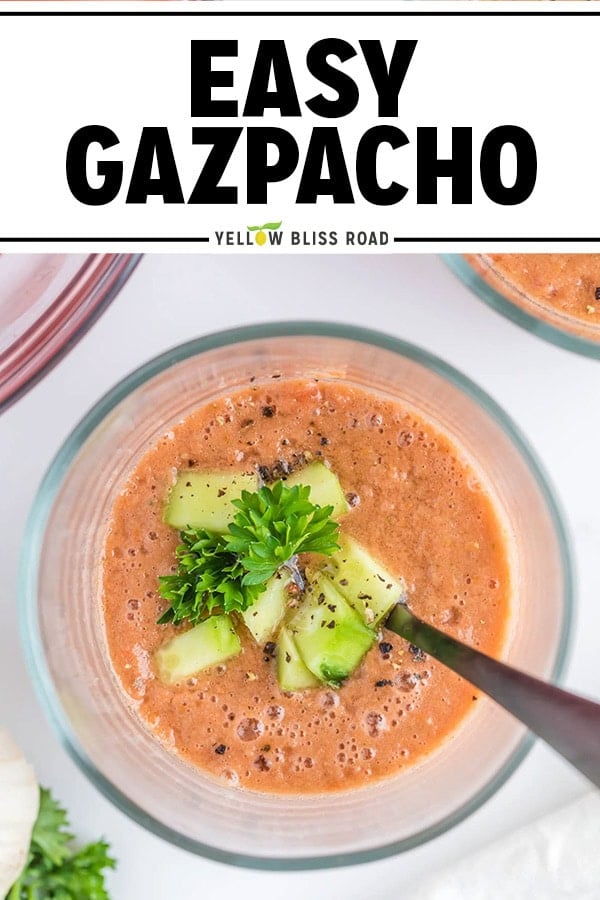
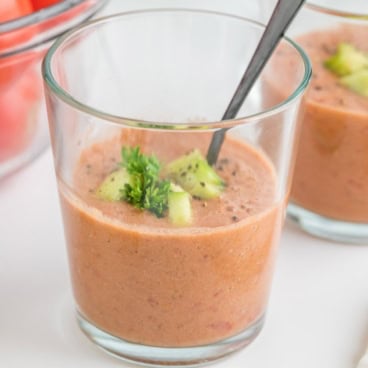
This Easy Gazpacho Recipe is a fresh, no-cook tomato soup that comes together in about 10 minutes in your blender. Ripe tomatoes, crisp cucumber, fresh herbs, and a splash of vinegar are all you need for a cold, refreshing summer soup. It’s light enough to serve as a starter and satisfying enough for a hot-day lunch.
Looking for more ways to use fresh summer tomatoes? Try my Classic Bruschetta, Pesto Bruschetta, or Tomato Basil Pasta next.
3 Things That Really Matter in Gazpacho
A few simple things will make the difference between a beautifully balanced gazpacho and one that ends up watery or overly smooth. Here’s what to keep in mind before you blend.
- Use Roma tomatoes. They have less water and meatier flesh than beefsteak or vine-ripe, so the soup stays flavorful instead of watery.
- Blend in two stages. Blend most of the tomatoes smooth, then pulse in the rest. You get a velvety base with little bites of fresh tomato throughout.
- Chill your produce first. Cold ingredients mean cold soup right after blending, no extra chill time required.
RECIPE WALK-THROUGH
How To Make Easy Gazpacho
See the recipe card below for full, detailed instructions
Gazpacho is one of those recipes that comes together as fast as you can chop the vegetables. The blender does all the heavy lifting. Here’s how to get the best texture every time.
Step 1: Chill the produce
Refrigerate the tomatoes, cucumber, and onion until cold. At least an hour does the trick, but overnight works too. Cold ingredients mean the soup is ready to serve right after blending, no extra waiting required.
If you forget this step, no problem. You can chill the finished soup for an hour instead.
Step 2: Prep the vegetables
Dice the Romas, removing and discarding the firm core.
Add everything to a bowl, including the seeds and juices. They add flavor and you don’t want to lose them.
Peel and dice the cucumber and add it to the bowl.
Step 3: Blend the base
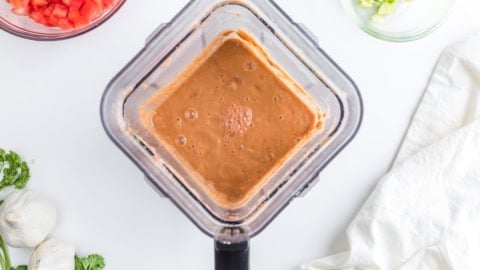
Add about half the diced tomatoes and three-quarters of the cucumber to a blender, along with the onion, garlic, basil, parsley, olive oil, vinegar, and salt. Blend until completely smooth and well combined.
If your blender is on the smaller side, blend in two batches to avoid overflow.
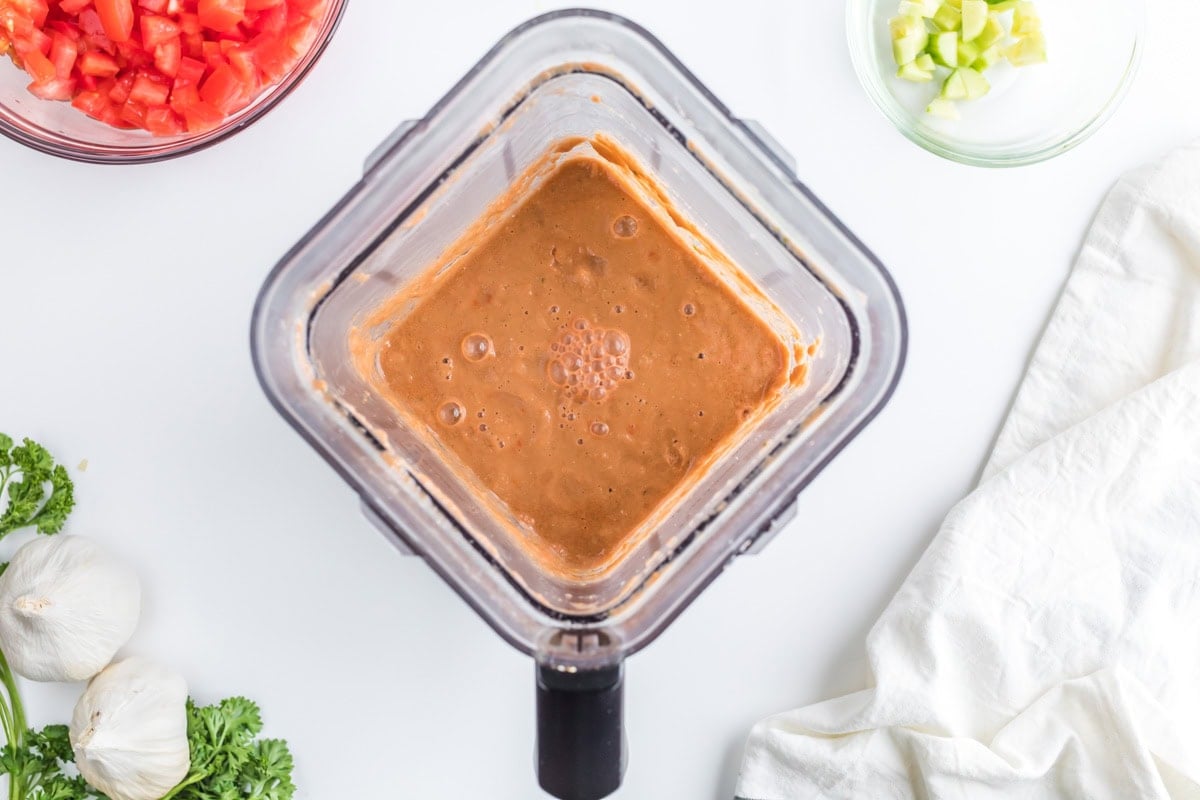
Step 4: Pulse in the rest for texture
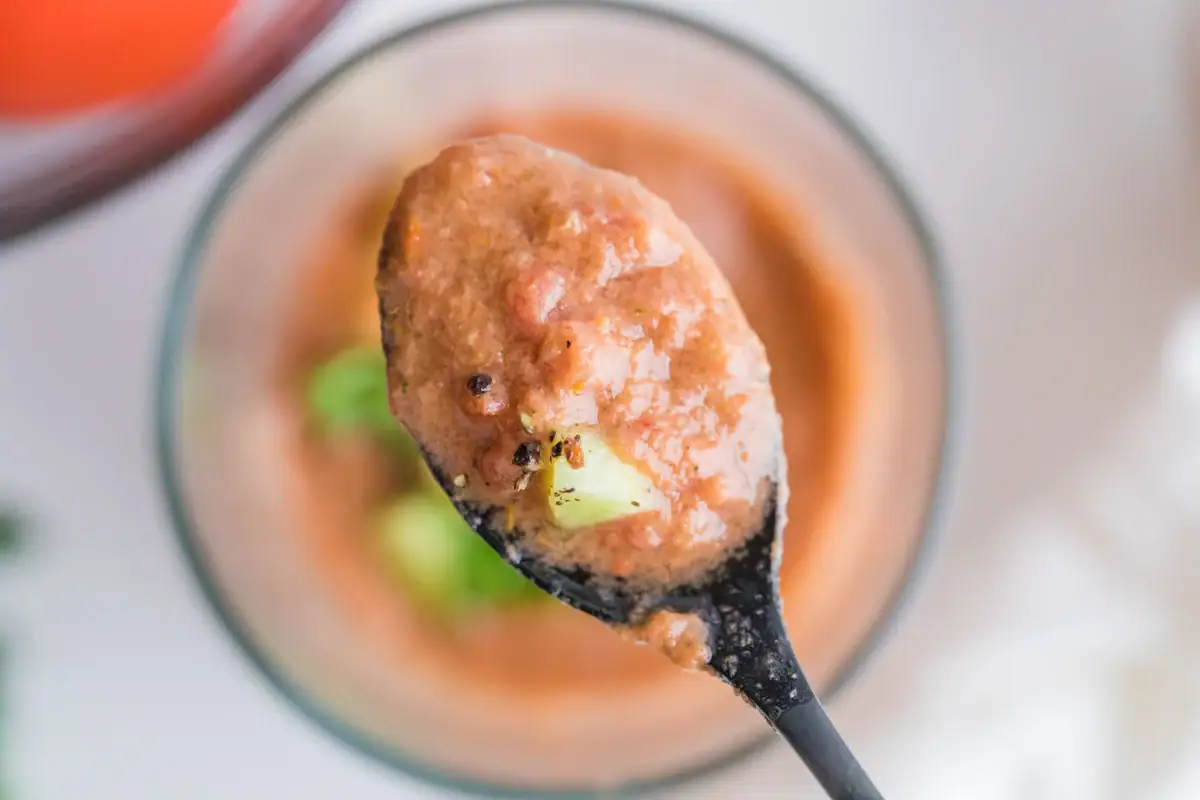
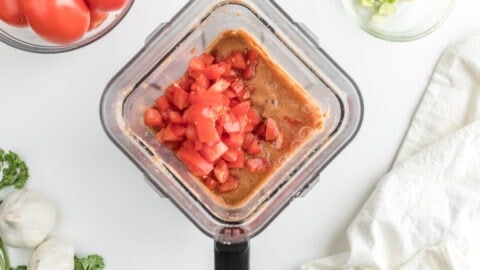
Add the remaining tomatoes and pulse just a few times until they’re broken up but not pureed. This is what gives gazpacho its signature texture, a smooth base with little bites of fresh tomato in every spoonful.
Resist the urge to keep blending or you’ll end up with baby-food consistency.
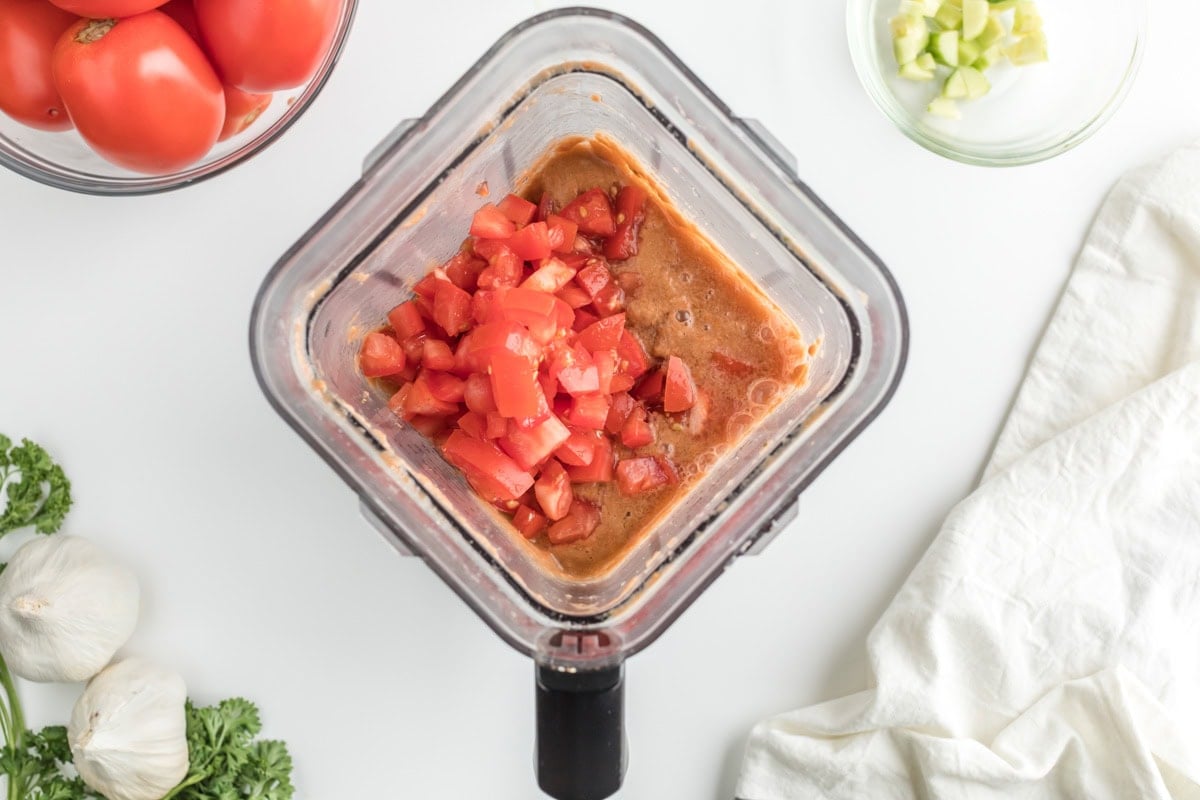
Step 5: Chill (optional but recommended)
If your produce was already cold, the soup is ready to serve. For deeper flavor, refrigerate for an hour or up to overnight.
Gazpacho is genuinely better after a few hours of chilling, the flavors meld and develop as it sits.
Step 6: Serve and garnish
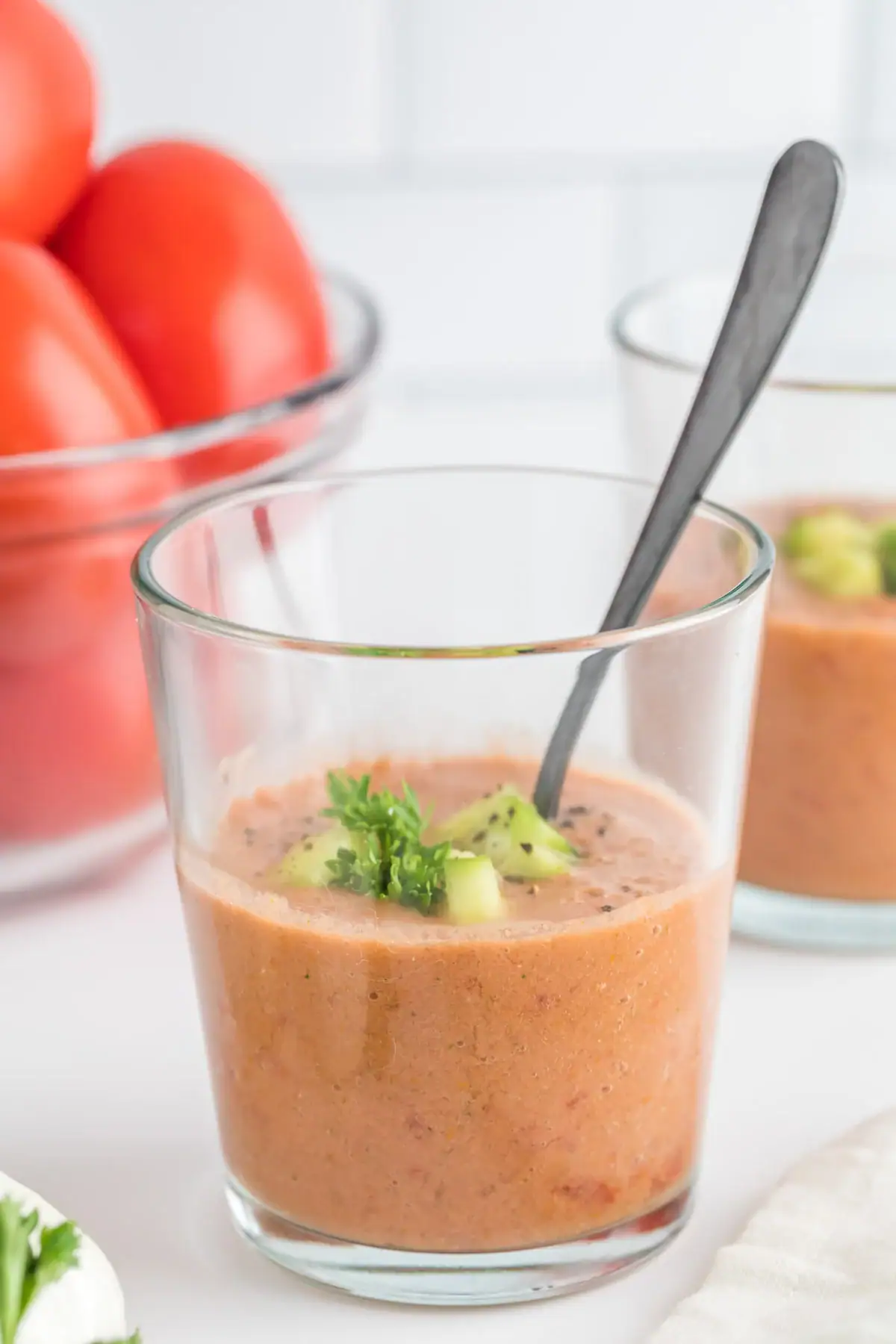
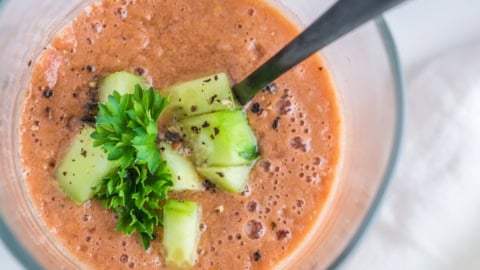
Ladle into small bowls or glasses. Top with a tablespoon of diced cucumber, a pinch of fresh herbs, and freshly cracked black pepper.
A drizzle of good olive oil on top is a nice finishing touch.
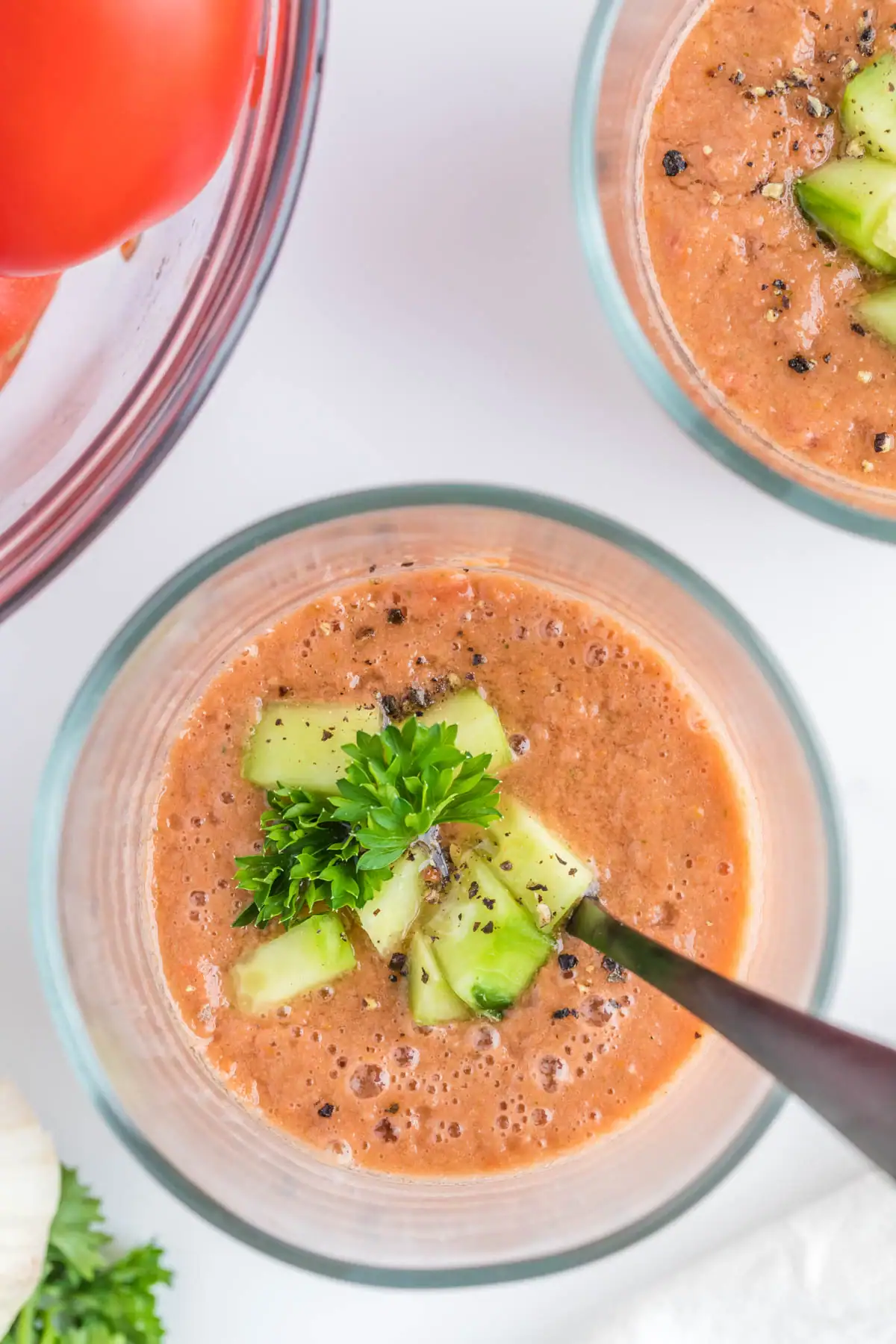
How to Serve Gazpacho
Gazpacho is endlessly flexible. It works as a light starter for a summer dinner, a refreshing lunch with bread on the side, or even as a sippable appetizer at a party.
Serve it with crusty bread, crostini, or cheesy garlic bread for dipping or alongside. To turn it into a complete meal, pair it with a grilled main like my Citrus Grilled Chicken or Grilled Shrimp Pasta Salad.
For parties, try serving it in small juice glasses or shot glasses as a cold, sippable starter. You can even pour it over ice in a tall glass for a savory summer drink.
Variations
This recipe is approachable on purpose. It skips the bread, the bell peppers, and the longer ingredient list of authentic Spanish gazpacho in favor of something you can make in 10 minutes with what you’ve got. That said, here are a few easy ways to switch it up.
- Try sherry vinegar. It’s the most traditional vinegar for Spanish gazpacho and adds a deeper, nuttier flavor. Red wine vinegar works too and gives it a sharper edge.
- Add bell pepper for a more traditional version. A roughly chopped red or green bell pepper blended in with the base gets you closer to authentic Spanish gazpacho. Start with half a pepper and taste from there.
- Swap the herbs. Cilantro can stand in for parsley. A small handful of fresh mint is also nice for a more refreshing twist.
- Make it a little thicker. Some traditional recipes blend in a slice of stale bread for body. If you want a heartier soup, tear a slice of crusty bread into the blender with the base ingredients.
- Spice it up. A small pinch of cayenne or a few dashes of hot sauce add a little heat without changing the character of the soup.
Storage Tips
Storage, Freezing, Make Ahead
- Gazpacho is one of those rare soups that’s actually better made ahead. The flavors meld and deepen as it sits, so making it earlier in the day or the night before pays off.
- Make ahead: Make it in the morning to serve at dinner, or the night before for the best results.
- Storage: Keep leftovers in an airtight container in the refrigerator for up to 3 days. Give it a stir before serving since the solids can settle.
- Freezing: Gazpacho freezes well for up to 3 months in freezer-safe bags or containers. Thaw in the fridge overnight, then stir well before serving. The texture holds up nicely.
Frequently Asked Questions
Why is my gazpacho watery?
The most common culprits are high-water-content tomatoes (like beefsteak instead of Roma), skipping the chill step, or over-blending. Stick with Roma tomatoes, which have less water and a meatier flesh. If a lot of liquid pools in the bowl after dicing, you can drain a bit off before blending. And remember to pulse the second addition of tomatoes rather than blending it smooth.
What’s the best vinegar to use for gazpacho?
Three options work well. Balsamic (what this recipe calls for) is sweeter and adds a tangy depth. Sherry vinegar is the most traditional choice and brings a nuttier flavor. Red wine vinegar gives it a sharper, brighter edge. Any of the three is great, so it’s mostly a matter of what you have on hand and what flavor profile you prefer.
Do I need to peel the tomatoes?
For Roma tomatoes, no. The skins are thin and blend down smoothly without leaving any noticeable texture. If you’re using a thicker-skinned tomato like beefsteak, peeling can give you a smoother result. To peel them quickly, score an X on the bottom of each tomato, drop them in boiling water for 30 seconds, then transfer to an ice bath. The skins will slip right off.
What can I serve with gazpacho?
Crusty bread or crostini for dipping is the classic pairing. A simple green salad makes it a light lunch. For a heartier meal, serve it alongside grilled chicken or shrimp. At a party, small glasses of gazpacho work beautifully as a sippable starter.
More Fresh, Summery Recipes
- Tomato Avocado Salad
- Asian Cucumber Salad
- Summer Spaghetti Salad
- Garlic Tomato Pasta
- Roasted Cherry Tomatoes
Easy Gazpacho

Ingredients
- 10 Roma tomatoes chilled
- 1 seedless English cucumber chilled
- ¾ cup sweet yellow onion diced
- ¼ cup fresh basil chopped
- ¼ cup fresh parsley chopped
- 2 cloves garlic minced
- ¼ cup balsamic vinegar
- 1 tablespoon olive oil
- ¼ teaspoon sea salt
- Additional fresh herbs for garnish (basil, parsley)
- Freshly ground black pepper to taste
Instructions
- Refrigerate the tomatoes, cucumber, and onion until cold.
- Dice the Roma tomatoes, removing and discarding the firm core. Add the pieces (along with seeds and juices) to a bowl. Peel and dice the cucumber and add to the bowl.
- Add just over half the diced tomatoes and about three-quarters of the diced cucumber to a blender, along with the onion, garlic, basil, parsley, olive oil, balsamic vinegar, and salt.
- Blend until very smooth and well incorporated.

- Add the remaining tomatoes and pulse just until mixed in but not fully pureed. This gives the soup its signature texture.
- Optional: chill for an hour for deeper flavor.
- Ladle into small bowls or glasses. Top with about 1 tablespoon diced cucumber, a pinch of fresh herbs, and freshly cracked black pepper. Serve cold.
Notes
- Vinegar swap: Sherry vinegar is the most traditional vinegar for gazpacho and adds a nuttier flavor. Red wine vinegar also works for a sharper edge.
- Chilling shortcut: If you forget to chill the produce ahead of time, refrigerate the finished soup for at least an hour before serving.
- For best texture: Stick with Roma tomatoes. They have less water than beefsteak or vine-ripe tomatoes, which keeps the soup from getting watery.
- Storage: Leftover gazpacho keeps in an airtight container in the fridge for up to 3 days. Stir before serving since solids can settle.
- Freezing: Freezes well for up to 3 months in freezer bags or containers. Thaw fully in the fridge and stir before serving.
- Bell pepper variation: For a more traditional Spanish-style gazpacho, add half a roughly chopped red or green bell pepper to the blender with the base ingredients.
Nutrition
Nutritional Disclaimer Kristin Maxwell of “Yellow Bliss Road” is not a dietician or nutritionist, and any nutritional information shared is an estimate. For accurate calorie counts and other nutritional values, we recommend running the ingredients through your preferred online nutritional calculator. Calories and other nutritional values can vary depending on which brands were used.