
This post may contain affiliate links. Please read our disclosure policy.
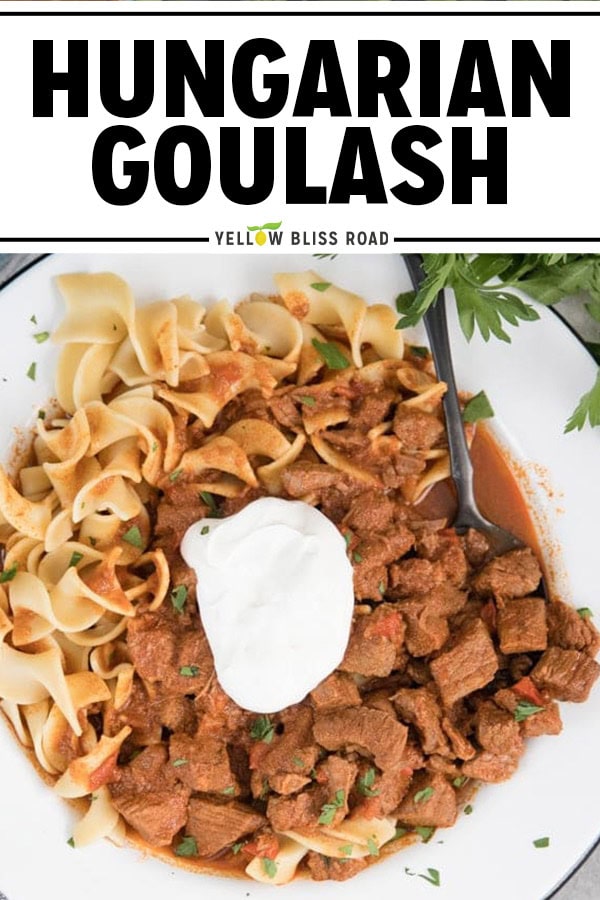
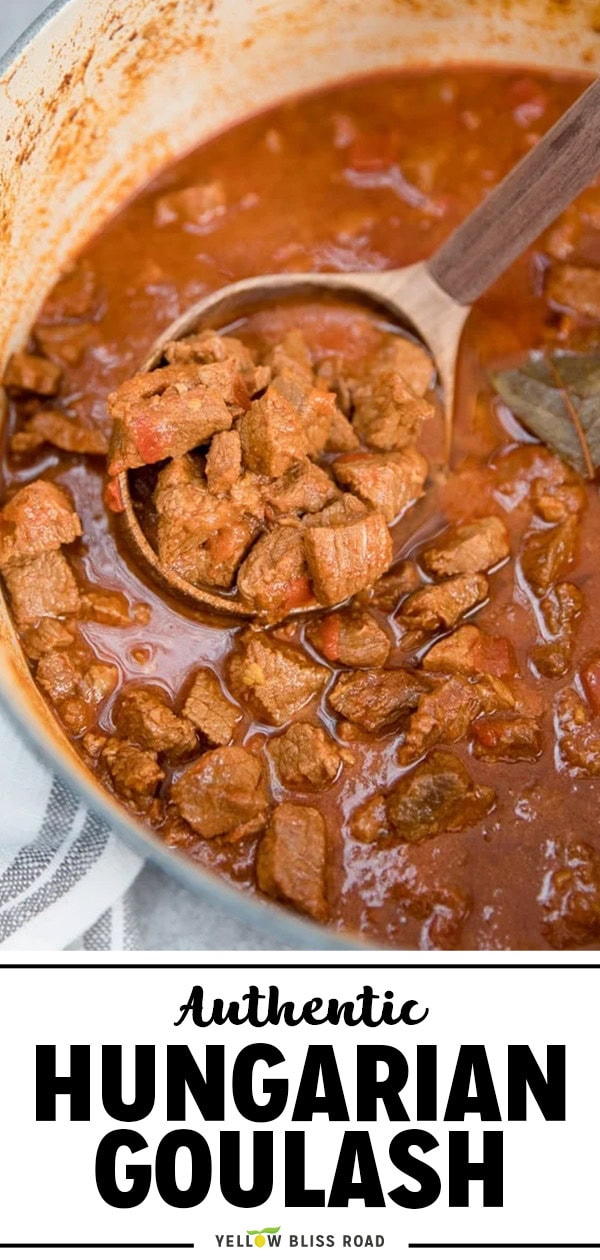
Authentic Hungarian Goulash is one of those comforting dishes that feels both rustic and familiar. It’s a simple combination of tender beef, onions, and plenty of paprika that simmers slowly until everything melds together into a rich, hearty stew. Served with bread or noodles, it’s the kind of meal that warms you through and makes you slow down and enjoy each bite.
If you love cozy, slow-simmered comfort food, try Hungarian Chicken Paprikash for a creamy twist, or check out Easy Goulash with Corn for a quicker American-style version. You’ll also love this Easy Beef Macaroni Soup for another hearty, family-friendly dinner.
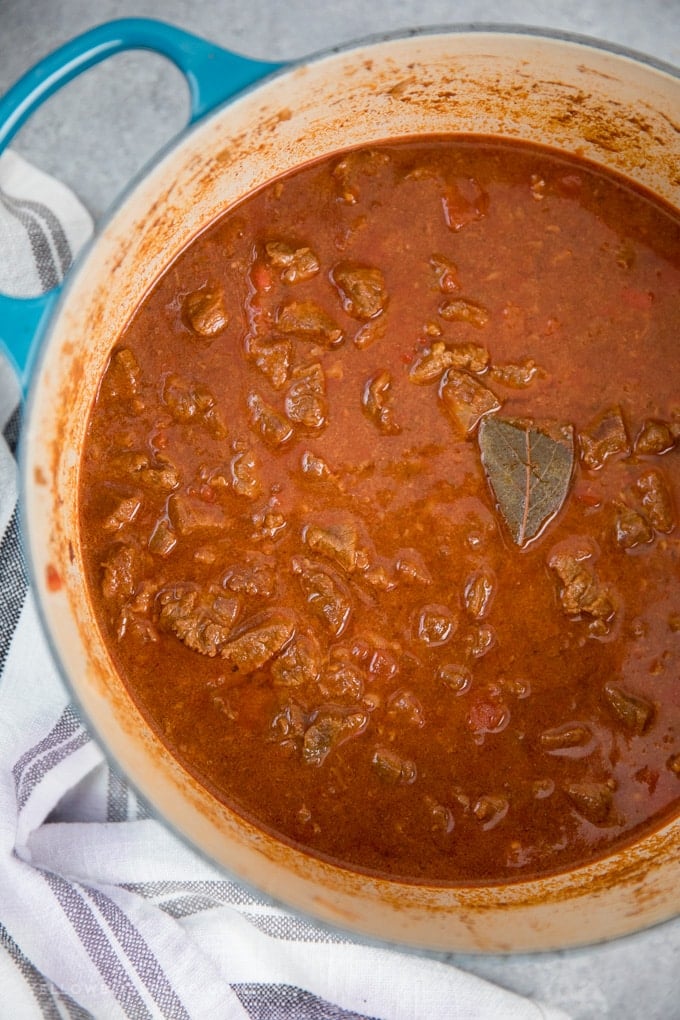
What is Hungarian Goulash?
Traditional Hungarian goulash (called gulyás in Hungary) is a slow-simmered beef dish built on a foundation of sweet paprika, onions, and simple seasonings. It’s more like a thick, brothy stew than the tomato-and-pasta casserole many Americans grew up calling “goulash.”
What makes it different from American goulash?
- Hungarian goulash is paprika-forward, made with chunks of beef simmered low and slow in a rich broth. No pasta, no ground beef.
- American goulash is typically a skillet meal with ground beef, elbow macaroni, and a tomato-based sauce.
Both are delicious comfort food, but they’re very different dishes. This recipe is the real deal: tender beef, bold paprika flavor, and a satisfying broth you’ll want to soak up with crusty bread.
Before You Get Started
A few tips to set you up for success:
- Use fresh, quality paprika. Sweet Hungarian paprika is the star here. If yours has been sitting in the spice cabinet for a year or more, it’s probably lost most of its flavor. Fresh paprika should smell fragrant and slightly sweet.
- Choose the right cut of beef. Tougher cuts like chuck roast or stew meat are ideal because they become tender and flavorful with slow cooking. Avoid lean cuts, which can dry out.
- Don’t rush the simmer. This dish needs time. Plan for at least two hours on the stovetop (or 4-6 hours in a slow cooker) so the beef gets tender and the flavors really come together.
recipe walk-through
How to Make Authentic Hungarian Goulash
See the recipe card below for full, detailed instructions
Step 1: Sauté the Aromatics
Heat olive oil in a large soup pot or Dutch oven over medium heat. Add the chopped onion and red bell pepper and cook until soft and slightly golden, about 5 minutes. The onions should be translucent but not browned.
Stir in the minced garlic and bay leaf and let them cook for about a minute until fragrant. You’ll smell that garlic aroma right away, which means it’s time to move on.
- Tip: A Dutch oven works great here because it holds heat evenly and transitions easily from stovetop to oven if needed.
Step 2: Brown the Beef and Build the Base
Add the beef chunks to the pot along with the paprika, salt, and pepper. Stir everything together so the meat is coated in that gorgeous red paprika. Cook for several minutes, stirring occasionally, until the meat is lightly browned on all sides.
This step does double duty: it builds flavor on the beef and blooms the paprika, which deepens its color and taste. You’re not looking for a hard sear here, just some light browning.
- Don’t overcrowd the pot. If needed, brown the beef in batches so it sears instead of steams.
Step 3: Add Liquid and Simmer
This is where the stovetop and slow cooker methods split. Choose whichever works best for your schedule.
Stovetop Method
Stir in the beef broth and tomato paste, scraping up any browned bits (fond) from the bottom of the pot. Those bits are packed with flavor, so don’t leave them behind.
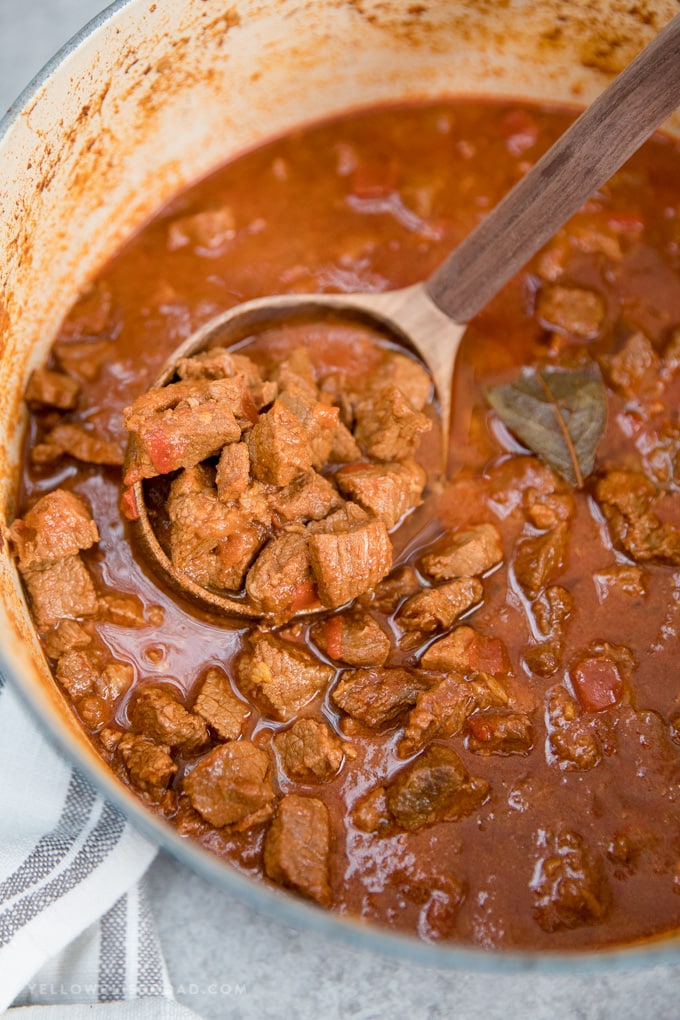
Bring the pot to a boil, then reduce heat to medium-low. Cover and let it simmer gently for at least 2 hours, until the meat is fork-tender and the broth has thickened slightly.
The beef should pull apart easily with a fork, and the broth will have a rich, deep red color. If the liquid reduces too much, add a splash of broth or water.
The longer you can let it simmer, the better. Two hours is the minimum, but three hours will give you even more tender, flavorful results.
Slow Cooker Method
After browning the beef and aromatics on the stovetop, transfer everything to your slow cooker. Stir in the beef broth and tomato paste, making sure to scrape up any browned bits from the pot and add them too.
Cover and cook on high for 4 hours or low for 6 hours.
- Low vs High: I recommend cooking on low whenever you have the time. The longer, slower cook allows the beef to get truly melt-in-your-mouth tender and lets the flavors develop more fully. High works in a pinch, but low is worth the wait.
The beef breaks apart easily and the broth has a rich, slightly thickened consistency.
Step 4: Finish and Serve
Remove the bay leaf before serving (it’s done its job but isn’t meant to be eaten).
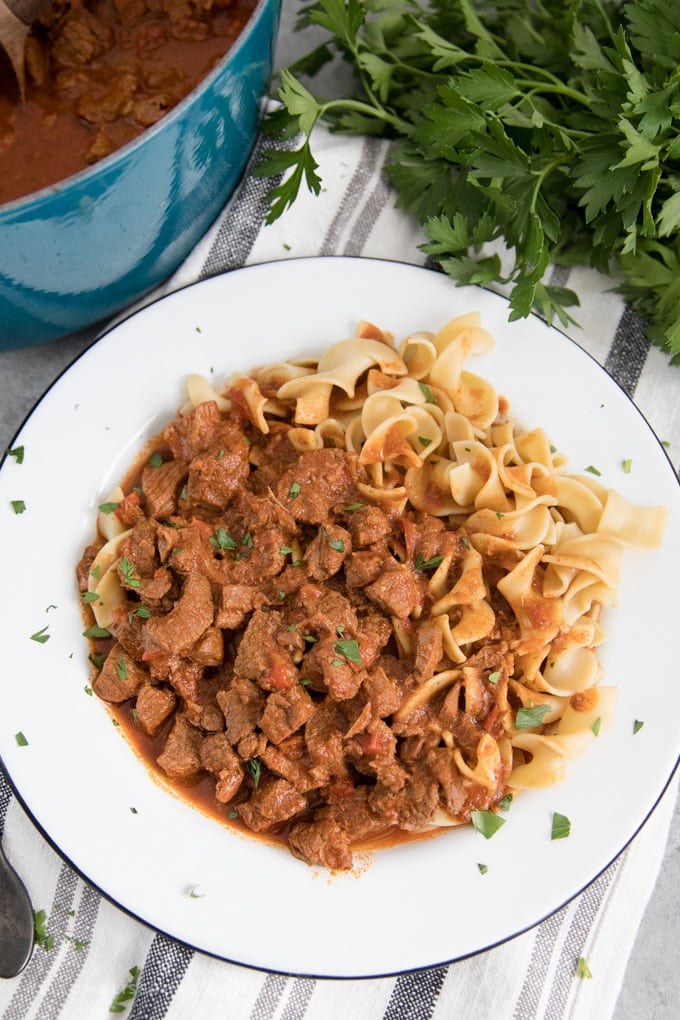
Give the goulash a taste and adjust the salt if needed. Ladle it over egg noodles, spaetzle, or mashed potatoes, and finish with a sprinkle of fresh parsley.
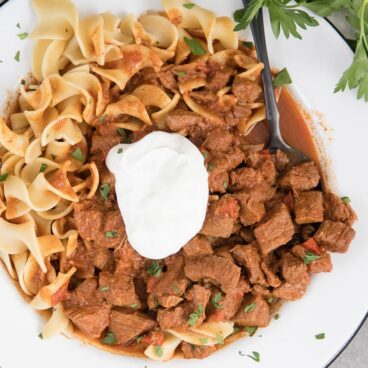
For a creamy touch, add a dollop of sour cream to each bowl.
Serving Suggestions
Hungarian goulash is traditionally served over egg noodles or spaetzle. If you want to go fully traditional, you can try making csipetke, a Hungarian pinched noodle that’s similar to a small dumpling. This goulash is also delicious over mashed potatoes or simply with some crusty bread on the side for soaking up that rich broth.
Side dish ideas to round out the meal:
- Butter Lettuce Salad
- Oven Roasted Vegetables
- Honey Roasted Carrots
- Cheesy Garlic Bread
- Creamy German Cucumber Salad (Gurkensalat)
Want to thicken the broth? If your goulash is thinner than you’d like, whisk together 1 tablespoon cornstarch and 1 tablespoon water in a small bowl. Stir the slurry into the bubbling stew and let it simmer for 5-10 minutes until thickened.
Want it creamy? Add a dollop of sour cream to each bowl when serving, or stir in ¼ cup of heavy cream during the last few minutes of cooking. The cream softens the bold paprika flavor and adds a rich, silky finish.
Storage Tips
The Best Way to Store Leftovers
Refrigerator (3-4 days): Transfer cooled goulash to an airtight container and store in the fridge for up to 3-4 days. The flavor actually deepens as it sits, making it even richer the next day.
Freezer (up to 3 months): Let the goulash cool completely, then transfer to a freezer-safe container. It freezes beautifully for up to 3 months.
To Reheat: Thaw overnight in the refrigerator if frozen. Reheat gently on the stovetop over medium heat, or use the microwave. If the sauce has thickened, add a splash of water or broth to loosen it up.
Frequently Asked Questions
What’s the difference between Hungarian goulash and American goulash?
Hungarian goulash is a slow-simmered beef stew flavored with paprika and served over noodles or with bread. American goulash is a quick skillet dish made with ground beef, elbow macaroni, and tomato sauce. Same name, very different meals.
What kind of paprika should I use?
Sweet Hungarian paprika is traditional and gives the dish its signature flavor and color. Regular paprika will work in a pinch, but the taste won’t be quite as rich. Avoid smoked paprika, which will change the flavor profile.
Can I make Hungarian goulash with chicken or pork?
Yes! Chicken thighs or pork shoulder both work well. Adjust the cooking time since chicken cooks faster than beef. For a classic chicken version, try Hungarian Chicken Paprikash.
Why is my goulash bitter?
Bitter goulash usually comes from old paprika or paprika that was cooked over too-high heat. Use fresh paprika and add it to the pot with the beef (not directly into hot oil) to prevent a burnt, bitter taste.
Can I make this in an Instant Pot?
Yes, you can adapt this recipe for a pressure cooker. Use the sauté function to brown the meat, then pressure cook on high for about 35-40 minutes with a natural release.
More Hearty Stews and Comfort Food
- Simple Beef Stew
- Pork Stew
- Slow Cooker Chicken Stew
- Authentic German Spaetzle
- Hungarian Chicken Paprikash
Looking for more cozy dinner ideas? Browse all of our soups and stews for easy, comforting meals.
Classic Hungarian Goulash

Ingredients
- 2 tablespoons Olive oil
- 1 Large yellow onion chopped, about 1 ½ cups
- 1 Red bell pepper seeded and diced
- 5 Garlic cloves minced
- 1 Bay leaf
- 3 pounds Chuck roast or stew meat cut into 1-2 inch chunks
- 3 tablespoons Sweet Hungarian paprika (regular paprika works but will change the flavor)
- 3/4 teaspoon Kosher salt
- 1/4 teaspoon Black pepper
- 1 cup Beef broth
- 3 tablespoons Tomato paste (or a 6-ounce can)
Instructions
- Heat olive oil in a large soup pot over medium heat. Add onions and red pepper and cook until soft, about 5 minutes. Add minced garlic and bay leaf and continue to cook for 1 minute.
- Add beef to the pot and stir in paprika, salt, and pepper. Cook, stirring often, until meat is browned on all sides, about 5 minutes.
If Making on the Stove Top:
- Stir in broth and tomato paste, scraping up any browned bits. Bring to a boil, then reduce heat to medium-low. Cover and simmer until meat is fork-tender, about 2 hours. Remove the bay leaf before serving.
If Making in a Slow Cooker:
- Transfer meat mixture to the slow cooker. Stir in broth and tomato paste. Cover and cook on high for 4 hours or on low for 6 hours. Remove the bay leaf before serving.
To Serve:
- Serve over cooked egg noodles and garnish with fresh chopped parsley. For a creamy finish, add a dollop of sour cream to each bowl.
Notes
- Paprika matters: Use fresh, sweet Hungarian paprika for the best flavor and color. Old paprika loses its potency and can taste flat.
- Best beef cuts: Chuck roast or stew meat work best. Tougher cuts become tender with slow cooking.
- Low and slow: Don’t rush the simmer. The longer cooking time allows the beef to become tender and the flavors to meld.
- To thicken: Whisk 1 tablespoon cornstarch with 1 tablespoon water and stir into the bubbling stew. Simmer 5-10 minutes.
- Make it creamy: Add a dollop of sour cream when serving, or stir in ¼ cup heavy cream during the last few minutes of cooking.
- Storage: Refrigerate in an airtight container for 3-4 days, or freeze for up to 3 months.
- Reheating: Warm gently on the stovetop. Add a splash of water or broth if the sauce has thickened.
- Remove the bay leaf before serving.
Nutrition
Nutritional Disclaimer Kristin Maxwell of “Yellow Bliss Road” is not a dietician or nutritionist, and any nutritional information shared is an estimate. For accurate calorie counts and other nutritional values, we recommend running the ingredients through your preferred online nutritional calculator. Calories and other nutritional values can vary depending on which brands were used.




I am making this recipe as I write review. This will be my third time making this delicious goulash and I’m sure I’ll make it many more times!
Thanks for leaving your feedback Andrea. I love hearing that others love this family recipe!
Could this be made in an instant pot/pressure cooker?
Sure, I don’t have instructions for that but you can use an Instant Pot.
There is a Westphalian „equivalent“ called „Pfefferpotthast“. No vegetables but beef : onion ratio 1:2 to 1:1. Cumin, bayleaf, salt and pepper (not peppers). You need to sear the beef until brown/camarelised on high heat. And you add some lemon juice and 2 or 3 lemon slices. Some recipes also ask for cloves. Best served with pickled cucumbers and potatoes. Sometimes I swap the lemon with green beens. Can also provide recipe for cucumber salad and (South or North) German potato salad if interested.
My father was from Zalaapati Hungary.
He and my mother came to the US in 1956. This recipe is very close our family
Hungarian goulash Recipe. The Hungarian paprika definitely makes it authentic!! Thanks!! ♥️
You are so welcome Rose! Thank you for the wonderful comment.
I am going to make this Goulash and I know for a fact it is going to be fabulous. I make a recipe of Hungarian Veal Paprikash because I wanted to make something from my husband’s grandfather’s Hungarian culture. It was a hit with my family. Now I’m making this wonderful beef hungarian goulash which I believe he would enjoy as well. I am Ukrainian and my mother made a Goulash that was so different from any goulash made where I make my own sauce out of the water that all the vegetables and meat are cooked in at the end. I’ve learned that tinkering with a recipe to curtail it to your special ideal meal is authentic to your taste buds. Thank you for this recipe.
You are so welcome Lesa! Thank you so much for stopping by. (Fantastic feedback)
So long this reciepe is the the closest to authentic. But in hungary this is not goulash. Goulash is a soup. I saw Jamie Olivers goulash and I wanted to cry. Try to replace olive oil. Authentic hungarian cuisine never use olive oil, but use lard of pork, or smoked hungarian bacon type of meat, that is greasy enough to put your ognion and garlic in to cook. But there is no need to add any Bell pepper or tomatopaste or any kind of broth. The only thing that makes this food red, is hungarian Red pepper. But this dish is great anyway 🙂 I hope you gonna try it in the real authentic way 🙂 ( I am a native hungarian who loves to cook)
Thanks for your feedback Barbara! My grandfather was a native Hungarian and after they moved to the US my German grandmother would make this recipe for him.
It’s not goulash, it’s stew. In hungarian pörkölt.
100% correct.
This looks like my Hungarian grandmothers recipe?
Then your grand mother was not making goulash but porkolt.
I don’t understand the instructions. Do I add the broth and tomato paste to the pot on the stove or when it’s transferred to the slow cooker. You say to do it with both steps.
Those are two separate methods, you would be doing one or the other. So either you’re making it on the stovetop and then serving, or making it in the slow cooker and then serving. I edited the recipe to try and clarify that a little better.
Can’t find the number of people your recipe is for?????
It will feed about 6 people, served with noodles.