
This post may contain affiliate links. Please read our disclosure policy.
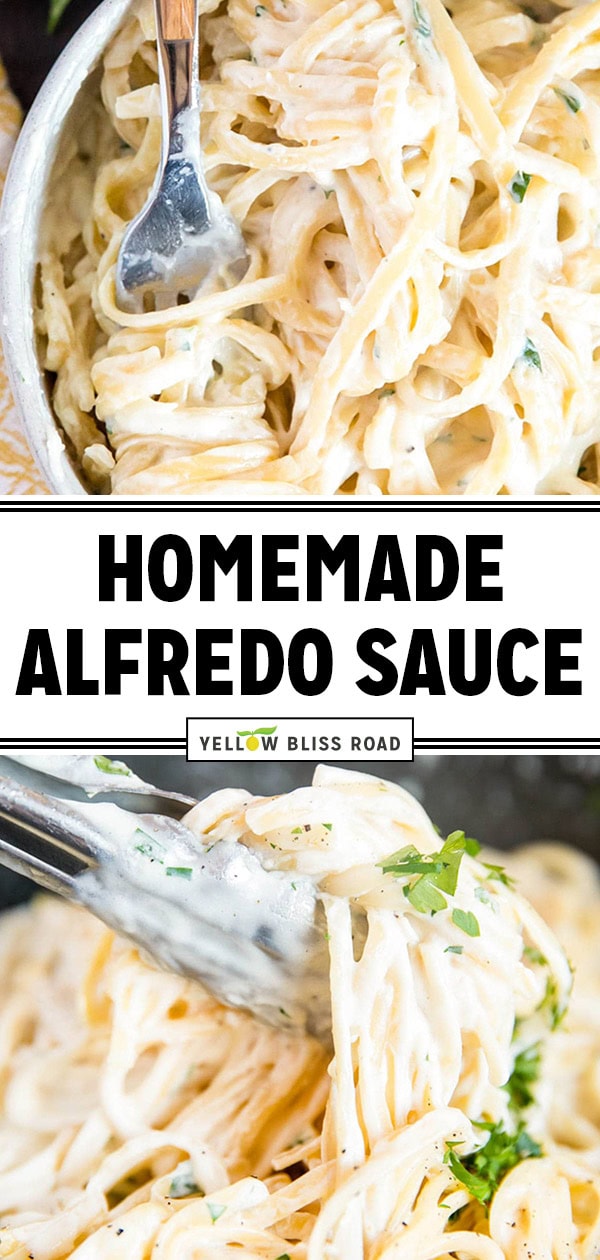
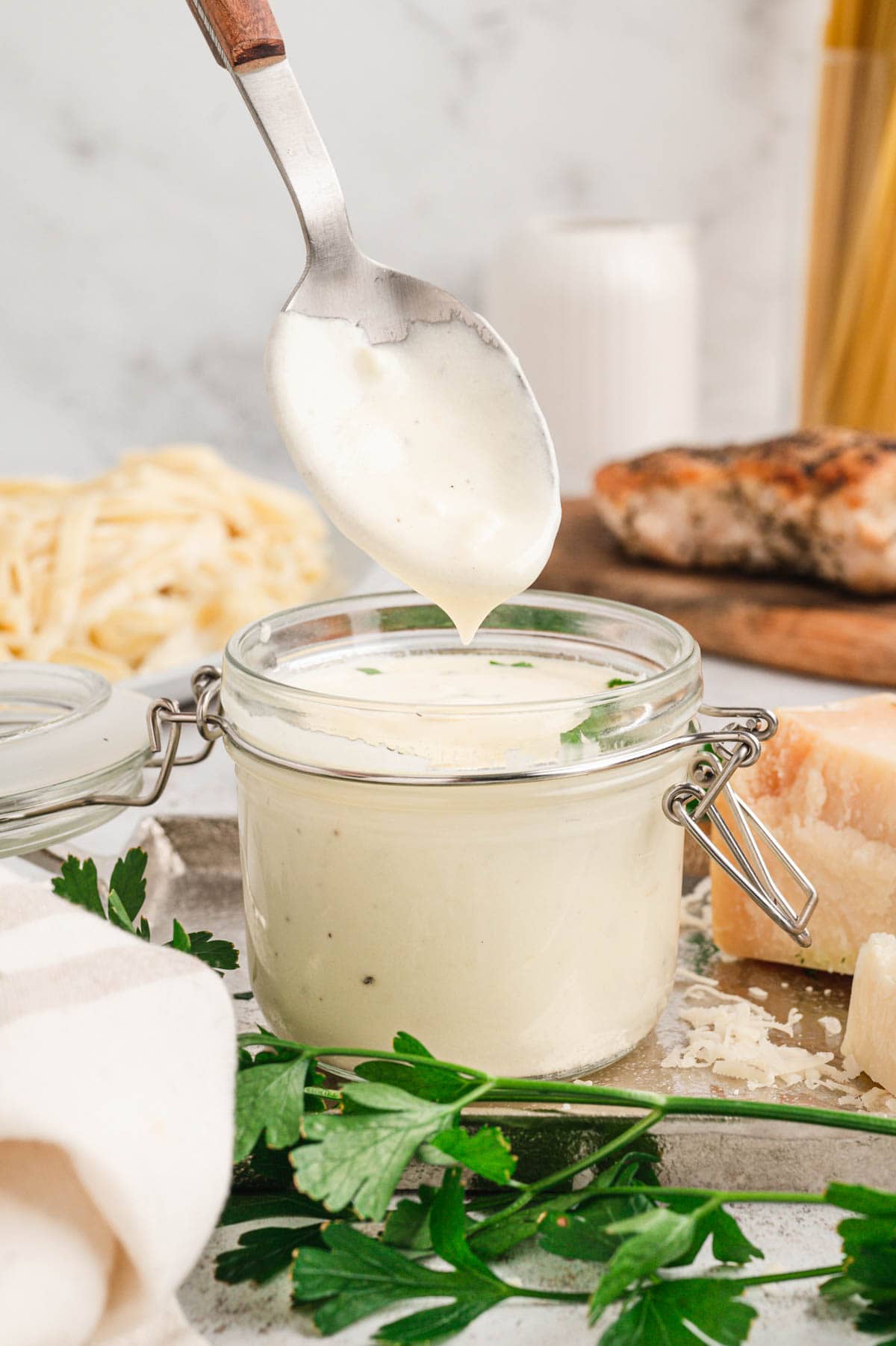
The best Alfredo sauce doesn’t come from a jar. This creamy homemade Alfredo sauce is rich, silky, and ready in just 15 minutes with only 5 simple ingredients. It’s easy to make, tastes like you spent hours on it, and pairs perfectly with your favorite pasta. Once you make it from scratch, you’ll never go back to store-bought.
Use this sauce for Chicken Alfredo or Shrimp Alfredo, or browse all of our pasta recipes for more dinner ideas.
4 Tips That Make or Break This Recipe
A few simple techniques make the difference between a silky, restaurant-quality sauce and a grainy or broken one. Keep these tips in mind before you start cooking.
- Grate your own Parmesan. Pre-shredded cheese is coated with anti-caking starches that prevent smooth melting. For the silkiest sauce, always grate fresh Parmesan off the block.
- Keep the heat low. Once you add the cream, keep it at a gentle simmer with just a few small bubbles. Boiling can cause the butter and cream to separate, leaving you with a greasy, broken sauce instead of a creamy one.
- Have everything ready before you start. This sauce comes together quickly, so measure your cream, grate your cheese, and mince your garlic before you turn on the stove. Once you start, you won’t have time to prep.
- Use real heavy cream. Half-and-half or milk won’t give you that thick, rich consistency. Heavy cream is what makes Alfredo taste like Alfredo.
RECIPE WALK-THROUGH
How to Make Homemade Alfredo Sauce
See the recipe card below for full, detailed instructions
This classic sauce is all about simple ingredients and proper technique. The key is working quickly once you start and keeping the heat gentle throughout.
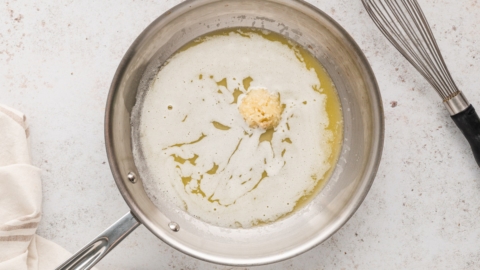
Step 1: Melt the Butter and Sauté the Garlic
Melt the butter in a large skillet over medium-low heat. Add the minced garlic and cook for 1 to 2 minutes, stirring often, until fragrant.
Watch carefully here because garlic can burn quickly, and burnt garlic will give your sauce a bitter taste.
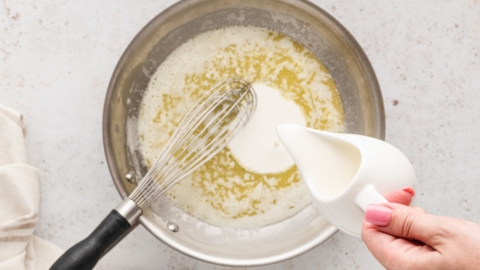
Step 2: Add the Heavy Cream
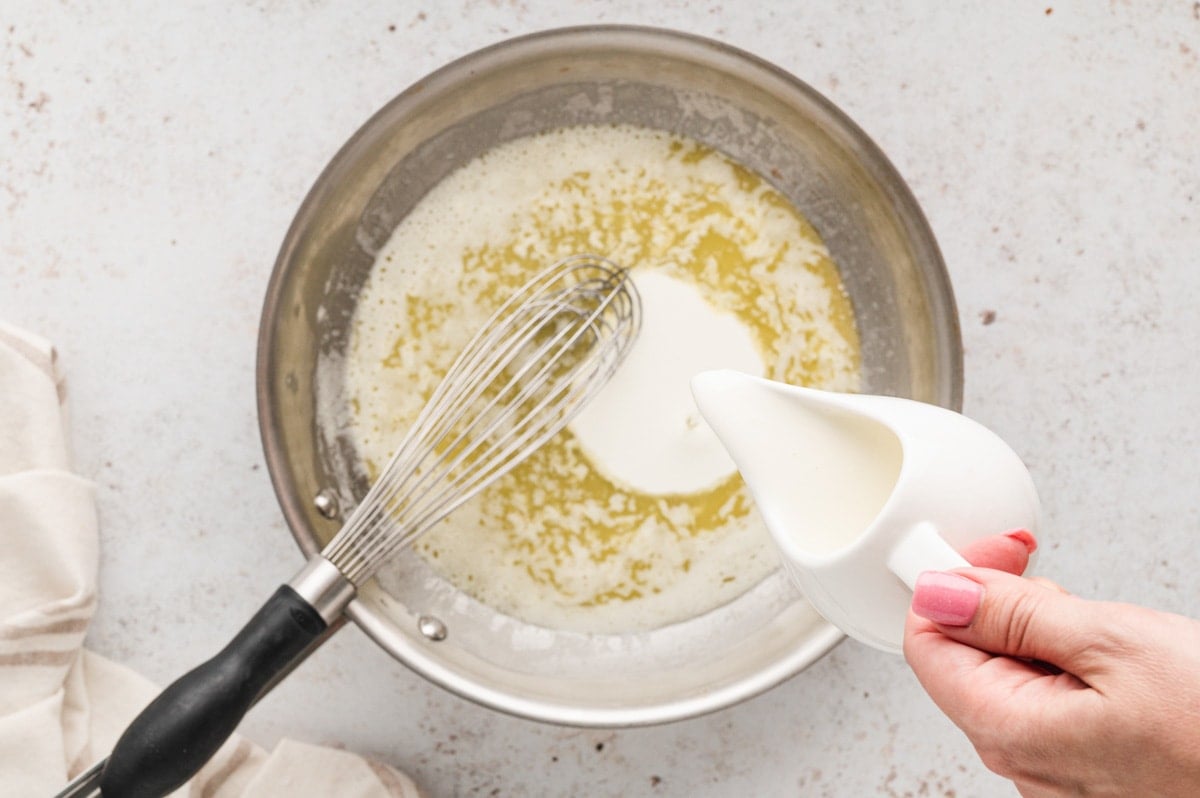
Pour in the heavy cream and whisk it into the butter until combined. Let the mixture come to a gentle simmer with small bubbles forming around the edges.
Simmer for 2 to 3 minutes to let it warm through.
Don’t let it boil. High heat at this stage can cause the cream to scorch or the fat to separate.
Step 3: Whisk in the Parmesan
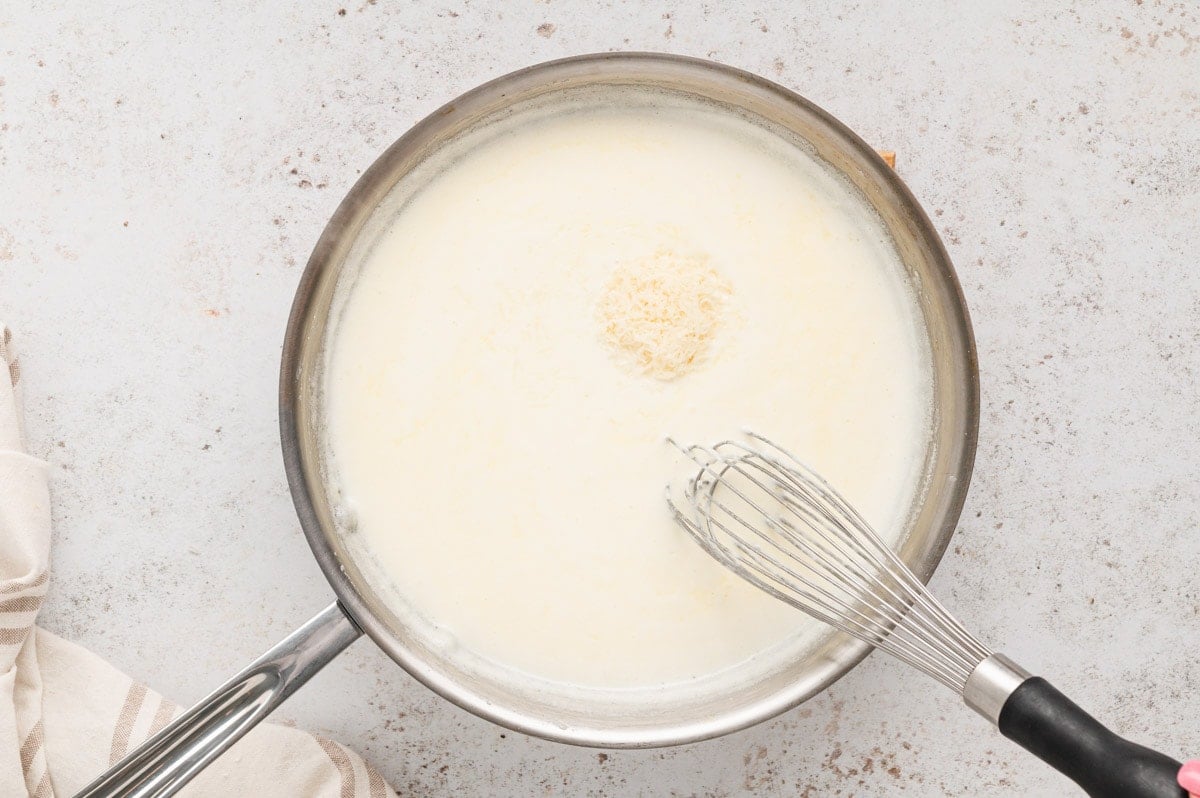
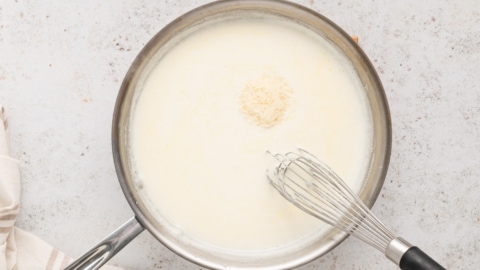
Remove the skillet from heat or turn the heat to its lowest setting before adding the cheese. Add the freshly grated Parmesan in small handfuls, whisking vigorously after each addition. This helps the cheese melt smoothly into the sauce without clumping.
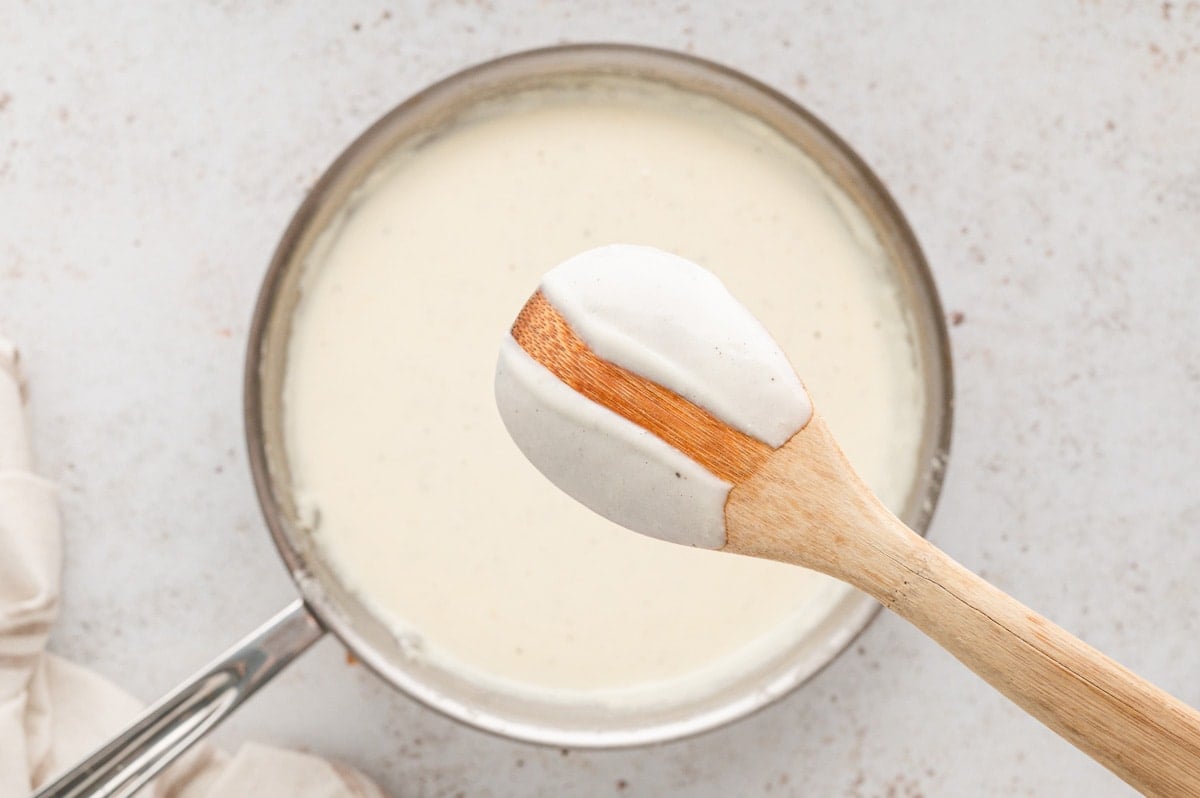
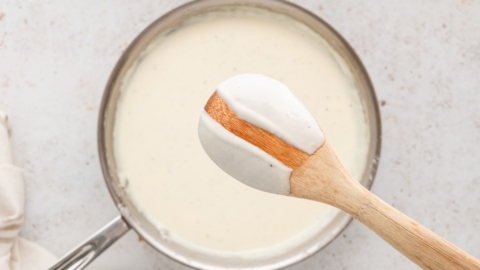
Return to low heat and let the sauce simmer gently for 3 to 4 minutes, stirring often, until it thickens enough to coat the back of a spoon.
If your sauce seems too thin, stir in a few ounces of softened cream cheese (from the block, not the spread) for extra body. You can also make a quick roux by cooking a tablespoon each of butter and flour until golden, then whisking it into your simmering sauce.
- Your sauce is thickened and ready when it coats the back of a spoon.
Step 4: Season and Toss with Pasta
Taste the sauce before adding salt. The butter and Parmesan usually provide plenty of seasoning on their own. Add fresh cracked black pepper to taste.
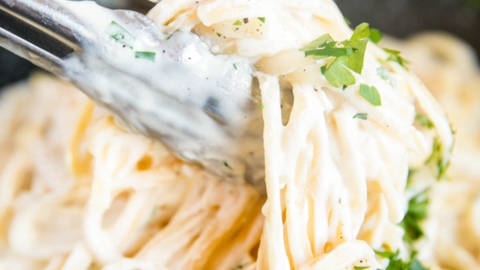
For the best results, add the hot pasta directly to the sauce rather than pouring sauce over the pasta. Use tongs to transfer the noodles straight from the cooking water to the skillet, then toss to coat. The starchy pasta water clinging to the noodles helps the sauce thicken and cling to every strand.
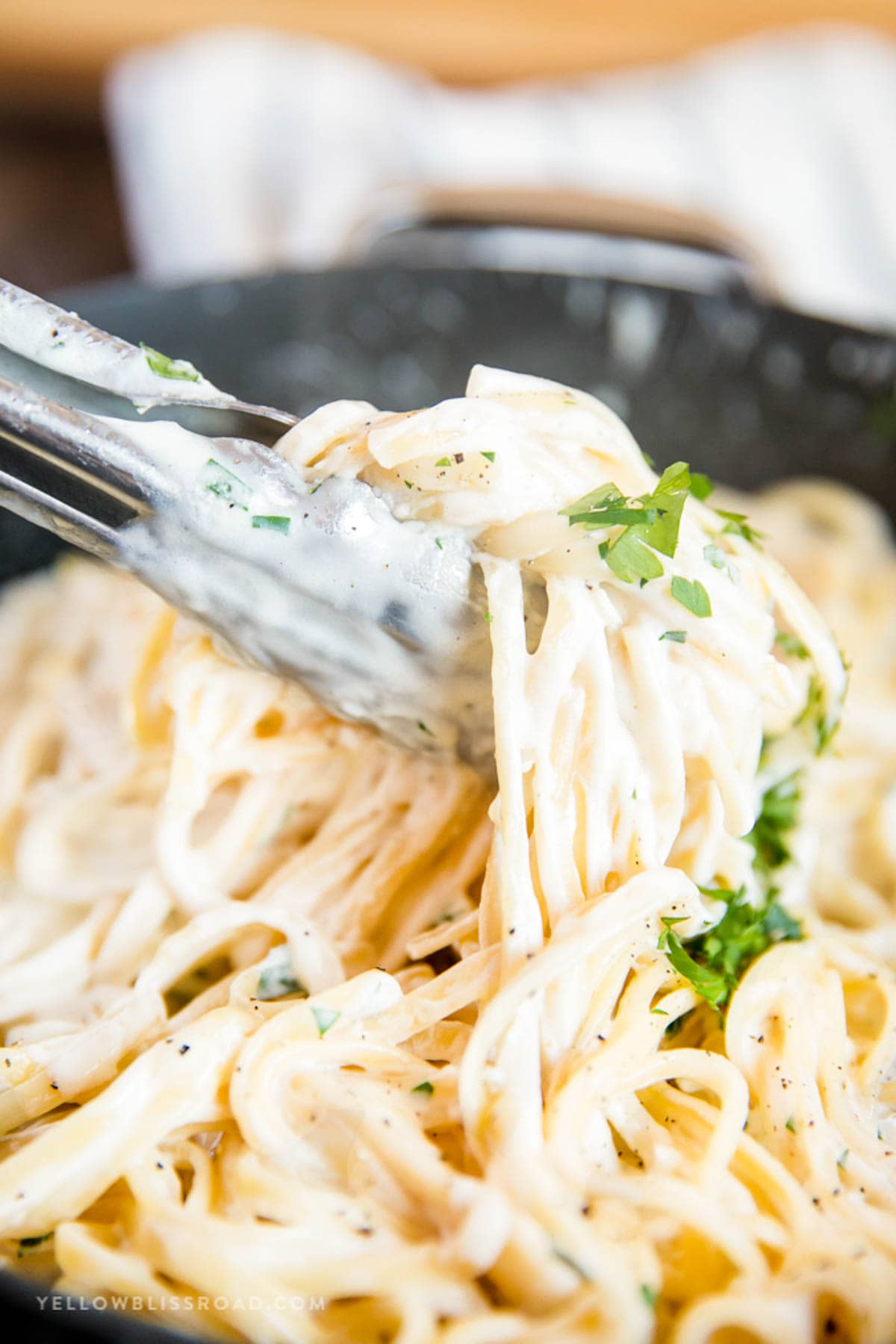
- Work quickly. Alfredo sauce is best served immediately while everything is hot. The sauce will continue to thicken as it sits.
Best Ways to Use Alfredo Sauce
While fettuccine is the classic pairing, this versatile sauce works with any pasta shape. Long noodles like spaghetti and linguine work beautifully, and short cuts like penne and rotini hold the sauce in their ridges and curves.
Beyond the classic fettuccine, try this Alfredo sauce:
- Tossed with Tortellini and Broccoli for a quick weeknight dinner
- Layered in Chicken Alfredo Stuffed Shells or Chicken Alfredo Baked Ziti
- As the base for One Pot Chicken Alfredo
- Drizzled over grilled chicken or Pan Seared Shrimp
- As a creamy pizza sauce or warm bread dip
- Stirred with sun-dried tomatoes, spinach, or roasted garlic for an easy variation
For a unique twist, try Roasted Red Pepper Alfredo or my fall favorite, Pumpkin Alfredo.
If you’re serving this as a complete meal, a simple salad like my Copycat Olive Garden Salad and some Garlic Bread are all you need.
Storage Tips
Storage and Reheating
Alfredo sauce is best enjoyed fresh, but leftovers can be stored with a little care.
Refrigerator: Store the sauce separately from the pasta if possible. Keep it in an airtight container in the fridge for 3 to 4 days. If the pasta and sauce are already combined, store together but plan to use within 3 to 4 days.
Reheating: Cream sauces can be tricky to reheat because they tend to break when overheated. Add a splash of milk or cream to the pasta, then warm it slowly over low heat on the stovetop, stirring frequently. You can also microwave at 50% power, stirring every 30 seconds, until warmed through. The key is low heat and patience.
Freezer: Freeze the sauce alone (no pasta) in an airtight container or freezer bag for up to 6 months. To use, thaw overnight in the refrigerator, then reheat gently in a saucepan over low heat, stirring constantly. Make fresh pasta when you’re ready to serve.
- If your reheated sauce looks separated or grainy, try whisking in a splash of warm cream to bring it back together.
Frequently Asked Questions
Is heavy cream or whipping cream better for Alfredo sauce?
Heavy cream is the best choice for a thick, rich Alfredo sauce. Heavy whipping cream will also work since it has a similar fat content. Regular whipping cream has slightly less fat and may result in a thinner sauce, but it’s an acceptable substitute.
Avoid using half-and-half or milk as your primary dairy. They won’t thicken properly and will leave you with a thin, watery sauce.
Why is my Alfredo sauce gritty or grainy?
Grainy sauce usually happens when the cheese doesn’t melt smoothly. The most common causes are using pre-shredded cheese (which has anti-caking agents), adding cheese to sauce that’s too hot, or not whisking vigorously enough.
For the smoothest results, always grate cheese fresh off the block, remove the sauce from direct heat before adding the cheese, and whisk continuously as you add it in small handfuls.
What’s the secret to a restaurant-quality Alfredo sauce?
Three things make all the difference: freshly grated Parmesan cheese, keeping the heat low throughout cooking, and tossing the pasta directly in the sauce rather than serving sauce on top. The starch from the pasta water helps the sauce cling to every noodle and gives it that glossy, silky finish you get at restaurants.
How is Alfredo sauce different from other cream sauces?
Classic Alfredo is made with just butter, heavy cream, and Parmesan cheese, giving it a rich, nutty flavor. It’s similar to the butter and cheese sauce on Cacio e Pepe, but Alfredo is slightly richer because of the heavy cream.
Other cream sauces like béchamel start with a flour-based roux, which gives them a different texture. If you want a lighter Alfredo-style sauce, check out my Chicken Alfredo Baked Ziti where I share a roux-based version.
More Pasta Sauce Recipes
- Authentic Pasta Carbonara
- Creamy Garlic Penne Pasta with Chicken
- Easy Bolognese Sauce
- Goat Cheese and Tomato Sauce
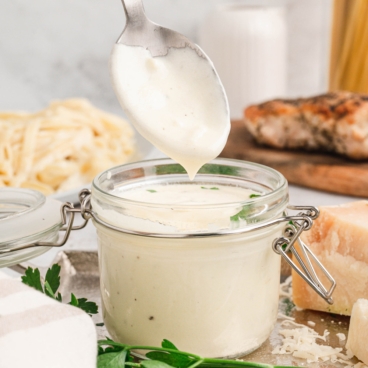
Homemade Alfredo Sauce

Ingredients
- 1/2 cup butter 1 stick
- 2 cloves garlic minced
- 2 1/2 cups heavy cream
- 2 cups freshly grated Parmesan cheese grated off the block
- Fresh cracked black pepper to taste
- Fresh minced parsley for garnish (optional)
- 16 ounces fettuccine or other pasta for serving
Instructions
- In a large skillet, melt the butter over medium-low heat. Add the minced garlic and cook, stirring often, for 1 to 2 minutes or until fragrant. Be careful not to let the garlic burn.

- Whisk in the heavy cream until combined. Let the mixture come to a gentle simmer with small bubbles around the edges. Simmer for 2 to 3 minutes.
- Reduce heat to low or remove from heat. Add the freshly grated Parmesan cheese in small handfuls, whisking vigorously after each addition until the cheese is fully melted and the sauce is smooth.
- Return to low heat and simmer gently for 3 to 4 minutes, stirring often, until the sauce has thickened enough to coat the back of a spoon. Do not boil.
- Season with fresh cracked black pepper to taste. Toss with hot, freshly cooked pasta and garnish with fresh minced parsley if desired. Serve immediately.
Video
Notes
- Grate your own cheese. Pre-shredded Parmesan contains anti-caking starches that prevent smooth melting and can make your sauce gritty.
- Keep the heat low. Boiling can cause the butter and cream to separate, resulting in a greasy, broken sauce.
- Don’t skip the garlic. While traditional Italian Alfredo doesn’t always include garlic, it adds wonderful depth of flavor.
- Toss, don’t pour. Add pasta directly to the sauce using tongs. The starchy pasta water helps the sauce cling and thicken.
- Sauce too thin? Stir in a few ounces of softened cream cheese, or make a quick roux with 1 tablespoon each butter and flour.
- Salt sparingly. Taste before adding salt. The butter and Parmesan usually provide enough seasoning.
- Recipe yield: Makes about 3 cups of sauce, enough for 1 pound of pasta.
- Heavy cream substitutes: Heavy whipping cream works well. Avoid half-and-half or milk as they won’t thicken properly.
- Storage: Refrigerate sauce (separate from pasta if possible) for 3 to 4 days. Freeze sauce alone for up to 6 months.
- Reheating: Warm slowly over low heat with a splash of cream, stirring frequently. Avoid high heat which can cause the sauce to break.
- Variations: Stir in sun-dried tomatoes, sautéed spinach, or roasted garlic for easy flavor variations.
Nutrition
Nutritional Disclaimer Kristin Maxwell of “Yellow Bliss Road” is not a dietician or nutritionist, and any nutritional information shared is an estimate. For accurate calorie counts and other nutritional values, we recommend running the ingredients through your preferred online nutritional calculator. Calories and other nutritional values can vary depending on which brands were used.





The Alfredo sauce recipe was fantastic! I added chopped green onions with the garlic and it was good. Had the Alfredo sauce with Trader Joe’s Ravioli, rather than Fettuccine.
Awesome feedback Joan! Thanks for stopping by.
This was a really good recipe, and my fiancé, and I both enjoyed it! My only problem was when I tried to reheat it. It wasn’t creamy at all, and was really just like buttery noodles. And any suggestions for how to fix this??
Reheating can cause the sauce to break. I would suggest trying a very low and slow approach on the stovetop.